





Edwardian Games Compendium Box
An edwardian games compendium box combines leisure and hospitality in a single fitted case designed for entertaining.
Edwardian Games Compendium Box
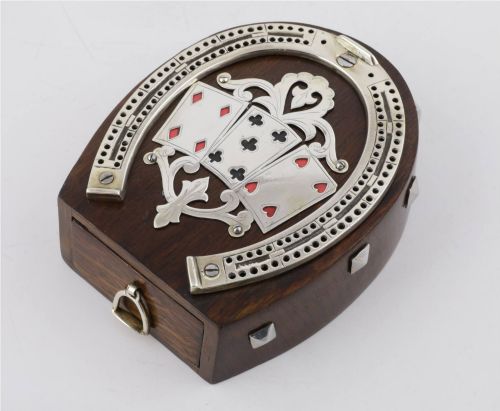
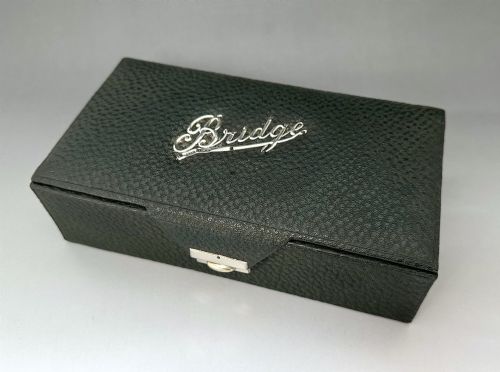
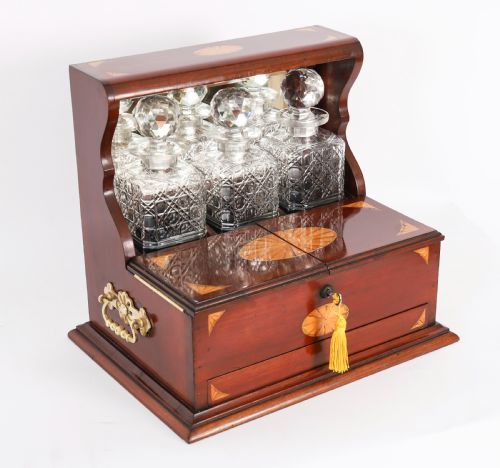
An edwardian games compendium box brings together multiple pastimes alongside barware, frequently housing decanters and drinking glasses within a single fitted cabinet. You will most commonly encounter these pieces dating from the Edwardian period and the late nineteenth century, spanning Victorian and Black Forest styles.
The forms vary from compact bridge boxes and miniature chess sets to large compendiums incorporating tantalus mechanisms and dry bars. Oak, mahogany, satinwood, and burr walnut form the primary wooden structures, often enhanced with brass mounts and inlaid details.
How they were made
Cabinetmakers utilised solid timbers and decorative veneers such as oak, mahogany, satinwood, and burr walnut, shaping cases with hinged lids and drop fronts. Internal compartments were precision built to secure playing pieces, dominoes, and cards without shifting during transport.
Fittings often incorporated brass hinges, locks, and silver-plated mounts, while specialised carving appeared on Black Forest examples. Glass components included cut crystal decanters manufactured to fit snugly alongside wooden gaming trays.
Edwardian Games Compendium Box Retail Price Guide 2026
Typical asking prices for edwardian games compendium box among the pieces listed under this phrase on Sellingantiques today, from the lower quarter to the upper quarter. They describe what is for sale here now, not the wider market.
Listings feature oak, mahogany, satinwood, and burr walnut paired with brass, bone, and cut glass across Victorian and Edwardian periods.
What varies in quality
Quality rests in the precision of the internal partitioning and the selection of cabinet timbers, where figured veneers and solid oak outclass simpler constructions. The integration of complex hardware, such as functioning tantalus mechanisms and secure brass locks, marks the distinction between standard items and superior pieces.
Finishing details distinguish the workmanship, from finely carved exterior decoration to the intact condition of internal bone gaming pieces and cut glass decanters. Harmony between the dry bar provisions and the games equipment indicates the original ambition of the maker.
The Edwardian Games Compendium Box Glossary
- Tantalus
- A locking drink cabinet that restrains decanters by their necks to prevent unauthorized access while displaying the contents. The mechanism typically requires unlocking a top bar before any bottle can be removed.
- Compendium
- A multi-game set housed within a single dedicated box or chest. These collections usually include boards, cards, counters, and dice arranged on tiered interior trays.
- Burr walnut
- A prized wood veneer harvested from the burl growths of walnut trees, noted for its swirling and intricate grain patterns. Cabinetmakers used it on high-end Victorian and Edwardian surfaces to create striking visual depth.
- Black Forest carving
- Highly detailed woodwork originating from the timber-rich mountain region of central Europe, characterised by naturalistic animal and foliage motifs. Pieces in this style often feature deeply carved relief scenes on the exterior lids.
Edwardian Games Compendium Box: Frequently Asked Questions
What fits inside an edwardian games compendium box?
These boxes typically house a combination of playing cards, dominoes, chess sets, and gaming counters alongside fitted spaces for glassware.
Many versions integrate a tantalus framework holding three decanters to serve drinks while games are played.
How do I date an edwardian games compendium box?
Dating relies on stylistic clues, hardware construction, and timber choices spanning the late nineteenth century through the Edwardian era.
Victorian iterations often feature darker burr walnut or heavy oak, whereas Edwardian examples frequently showcase lighter oak and refined satinwood inlay.
Were these boxes used for travel?
While some smaller bridge boxes and card cases were portable, larger compendiums with integrated glass decanters functioned primarily as stationary dry bars for home entertaining.
The inclusion of heavy crystal bottles and locking mechanisms made them better suited for drawing rooms than transit.
How should I clean the wood and brass?
Maintenance requires gentle dusting with a dry cloth and occasional application of appropriate furniture wax to nourish the timber.
Brass mounts benefit from careful cleaning without abrasive agents to preserve the original metal finish.