




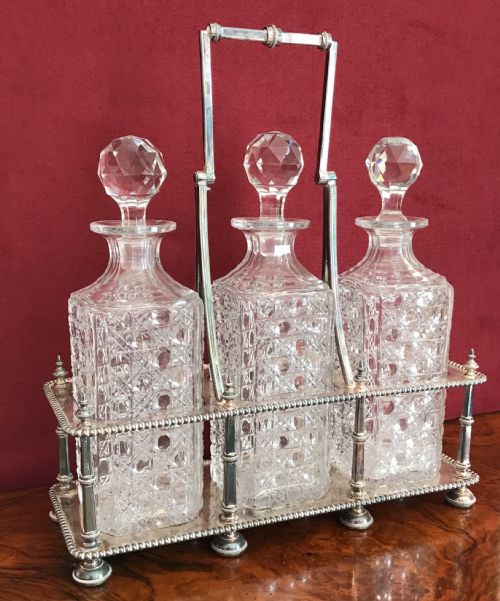


Edwardian Tantalus Set Silver
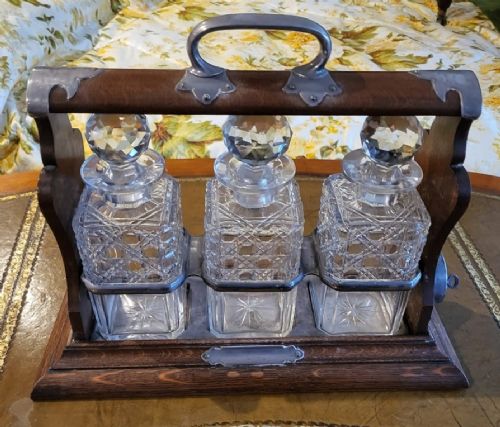
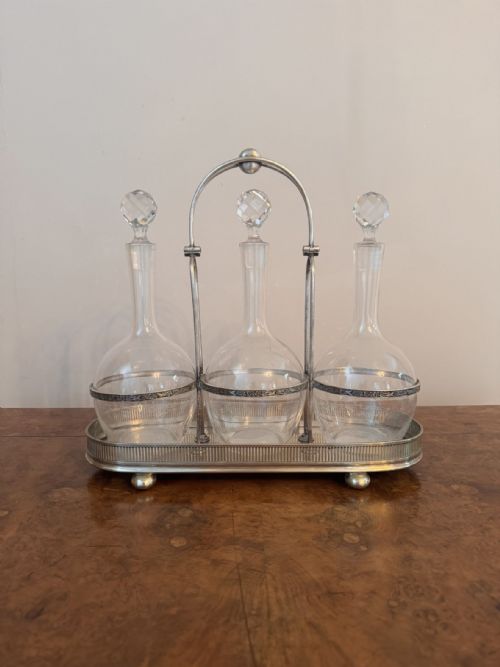
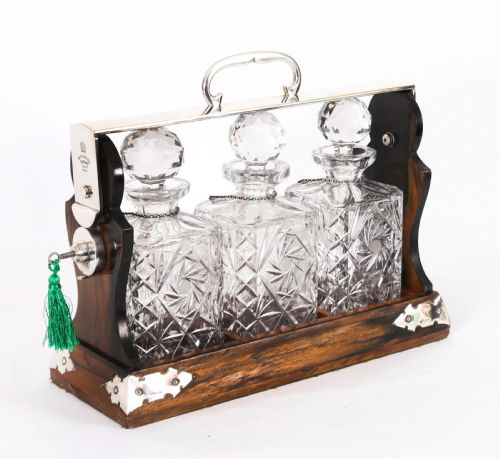
These pieces of edwardian tantalus set silver are secure locking decanter frames designed to safeguard spirits, most commonly encountered in oak with silver plate mounts.
Edwardian Tantalus Set Silver
An edwardian tantalus set silver combines secure barware with decorative utility, typically housing multiple crystal decanters within a framed wooden stand fitted with a locking mechanism. These items served as stylish entertaining accessories in period homes, keeping expensive spirits under lock and key.
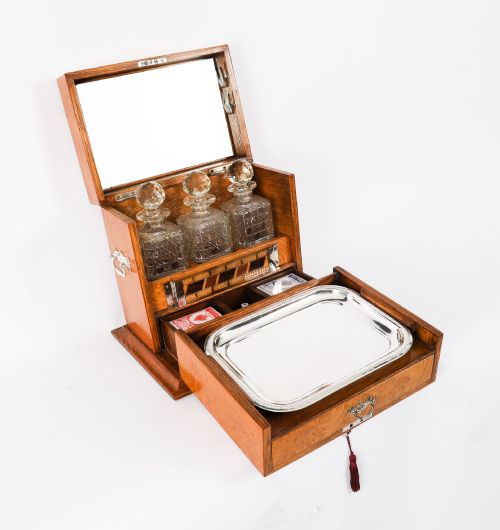
The most common examples on this page are Edwardian and Victorian oak frames fitted with silver plated mounts and cut glass decanters. Buyers will also find combined pieces that integrate games compendiums alongside the spirit bottles.
How they were made
Cabinetmakers constructed the frames using timbers such as oak, blonde oak, and occasionally coromandel, shaping them to hold two or three glass vessels securely. Metalwork components, including carrying handles, locking bars, and mounts, were fashioned from brass and finished with silver plating.
The bottles themselves utilise heavy cut glass or cut crystal, frequently featuring geometric patterns designed to catch the light. Functional hardware such as working locks and key mechanisms completed the construction to restrict access to the contents.
Edwardian Tantalus Set Silver Retail Price Guide 2026
Typical asking prices for edwardian tantalus set silver among the pieces listed under this phrase on Sellingantiques today, from the lower quarter to the upper quarter. They describe what is for sale here now, not the wider market.
Listings feature oak as the primary timber, complemented by variations in blonde oak and coromandel.
What varies in quality
The distinction between standard production and superior examples rests on the integration of the locking mechanism and the weight of the timber and glass. Finer pieces demonstrate robust cabinetry with well-fitted components and crisp, deep cutting on the crystal decanters.
Maker attribution and the inclusion of integrated games compendiums or additional storage compartments elevate the scope of the piece. The condition of the silver plating and the presence of original operating keys further separate ordinary items from those of higher regard.
Betjemann·Hukin and Heath
The Edwardian Tantalus Set Silver Glossary
- Tantalus
- A locking drink cabinet that holds decanters securely in a metal and wood frame while displaying the contents. The locking bar prevents the removal of the stoppers and bottles without a key.
- Silver plate
- A thin layer of silver applied to a base metal such as brass or copper. This technique allowed manufacturers to produce decorative mounts at a lower cost than solid silver.
- Games compendium
- A box or cabinet fitted with equipment for multiple tabletop pastimes, frequently incorporated into the base of larger tantalus sets. These combined pieces served social functions in period drawing rooms.
- Coromandel
- A dense, dark cabinet wood with contrasting light yellow streaks, utilised for high-end Victorian and Edwardian decorative boxes. It provides an ornate appearance distinct from standard oak.
- Cut crystal
- High-clarity glass shaped by grinding and polishing geometric patterns across the surface. This material adds weight and brilliance to the decanters housed within the frame.
Edwardian Tantalus Set Silver: Frequently Asked Questions
How does a tantalus lock work?
The locking mechanism typically involves a vertical metal bar secured by a turn of a key at the top or side. When engaged, this bar blocks the stoppers from being lifted out, preventing the decanters from being removed from the wooden frame.
Most period units require the original key or a compatible replacement to release the retaining bracket. Without unlocking this bar, the glass vessels remain firmly trapped inside.
What periods do these pieces date from?
The listings span from the late nineteenth century through to the early decades of the twentieth century. The majority cluster around the Edwardian era and the late Victorian period.
Examples from later decades also appear, showing continuity in the manufacture of these domestic spirit cabinets. Stylistic details in the woodwork and mounts help distinguish between the decades.
Are the decanters original to the stand?
Many sets retain their matched set of cut glass or crystal decanters, shaped specifically to fit the cutouts of the wooden base. Because bottles were easily broken or replaced over time, matching numbers or consistent wear patterns indicate original pairing.
Examining the neck and base dimensions helps confirm whether the glass vessels belong to the specific frame. Replacements often differ slightly in cutting style or height.
How should I clean the silver plate?
Silver plated mounts require gentle cleaning with a soft cloth and a non-abrasive polish designed specifically for plated items. Vigorous rubbing can wear through the thin silver layer down to the underlying base metal.
Care should be taken to avoid getting polish on the wooden frame or the glass decanters during maintenance. Regular dusting helps preserve the finish without requiring harsh chemical cleaning.
Can I use the decanters for daily serving?
The decanters are functional glass vessels suitable for holding and pouring spirits during gatherings. Checking the interior for cleanliness and ensuring the glass stoppers fit snugly is recommended before use.
Hand washing in warm water is advised rather than placing antique glass into an automatic dishwasher. This protects both the clarity of the cut crystal and any delicate pouring rims.