


Antique Games Box Set
When you handle an antique games box set, you touch the social centre of the nineteenth-century parlour, built for long evenings of chess, cards and croquet.

Antique Games Box Set
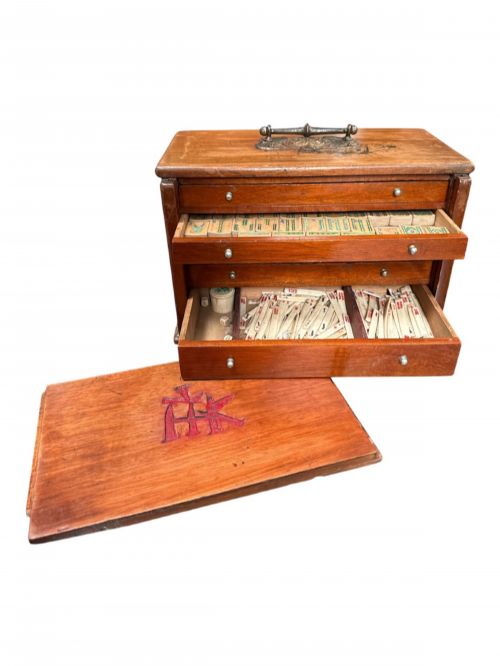
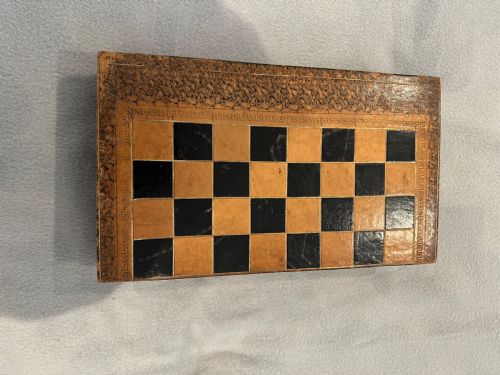
An antique games box set gathers the equipment for nineteenth-century entertainment into fitted wooden cases, leather folios and compartmented chests. Buyers seeking an antique games box set encounter everything from compact travelling chessboards to grand compendiums containing cards, dominoes and boards.
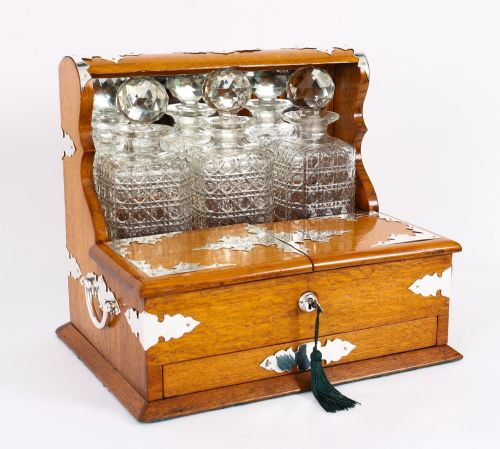
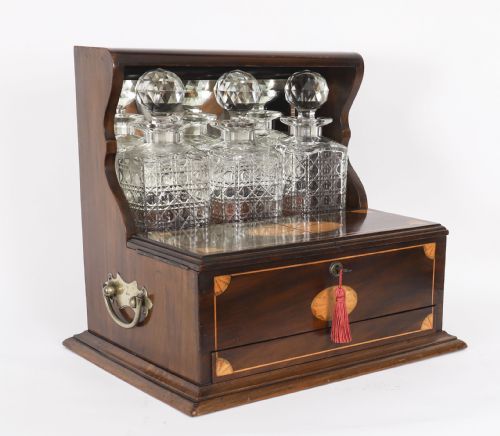
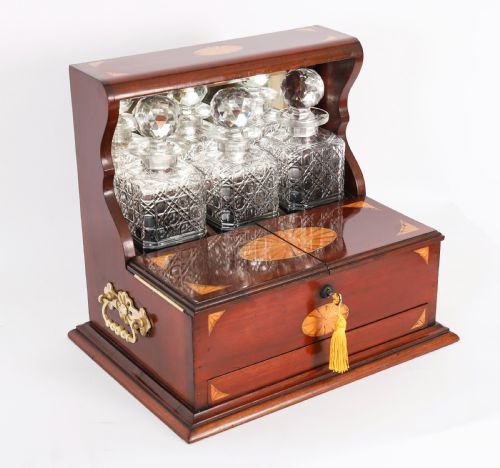
The material record spans the Victorian and Edwardian eras, reaching from the 1850s into the 1920s with substantial oak, walnut and mahogany cabinets. Many include integrated tantalus frames with cut crystal decanters alongside the gaming compartments, serving dual functions for hospitality and play.
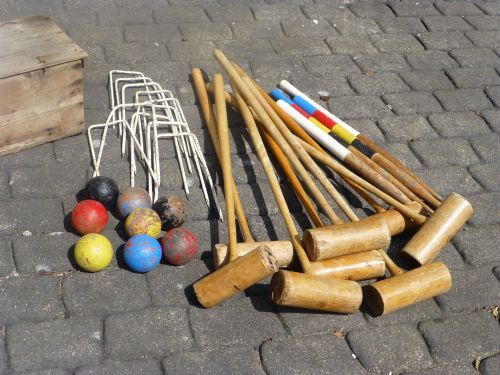
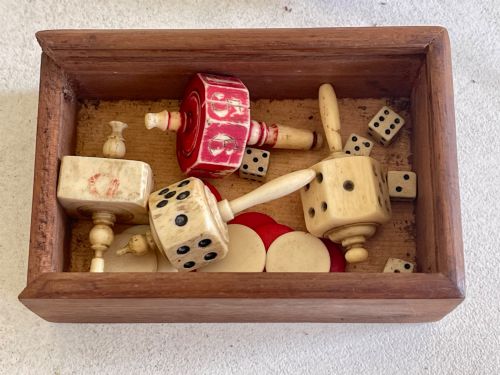
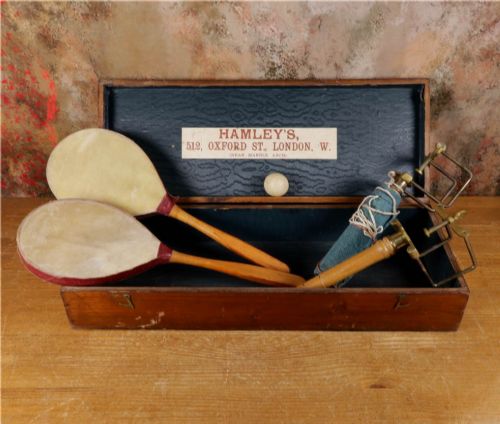
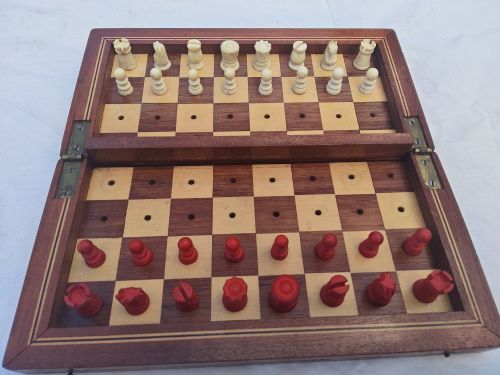
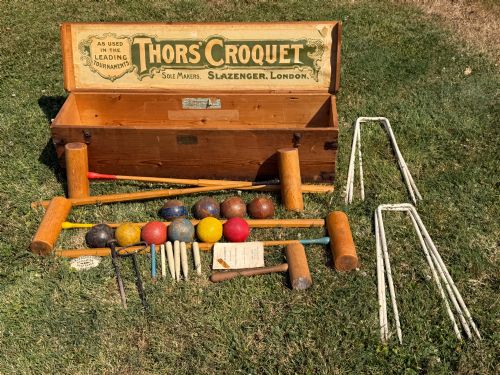
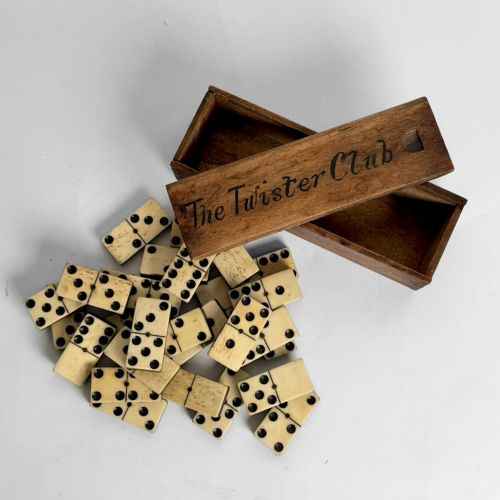
Specialised sets for lawn games, table tennis and croquet arrive in their original pine containers bearing the marks of major sports outfitters. Smaller pieces include bone dominoes, whist counters and travelling whittington pattern chess sets designed for mobility.
How they were made
Cabinet makers constructed the primary boxes using dense hardwoods such as mahogany, walnut, oak and coromandel, often reinforcing the corners with brass banding. Satinwood inlay and leather bindings provided decorative contrast on the exterior surfaces of the compendiums and faux book boards.
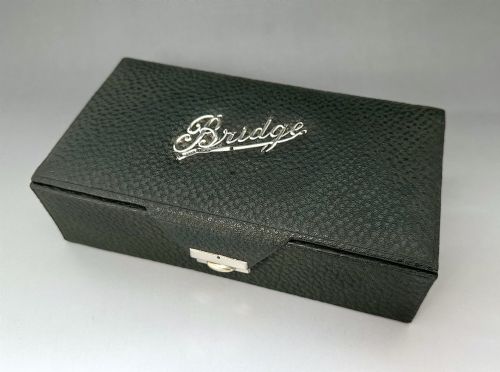
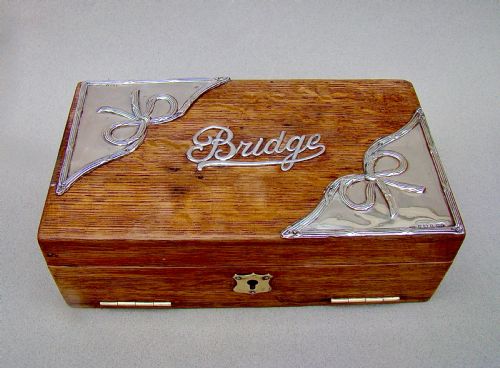
Inside the cases, turners shaped boxwood and ebony for chess and draughts pieces, while artisans carved delicate bone into dominoes and teetotums. Silver plate and solid silver mounts secured the closures, bridge boxes and card cases produced by period silversmiths.
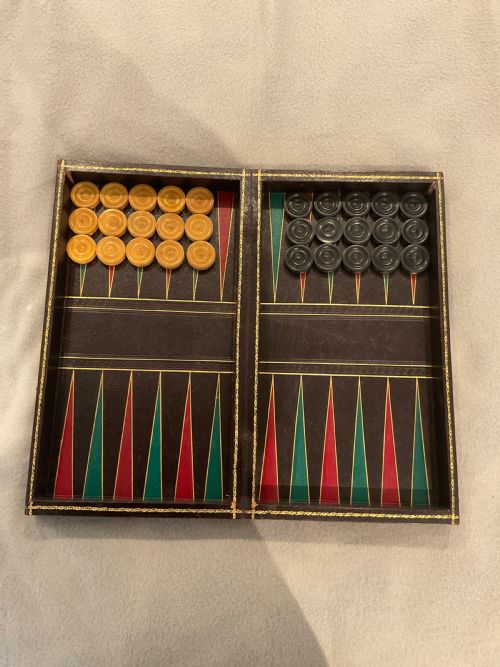
Several boxes double as faux books, letting a quiet game of backgammon hide on the library shelf.
What varies in quality
The distinction between ordinary and exceptional boxes lies in the integration of the internal fitments and the precision of the joinery. Superior examples maintain complete sets of original counters, dice and marker boxes snug within velvet-lined compartments.
Makers' signatures on chess sets, silver mounts or cabinet locks elevate a piece, separating standard production items from workshop-attributed compendiums. The choice of luxury timbers, such as figured walnut or coromandel, indicates the intended tier of the original commission.
Levi & Salaman·F.H.Ayres Ltd.·British Chess Company·George Betjemann
The Antique Games Box Set Glossary
- Tantalus
- A locking wooden frame holding decanters visible yet secured from unauthorized pouring. These frequently form the upper tier of larger games compendiums.
- Compendium
- A multi-game box housing equipment for several pastimes, such as chess, backgammon and cards, within one fitted case.
- Staunton
- The standard design of chess pieces introduced in the mid-nineteenth century, characterised by formal, architectural proportions and heavily weighted bases.
- Teetotum
- A small spinning top with sides marked with letters or numbers, used for gambling or parlour games before the widespread adoption of dice.
- Whist
- A traditional card game requiring specialised counters and markers to track scores during long parlour sessions.
Antique Games Box Set: Frequently Asked Questions
What games do these boxes contain?
Compendiums typically hold chess, backgammon, draughts, dominoes and playing cards within nested wooden trays. Some variations include cribbage boards, whist counters and dice.
Larger cabinets combine these indoor pastimes with spirit decanters and drinking glasses, creating a complete dry bar for evening guests.
How do I identify a Victorian games box?
Victorian examples rely heavily on dense woods like mahogany, walnut and rosewood, often featuring heavy brass mounts or intricate marquetry. The internal partitions are handmade to fit specific bone or wooden components.
Edwardian boxes tend to introduce lighter oak housings, silver-plated mounts and sports compendiums by makers like Slazenger and Gamage.
Were these sets used for travelling?
Many smaller folding boards and chess sets were designed specifically for carriage or rail travel, featuring pegged pieces or magnetic boards to resist motion. Miniature bone dominoes and folding leather faux book boards also served travellers.
Larger compendiums and tantalus cabinets remained stationary in the drawing room or study.