
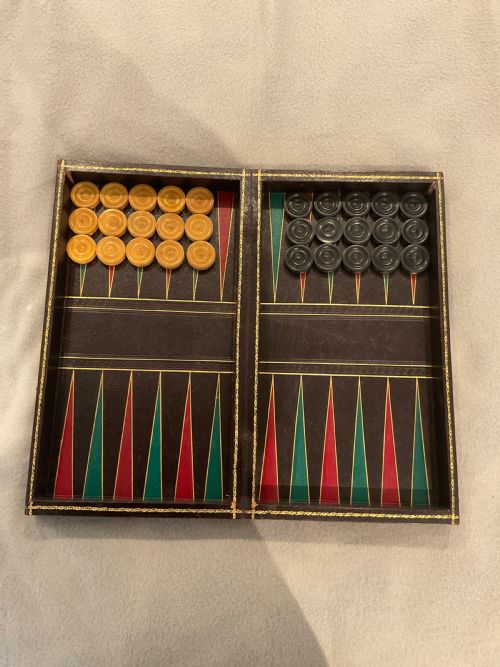
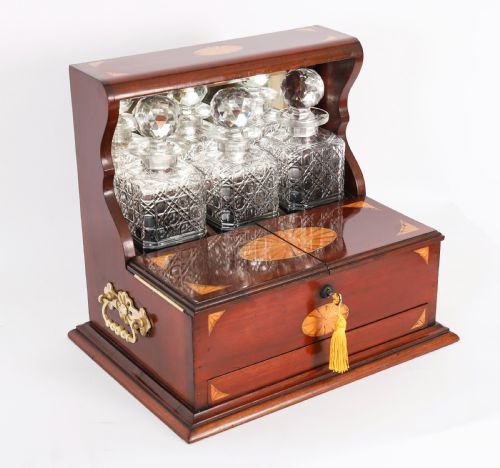


Vintage Games Compendium
A vintage games compendium brings together multiple parlour amusements in a single fitted box, offering an entertaining centrepiece for the evening.

Vintage Games Compendium
A vintage games compendium gathers multiple pursuits such as chess, backgammon, dominoes, and card games inside a portable fitted case. These items emerge primarily from Victorian, Edwardian, and Regency periods, reflecting an era when domestic parlour entertainment held central importance.
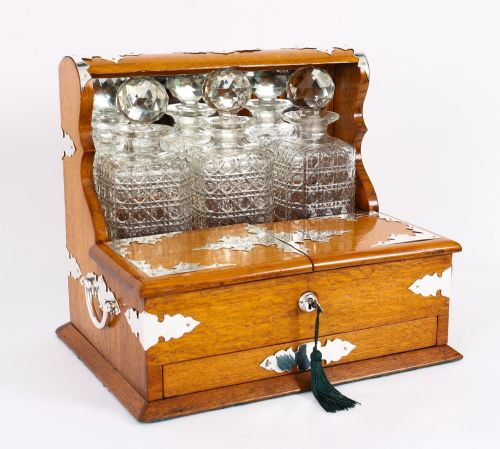
The objects take various forms, ranging from simple wooden boxes and leather-bound faux books to elaborate tantalus combinations incorporating decanters and drinking glasses. Collectors encounter pieces created from traditional English hardwoods alongside continental examples displaying intricate Black Forest carving.
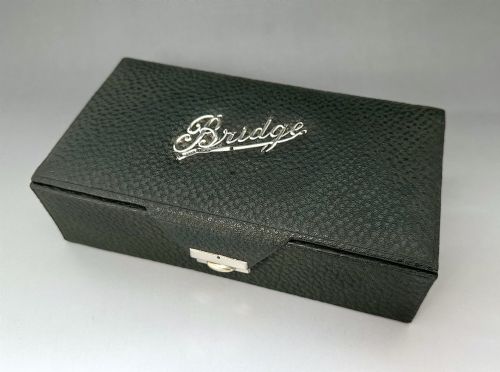
Most examples function as complete wooden compendiums or specialised boxes for bridge, cribbage, patience, and poker chips. Each piece provides a tangible connection to nineteenth and early twentieth-century social life through dedicated compartments designed for counters, dice, and folding boards.
Materials and construction
Craftsmen built these cases using dense timbers including oak, mahogany, walnut, satinwood, and kingwood, often applying satinwood stringing, marquetry, or burr walnut veneers. Interior trays utilise secondary woods and velvet or leather linings to protect individual game pieces.
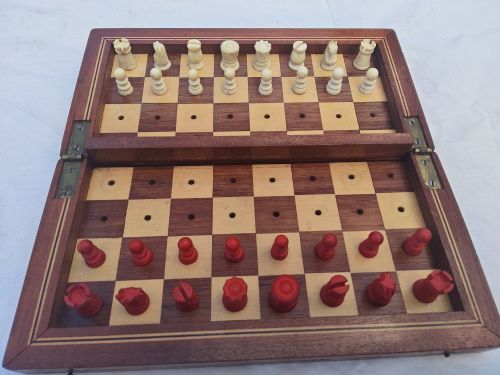
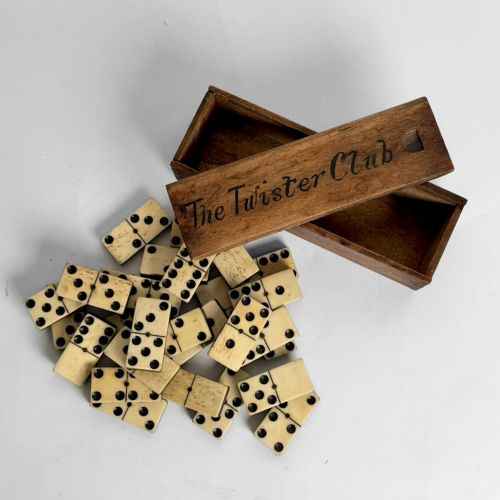
Game sets incorporate carved boxwood and ebony for chessmen, alongside bone, mother-of-pearl, and leather for counters, dominoes, and folding boards. Metal mounts in silver and brass secure the corners, hinges, and lock plates of the finer boxes.
Some Victorian players enjoyed games housed inside disguised leather books, hiding a quiet wager among the library shelves.
Judging quality in gaming boxes
Quality rests upon the precision of the internal partitioning and the choice of exterior veneers, where burr walnut or figured oak command attention. Superior pieces feature well-fitted trays, substantial brass or silver hardware, and complete sets of matching game components.
Maker attribution elevates certain sets, particularly when firms like F. H. Ayres produce weighted Staunton chess sets with exceptional carving detail. The integration of complex mechanisms, such as locking tantalus frames combined with games drawers, demonstrates superior workshop capability.
F. H. Ayres
The Vintage Games Compendium Glossary
- Compendium
- A collection of diverse games housed within a single fitted box or cabinet. These multi-game sets typically include folding boards, dice, counters, and cards.
- Tantalus
- A locking wooden frame holding decanters visible yet secured without a key. In many larger compendiums, the tantalus stands alongside or above the gaming drawers.
- Staunton
- The standard design of chess pieces introduced in the mid-nineteenth century, featuring distinct, balanced forms. Sets by makers like F. H. Ayres remain particularly sought after.
- Pope Joan
- A traditional eighteenth and nineteenth-century board game played with counters and a spinning top or painted board. Regency examples feature gilt decoration.
- Black Forest
- A style of wood carving originating in central Europe, known for deep, naturalistic animal and foliage motifs. Carved game boxes often display this distinctive regional craftsmanship.
Vintage Games Compendium: Frequently Asked Questions
What games are usually inside a compendium?
These boxes typically contain sets for chess, backgammon, dominoes, cribbage, and card games, accompanied by turned bone or wooden counters.
More elaborate examples incorporate rotating boards, dice shakers, and specialised compartments for patience or bridge.
How do I date a wooden games box?
Dating relies on timber choice, construction methods, and hardware styles, such as Victorian brass locks or Edwardian silver mounts.
Mouldings, veneer types like burr walnut or satinwood, and any maker marks or registration numbers help narrow the decade of manufacture.
Are all the game pieces original?
Many compendiums retain their matching turned bone or boxwood pieces, though collectors frequently encounter assembled sets.
Examining the wear, patina, and wood tone across the chessmen and boards helps determine if the components belong together from the period.
How should I care for a leather and wood box?
Keep wooden cases away from direct sunlight and sudden temperature changes to prevent the veneer from lifting or splitting.
Leather bindings and interiors benefit from occasional gentle dusting, avoiding modern liquid polishes that might stain the aged surfaces.