




Antique Silver Playing Cards
Antique silver playing cards and their associated boxes unite utility with tabletop elegance, offering collectors tactile pieces of Edwardian and Victorian social history.
Antique Silver Playing Cards
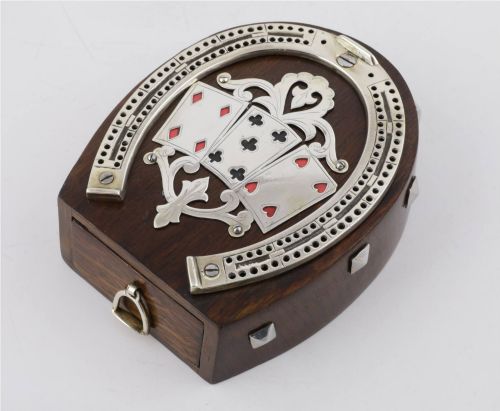
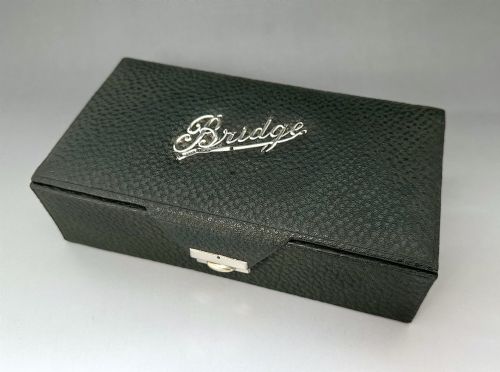
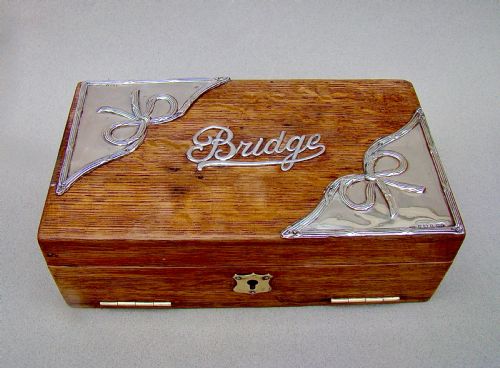
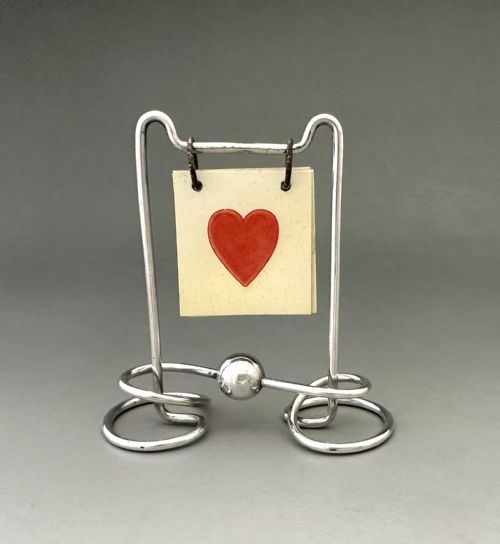
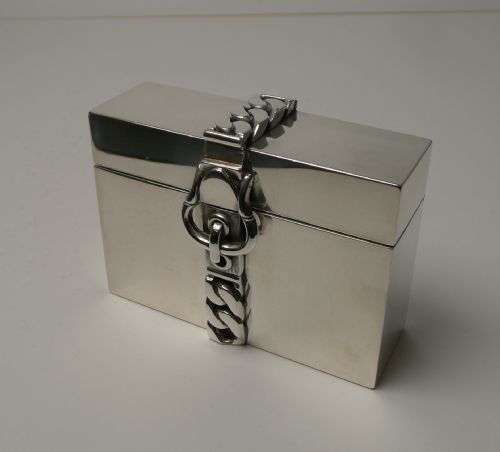
When you search for antique silver playing cards, you encounter a specialised assortment of games boxes, card boxes, caskets, and game accessories dating from the Victorian and Edwardian eras through to the mid-twentieth century. The selection spans leather bridge boxes mounted in sterling silver, dedicated card boxes with rising trays, and specialised items like trump markers and cribbage boxes.
You are most likely to meet Edwardian and Victorian examples on this page, often housing patience or bridge sets alongside whimsical menu holders and card suit spoons. Materials extend beyond solid silver and sterling silver to incorporate leather, enamel, wood, glass, and paper components.
The objects reflect the structured social pastimes of their periods, moving from nineteenth-century cribbage containers to Art Deco and 1940s Italian poker and bridge boxes. Each piece serves a distinct function within domestic card games, functioning as practical containers or decorative table accessories.
How they were made
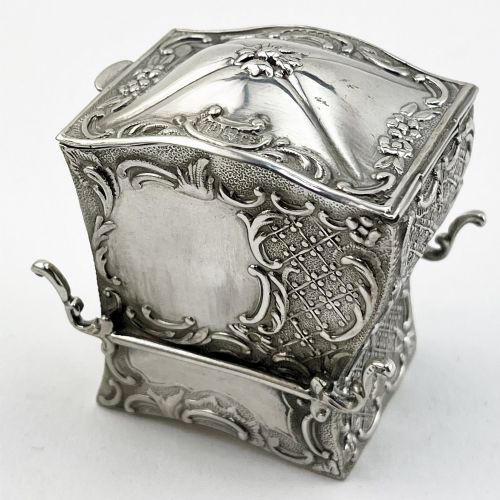
Silversmiths combined sterling silver mounts with structural materials such as leather, wood, and glass to create durable card boxes and games caskets. Metalwork techniques included intricate repoussé decoration, casting, and silver plating for items like trump markers.
Enamel and black lacquer surface treatments appear on mid-century pieces, contrasting with the warm tones of Bakelite used in later bridge spoons and the organic grain of fitted wooden or leather interiors.
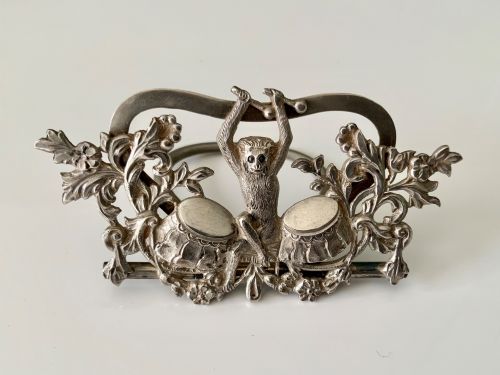
Card players can consult a silver menu holder shaped as a monkey playing drums while deliberating their next trump.
What varies in quality
The distinction between standard utility items and finer pieces rests on the integrity of the silver mounts, the precision of maker marks, and the preservation of fitted internal trays. Superior examples maintain the original hardware, functioning hinges, and crisp chasing on decorative motifs without excessive wear.
Material combinations also dictate standard variations, where solid silver construction and intact enamel or leather cladding elevate a piece above simpler plated or utilitarian equivalents.
Levi & Salaman·Nelson and Drake
The Antique Silver Playing Cards Glossary
- Bridge box
- A specialised container designed to hold playing cards, scoring pads, and pencils specifically for the game of bridge. These containers often feature silver mounts and partitioned wooden or leather interiors.
- Cribbage box
- A fitted receptacle created to house a cribbage board, pegs, and a deck of cards. The form reflects the popularity of this traditional counting game in Victorian households.
- Sterling silver
- An alloy consisting of pure silver and other metals, usually copper, to increase durability while maintaining a bright appearance. British pieces frequently bear hallmarks indicating the standard of purity and the assay office.
- Menu holder
- A small table accessory designed to display meal courses, occasionally cast in whimsical figural shapes such as a monkey playing drums. These items coordinate with broader tablescape silverware.
- Patience box
- A compact container intended for holding cards used in solitary card games, known as patience or solitaire. These boxes typically present refined exterior silver decoration enclosing a snug card compartment.
Antique Silver Playing Cards: Frequently Asked Questions
What is a bridge box?
A bridge box is a dedicated container built to store playing cards and scoring equipment for the card game bridge. They often feature protective silver mounts and fitted internal compartments.
Victorian and Edwardian versions frequently utilise leather, wood, or solid silver, reflecting the formal nature of parlour gaming during those periods.
How do I date a silver card box?
Dating relies on British hallmarks stamped into the silver, which record the assay office, the maker, and a date letter indicating the exact year of manufacture. Stylistic clues such as Edwardian restraint or Art Deco geometry also help establish the period.
Correlating the box style with accompanying materials like Bakelite or enamel provides further chronological context for mid-century pieces.
Were these boxes used for ordinary cards?
These boxes accommodated standard playing cards of the era, which were often slightly different in dimension to modern decks. They kept paper cards flat and protected from moisture and domestic wear.
Many boxes included rising trays or partitioned sections to separate multiple decks used in games like bridge or patience.
What are card suit spoons?
Card suit spoons are decorative teaspoons featuring handles or terminals shaped like the four suits of playing cards: hearts, diamonds, clubs, and spades. They were used during afternoon tea or card parties.
Sets of these spoons appear in silver or silver-plated forms, sometimes preserved within their original fitted presentation cases.