


Edwardian Decanter Box
These edwardian decanter box examples combine secure spirit storage with social entertainment, offering fitted wooden cases designed to keep hospitality gear close at hand.

Edwardian Decanter Box
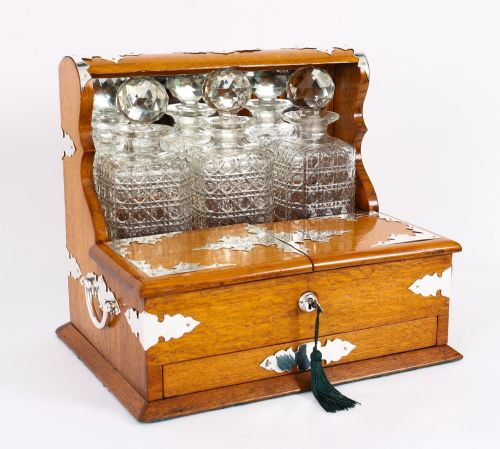
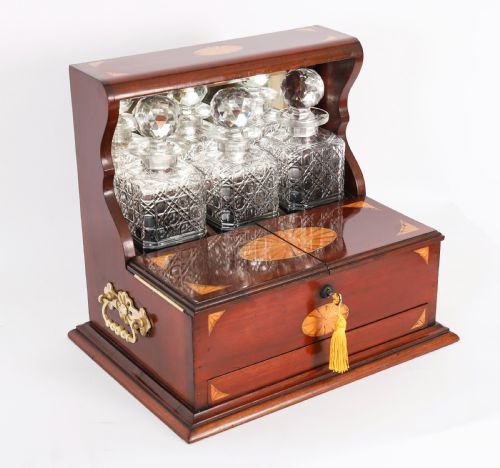
An edwardian decanter box serves as a portable drinks cabinet, housing crystal vessels and sometimes incorporating games compendiums or dry bar accessories within a timber case. The pieces found here span the late nineteenth century into the Edwardian era, taking the form of tantalus frames, brass-bound boxes, and multi-bottle drinks cabinets.
Most examples rely on oak, walnut, or mahogany, frequently fitted with brass handles, locks, and silver-plated mounts. The interior arrangements hold two or three cut glass or crystal decanters securely, often alongside compartments for playing cards, counters, or cigars.
Materials and construction
Cabinetmakers utilised solid and veneered timbers including blonde oak, pollard oak, walnut, satinwood, and coromandel, often enhancing the exterior with marquetry stringing or brass binding for structural reinforcement. Wood selection dictated the primary visual character of the box, ranging from dark figured grains to lighter golden tones.
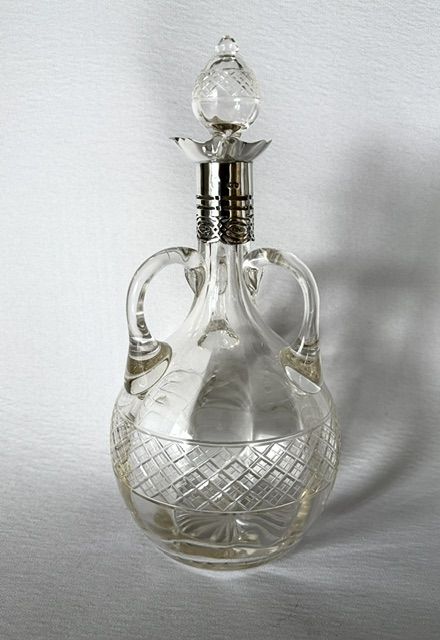
Metalwork played a functional and decorative role through cast brass carrying handles, escutcheons, hinges, and locking mechanisms that secured the bottles inside. Cut glass and crystal decanters sat within velvet or leather-lined partitions, accompanied by silver-plated mounts on specific hardware elements.
Period styles span Victorian, Victorian Gothic Revival, and Edwardian designs originating between 1880 and 1903.
Distinctions in quality
The degree of refinement rests on the complexity of the interior fittings and the choice of cabinet timber, with coromandel and pollard oak sitting alongside standard oak and mahogany. Elaborate combinations integrating games compendiums, humidor sections, and multifaceted locking mechanisms demand greater joinery skill than simple bottle holders.
Hardware weight and precision in the locking action differentiate workshop standards, as heavy cast brass mountings and functional locking levers indicate superior manufacture. The clarity and depth of the cut crystal decanters paired with the box further elevate the overall standard of the piece.
The Edwardian Decanter Box Glossary
- Tantalus
- A locking drink container that restrains decanters beneath a metal bar to prevent unauthorized pouring while displaying the bottles. The mechanism typically releases only when a key is turned in the lock.
- Games compendium
- A fitted box containing equipment for multiple parlour pastimes such as cards, dominoes, and chess. These compartments frequently share space with the bottle storage in larger drinks cabinets.
- Marquetry stringing
- Inlaid thin lines of contrasting wood set into the surface of the cabinet to create geometric borders. This decorative technique highlights the edges of the box lid and drawer fronts.
- Coromandel
- A dense, heavily figured exotic timber from Asia utilised for luxury nineteenth-century boxes. Its dark brown colour and dramatic grain make it a desirable material for high-end drinks cases.
- Escutcheon
- A protective metal plate surrounding the keyhole of the box. It prevents the surrounding wood from wearing down through repeated use of the key.
Edwardian Decanter Box: Frequently Asked Questions
What is an edwardian decanter box used for?
These boxes function as portable drinks cabinets designed to hold spirits securely while entertaining guests in a formal setting.
Many examples combine this bottle storage with integrated games compartments or dry bar accessories to serve multiple social needs at once.
How do I secure the bottles in a tantalus?
A tantalus employs a hinged metal retaining bar that locks down over the stoppers of the cut glass decanters. This prevents the bottles from being lifted out until a key releases the mechanism.
Older models rely on precision-fitted wooden partitions or drop-front doors that lock the entire internal compartment shut.
What woods are common for these boxes?
Oak appears most frequently in various finishes including blonde, golden, and pollard variations, alongside traditional choices like mahogany and walnut.
More decorative items utilise exotic timbers such as coromandel or feature satinwood inlay and marquetry stringing across the exterior surfaces.
Do these boxes come with keys?
Some pieces retain their original working locks and keys, while others operate with replacement mechanisms or function unlocked.
Because the locking bars and internal security systems form a key part of the design, checking the mechanism status helps understand the original operation.