

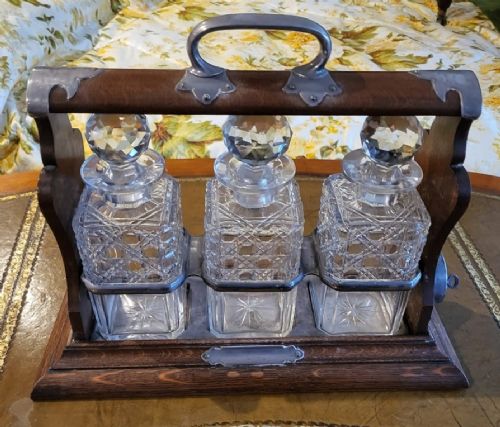

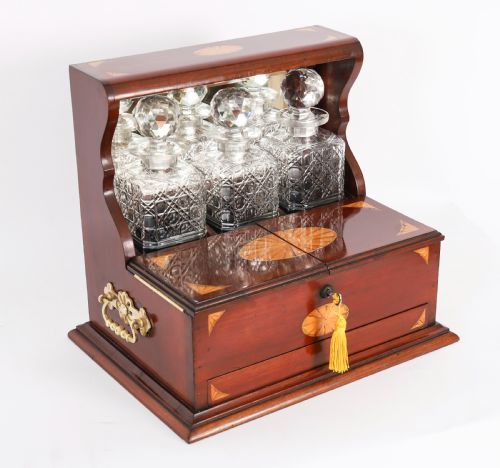


Vintage Drink Decanter Cabinet
A vintage drink decanter cabinet secures your spirits behind glass and wood, bringing period craft directly to the modern sideboard.
Vintage Drink Decanter Cabinet
A vintage drink decanter cabinet encompasses tantaluses, cellarettes, and liquor compendiums designed to house spirits securely. These pieces range from Georgian and Victorian cellarettes to Edwardian tantaluses fitted with cut crystal decanters and games compartments.
You are most likely to encounter oak and mahogany tantaluses from the Victorian and Edwardian periods on this page. These frequently combine storage for three decanters with spaces for cards and gaming pieces.
Form follows function across the selection, moving from heavy Georgian mahogany floor chests to tabletop oak frames mounted in brass. French Napoleon III examples also appear, offering alternative cabinetry styles for liquor storage.
Materials and construction
Cabinetmakers utilised solid timbers like oak and mahogany, often applying satinwood inlay, marquetry stringing, or brass mountings for structural reinforcement and decoration. These woods provide the durable housing necessary to support heavy glass decanters and internal wooden dividers.
Cut glass and cut crystal form the primary material for the matching decanters housed within the frames. Manufacturers combined these heavy glass vessels with silver-plated locking mechanisms to secure the contents.
Vintage Drink Decanter Cabinet Retail Price Guide 2026
Typical asking prices for vintage drink decanter cabinet among the pieces listed under this phrase on Sellingantiques today, from the lower quarter to the upper quarter. They describe what is for sale here now, not the wider market.
Victorian hosts relied on these locking frames so heavily that guests could admire the whiskey without ever touching a drop.
Judging quality and execution
Quality rests in the precision of the joinery and the selection of figured timbers, such as blonde oak or rich mahogany. Finer examples display meticulous marquetry stringing and intact, functioning brass hardware.
The integration of secondary functions dictates distinction at the higher end of the scale. Pieces that combine secure decanter storage with fully appointed games compendiums demonstrate superior workshop ambition.
The Vintage Drink Decanter Cabinet Glossary
- Tantalus
- A locking drink cabinet or stand that holds decanters securely in place while displaying the contents, preventing removal without a key.
- Cellarette
- A freestanding or floor-standing cabinet traditionally used to hold bottles of wine or spirits near the dining table.
- Cave a liqueur
- A French portable liquor chest, typically containing fitted glass decanters and small glasses within a lined interior.
- Marquetry
- Decorative woodwork where pieces of veneer are fitted into a background to form geometric or pictorial designs.
- Compendium
- A fitted box or cabinet containing multiple games alongside storage for drinks and glassware.
Vintage Drink Decanter Cabinet: Frequently Asked Questions
What is a tantalus?
A tantalus is a locking drink cabinet that holds decanters in place with a metal bar over their stoppers. This design displays the spirits while preventing guests or household staff from pouring a drink without the key.
The name derives from Greek mythology, specifically Tantalus, who was condemned to stand in water that receded whenever he tried to drink.
How do you date these cabinets?
Dating relies on timber choice, hardware style, and construction methods. Georgian pieces tend to be heavy mahogany cellarettes, whereas Victorian and Edwardian versions often feature oak frames with brass mounts and cut crystal decanters.
Examining the locks and key escutcheons provides further clues, as manufacturing techniques shifted significantly between the eighteenth and twentieth centuries.
Were these cabinets locked?
Yes, security was a primary function of these pieces. The locking mechanism typically secures the stoppers so the decanters cannot be lifted out.
Householders used these locks to control access to expensive spirits during periods when domestic staff managed the household dining rooms.
Why do some include games?
Victorian and Edwardian social habits favoured after-dinner entertainment, leading cabinetmakers to combine drinking vessels with card compartments. These combined pieces served as all-in-one entertainment centres for the drawing room.
The addition of folding boards and storage trays transformed a simple spirit stand into a comprehensive social compendium.
How should I clean the wood?
Maintain antique timber using traditional beeswax applied sparingly with a soft cloth. Avoid modern silicone sprays, which damage historic polished surfaces over time.
Gentle dusting and occasional wax nourishment will preserve the original patina of oak and mahogany cabinets.