
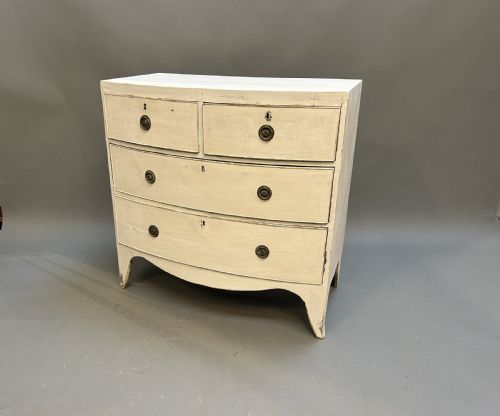
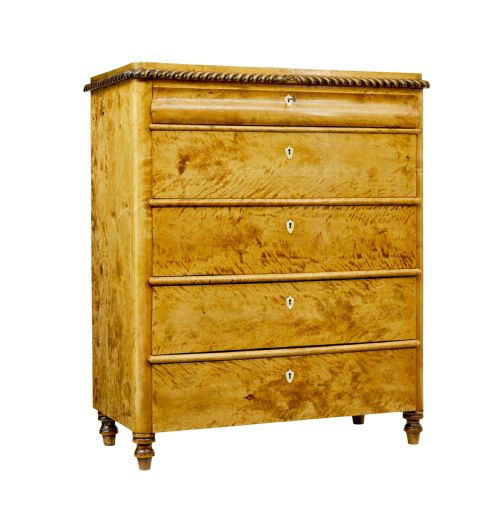


Antique Swedish Tallboy
An antique swedish tallboy brings commanding vertical presence and warm northern timber to a room, offering generous storage through deep, well-proportioned drawers.
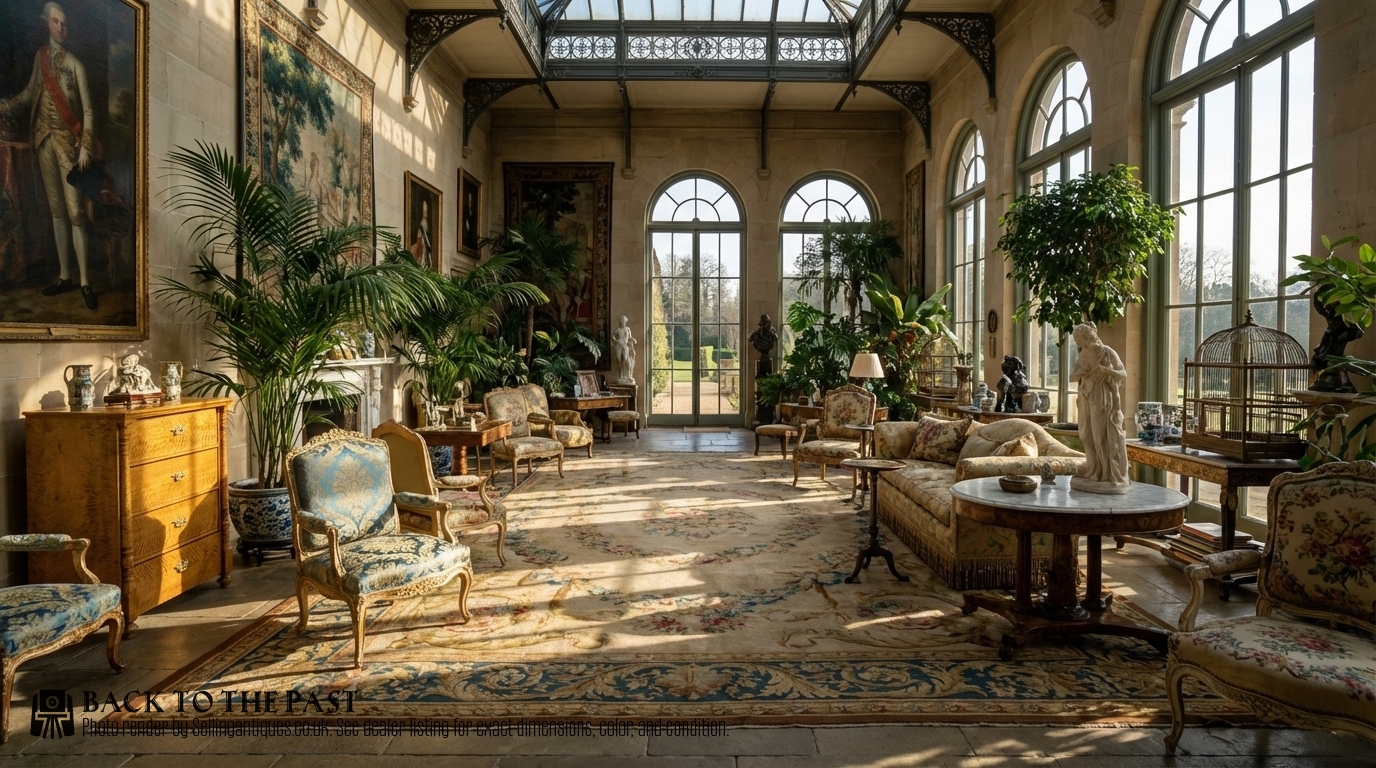
Antique Swedish Tallboy
When you search for an antique swedish tallboy, you encounter substantial storage furniture originating primarily from the nineteenth century. These pieces combine practical capacity with the refined lines typical of Scandinavian design, spanning styles from straightforward country utility to polished Biedermeier elegance.
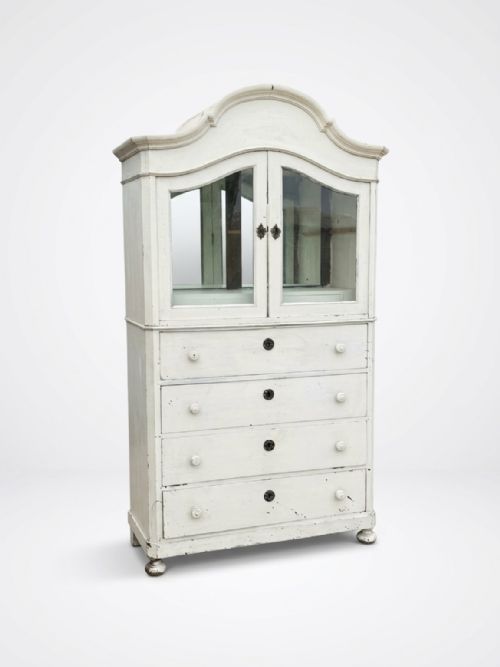
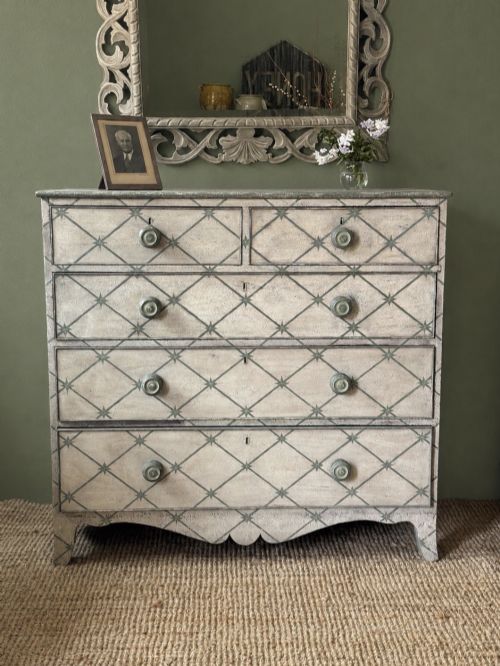
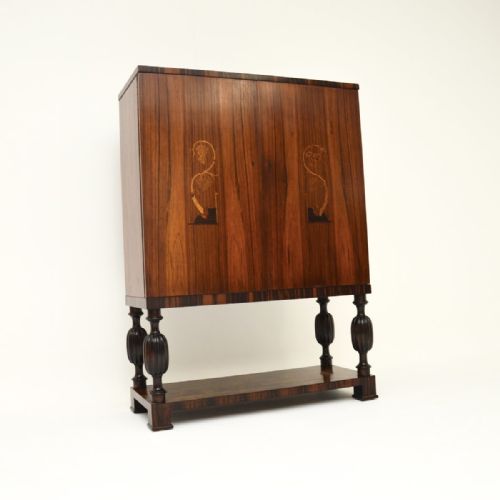
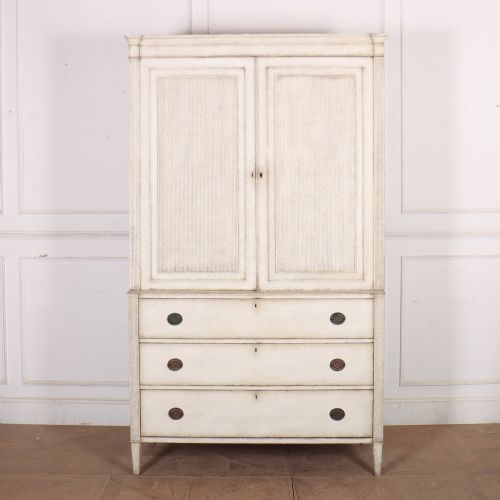
The most frequent examples on this page take the form of chests of drawers and secretaire chests featuring stacked timber construction. You will also find bonnet top cabinets and armoires that share the same tall, upright proportions characteristic of northern European cabinet-making.
Origins heavily favour Swedish workshops working across the nineteenth century, alongside related Scandinavian country pieces. Makers utilised regional timbers to construct tall chests that served bedrooms and halls with disciplined, uncluttered storage.
Materials and construction methods
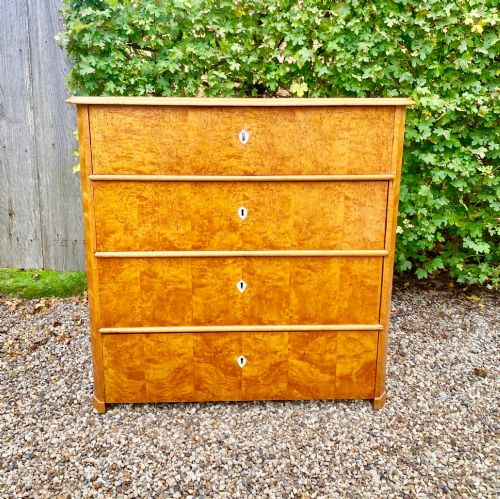
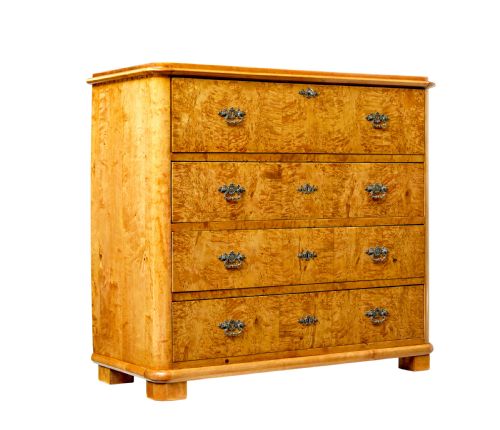
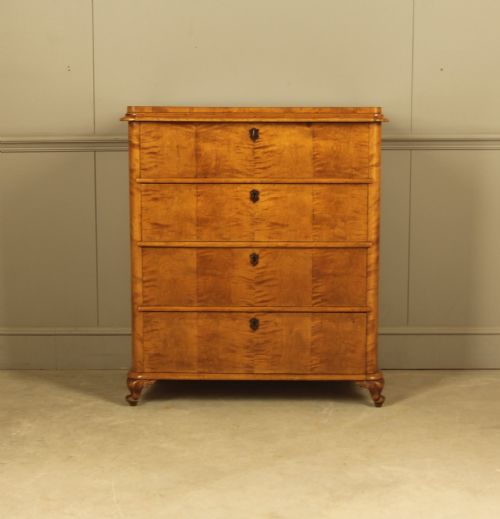
Craftsmen built these tall pieces predominantly using native northern woods, notably birch, pine, and specialised veneers such as burr birch, flame birch, and tiger birch. Selected sections display dramatic grain patterns that draw the eye across the vertical face of the drawers.
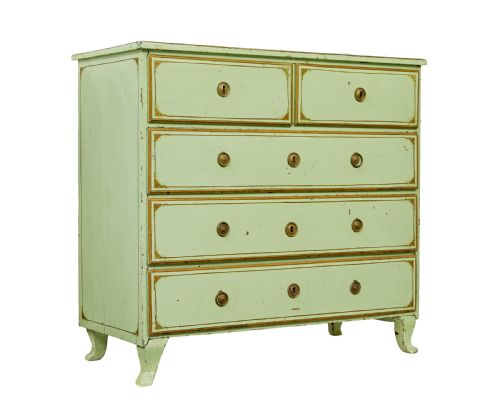
Surfaces frequently receive painted finishes, including hand-applied pigments in muted tones or simulated wood effects designed to mimic rarer timbers. Iron, brass, and bone details often provide functional hardware and subtle contrast against the pale wooden bodies.
Certain tall chests feature simulated birch paintwork, proving that clever nineteenth-century decorators enjoyed giving humble pine a very convincing timber makeover.
Distinctions in quality
Quality rests significantly on the selection and matching of wood veneers, where symmetrical flame or burr patterns elevate a simple chest into a polished display piece. Finer examples maintain crisp architectural mouldings and smooth drawer runners that operate without binding.
The integrity of the painted surface also dictates standard, with original or historically layered paint finishes holding greater depth than later commercial repainting. Structural joinery hidden within the carcass determines whether a tall chest remains rigid across centuries of daily use.
GEMLA FABRIKERS
The Antique Swedish Tallboy Glossary
- Birch
- A pale, hard northern European timber frequently used in solid form or sliced into decorative veneers for nineteenth-century furniture. It accepts polishing well and displays a subtle, uniform grain.
- Secretaire
- A cabinet or chest incorporating a fitted writing drawer with a drop-down front, concealing small compartments and pigeonholes inside. This dual-purpose form allowed owners to manage correspondence standing or seated.
- Biedermeier
- A dominant Central and Northern European design style spanning the nineteenth century, prioritising clean lines, utility, and minimal ornamentation over heavy historicism. It lets the natural beauty of woods like birch take precedence.
- Burr
- A growth distortion in timber that yields swirling, highly decorative grain patterns when sliced into veneer. Cabinet-makers reserved these prized sections for drawer fronts and primary visual surfaces.
- Bonnet top
- An arched or hooded upper superstructure atop a tall cabinet, providing extra interior height and architectural presence. This traditional form crowns tall storage pieces with curved distinction.
Antique Swedish Tallboy: Frequently Asked Questions
What is a swedish tallboy?
A swedish tallboy is a tall storage chest originating from Sweden, designed with stacked horizontal drawers to maximise vertical capacity while occupying minimal floor space.
These pieces rely on regional timbers like birch and pine, often finished with polished veneers or simple painted surfaces that suit traditional interiors.
How were these tall chests used?
Owners utilised these tall pieces primarily in bedrooms and dressing rooms to store folded linens, garments, and personal documents securely out of sight.
Some variants incorporate a secretaire drawer that folds down to serve as a compact writing desk for household correspondence.
How do I identify a nineteenth-century piece?
Nineteenth-century construction typically reveals hand-cut dovetail joints, solid timber drawer linings, and traditional timber fixings rather than modern metal screws.
Stylistic cues such as Biedermeier minimalism or Empire revival motifs further anchor these tall cabinets firmly within the eighteen-hundreds.
How should I live with one?
Position your tall chest against a stable wall where its vertical proportions can anchor the room without obstructing natural light or doorways.
Maintain consistent indoor humidity to protect delicate birch veneers and ensure the tall carcass remains straight and balanced over time.