






Carved Column Chest Drawers
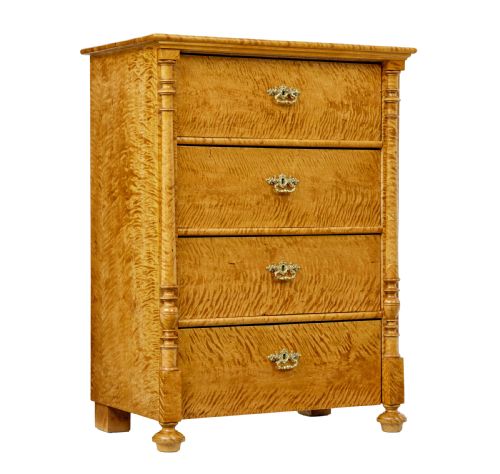
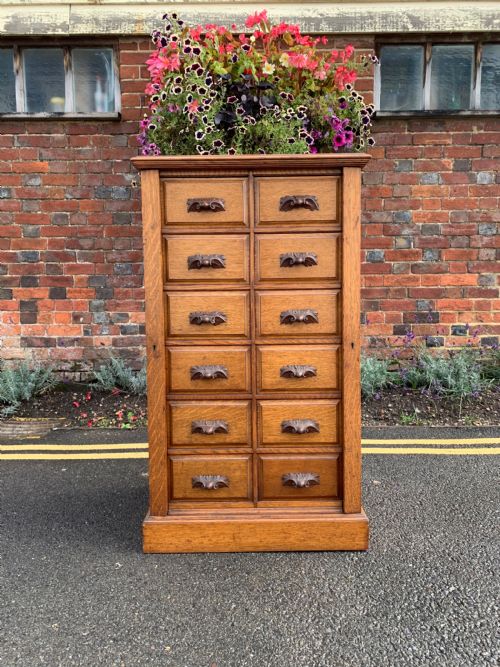
These carved column chest drawers bring architectural weight and rich timber grain to a room.
Carved Column Chest Drawers
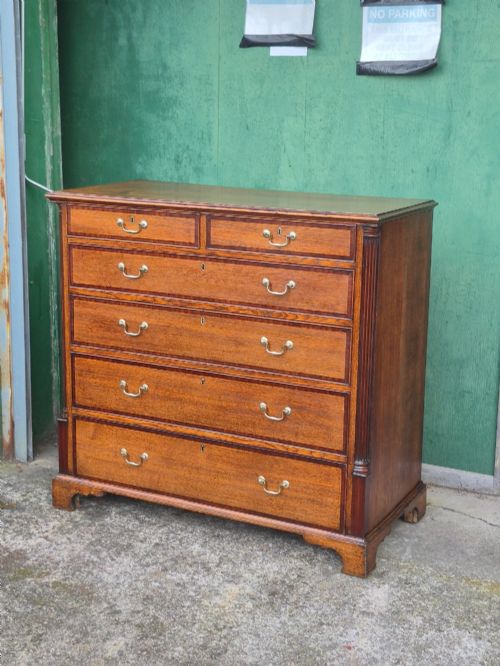
A carved column chest drawers combines sturdy storage with classical architectural pilasters flanking the drawer fronts. Pieces range from compact Wellington chests to grand Scotch designs and bow front forms, originating across the nineteenth century.
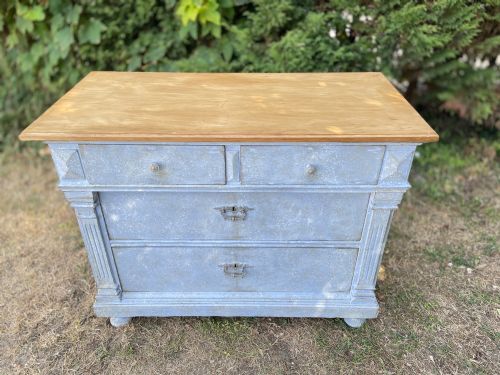
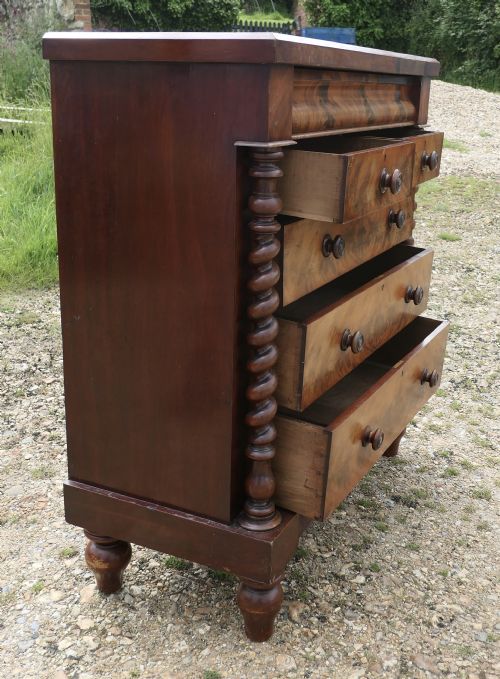
The selections span distinct periods including Regency, Victorian, and William IV, alongside continental expressions like Swedish tiger birch and French Gustavian styles. Buyers encounter both warm golden oak and deeply figured mahogany, often elevated by marble tops or flame mahogany veneers.
These sturdy timber pieces provide deep storage capacity while introducing strong vertical lines through their characteristic columns. They suit traditional bedrooms and studies equally well, functioning as both practical furniture and focal points.
Materials and construction methods
Cabinetmakers utilised robust primary timbers such as oak, mahogany, walnut, and pine, frequently applying flame mahogany veneer or tiger birch to visible drawer faces for enhanced visual depth. Brass hardware, including drop handles and escutcheons, provides functional contrast against the dark wood surfaces.
Structural integrity relies on traditional joinery methods that allow the dense hardwoods to expand and contract naturally over decades. Structural columns are typically carved directly from solid timber or applied as turned architectural pilasters flanking the main drawer stack.
Listings feature woods spanning mahogany, oak, walnut, pine, satin birch, and tiger birch, alongside marble and painted wood surfaces.
Distinguishing quality across examples
The distinction between standard utility pieces and finer examples rests on the selection of timber veneers and the crispness of the column carvings. Uniformity in grain matching across multiple drawer tiers signals careful workshop practice.
Superior hardware integration, heavy marble slabs fitted cleanly to the top, and well-executed secondary timbers like oak drawer linings separate workshop output. The depth of the colour and the condition of the polished finish determine the visual presence of each piece.
The Carved Column Chest Drawers Glossary
- Bow front
- A convex curved front facade that softens the rectangular profile of the cabinet. This shape requires advanced timber bending and fitting skills.
- Flame mahogany veneer
- A sliced timber sheet displaying a distinctive tongue-of-flame grain pattern derived from the branch junctions of the tree. It is applied to primary display surfaces for decorative effect.
- Pilaster
- A rectangular column projecting slightly from the main cabinet side, providing architectural framing for the drawers. On these chests, they are frequently carved.
- Tiger birch
- A light-colored timber featuring natural dark contrasting stripes resembling tiger striping. It is characteristic of northern European furniture making.
Carved Column Chest Drawers: Frequently Asked Questions
How do I care for a mahogany chest?
Maintain a stable indoor humidity level to prevent the dense timbers and applied veneers from splitting or warping over time. Apply a microcrystalline wax periodically to nourish the polished surface.
Avoid placing wooden furniture near direct heat sources or in strong sunlight, which can fade the natural colour of mahogany and walnut.
What is a Wellington chest?
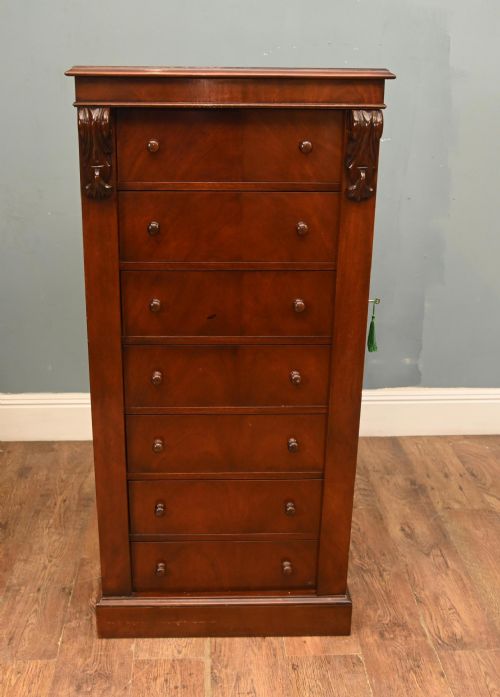
A Wellington chest is a tall, narrow storage unit characterised by a hinged locking stile on one side. This locking bar secures every drawer simultaneously when padlocked.
Originally designed for secure document storage, these pieces maximise vertical storage space while maintaining a compact floor footprint.
How are different periods identified?
Regency and Georgian examples often show lighter golden oak or refined mahogany with classical proportions. Victorian pieces tend toward heavier proportions, darker finishes, and bolder architectural columns.
Regional variations, such as Swedish tiger birch or French Gustavian styling, introduce paler palettes and painted wood surfaces distinct from British workshop traditions.
Can these chests fit modern bedrooms?
Their vertical orientation makes them practical for spaces where floor area is limited yet storage capacity remains essential. The deep drawers accommodate modern clothing while the flat top serves as a surface for lamps or mirrors.
Neutral timber tones allow these nineteenth-century pieces to anchor both contemporary and traditional interior design schemes.