





Antique Swag Mirror
An antique swag mirror brings classical proportion to a room through delicate ribbon, leaf or floral ornamentation suspended from a crest.
Antique Swag Mirror
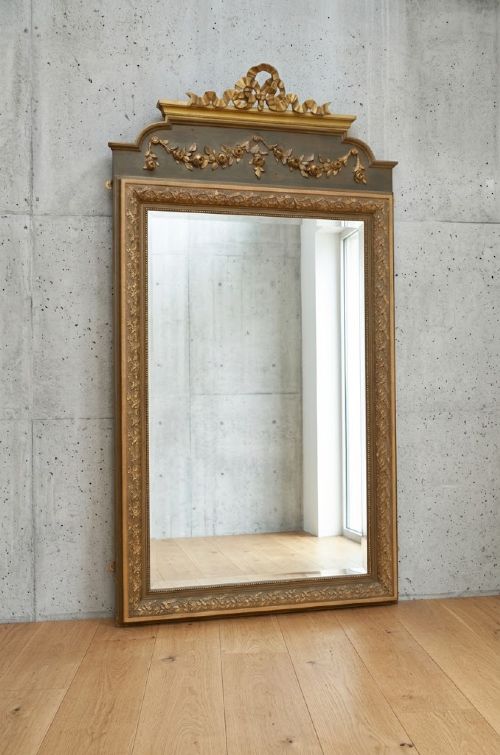
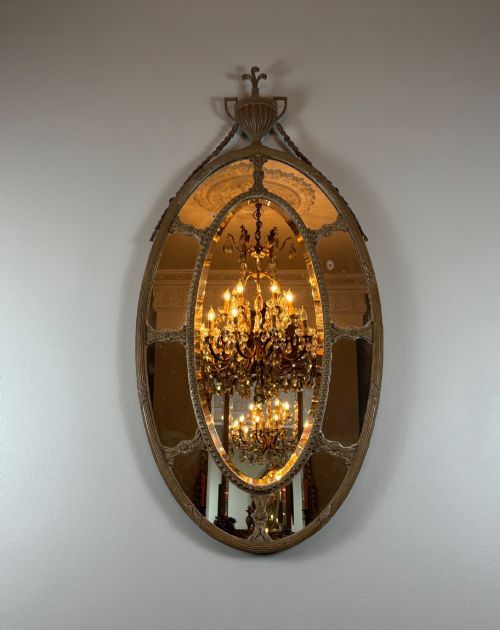
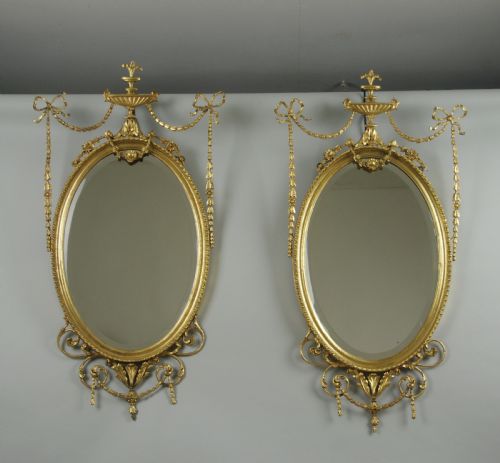
When you search for an antique swag mirror, you are looking at wall and overmantel looking glasses framed by neoclassical motifs, urns and hanging garlands. The pieces on this page span the Georgian period, the Victorian era and the turn of the twentieth century, reflecting revivals of Adam and Regency styles.
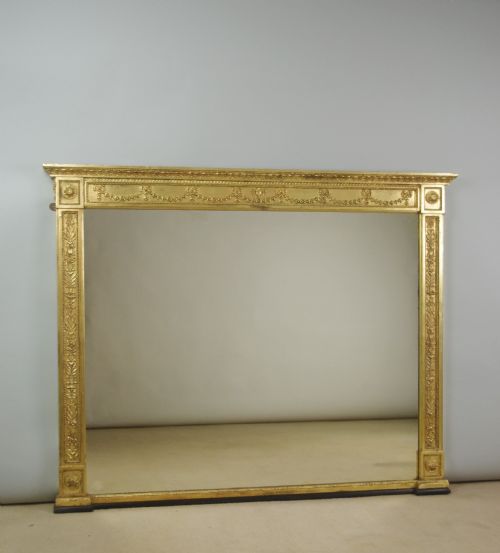
Most examples you meet here are Victorian interpretations of earlier neoclassical designs, executed in giltwood, gesso and composition material. They range from compact oval wall mirrors to large overmantels designed to anchor a principal room.
The forms vary between vertical wall hanging pieces with ribbon crests and broad horizontal overmantels featuring central urns flanked by drapery. These mirrors bring architectural discipline and reflective light into both period interiors and modern spaces.
How they were made
Makers constructed the primary frames of wood, frequently using giltwood, painted wood or ebonised wood to establish the structural shape. Delicate decorative details such as swags, ribbons and urns were often formed from composition or gesso applied over the wooden carcass.
The decorative surfaces received layers of size and gold leaf, or were painted and parcel-gilt to highlight the relief work. Glaziers set mirrored glass into these moulded frames, securing the plates from the reverse with timber backing boards.
Listings feature periods spanning from the Georgian era through Victorian revivals to the early twentieth century, utilising giltwood, gesso and composition.
What varies in quality
The distinction between tiers rests in the crispness of the moulded relief and the depth of the gilding. Hand-carved wooden ornament holds sharper definition than heavy composition pressings, while genuine gold leaf ages with a softer warmth than modern metallic paints.
Proportion and the integrity of the original glass plate also separate standard examples from finer ones. Mirrors retaining their early or original mirrored glass display gentle foxing and distortion that denote genuine age rather than replacement.
The Antique Swag Mirror Glossary
- Swag
- A decorative festoon of flowers, fruit or drapery suspended from two points. This classical motif forms the defining characteristic of the frame ornament.
- Gesso
- A mixture of gypsum or chalk and size used as a ground for gilding and moulding. Artisans built up intricate relief details on the frame before applying gold leaf.
- Composition
- A moulded material made from whiting, resin, glue and oil. Workshops pressed this substance into metal moulds to create repetitive decorative swags and urns quickly.
- Overmantel mirror
- A large horizontal looking glass designed to hang above a fireplace mantelpiece. These pieces often feature extended frames incorporating urn and swag assemblies.
- Giltwood
- Timber coated with gold leaf or gold paint. The underlying wood provides a sturdy support for the reflective metallic finish.
Antique Swag Mirror: Frequently Asked Questions
Where should I hang an antique swag mirror?
These mirrors suit placement above a mantelpiece, a console table or a sideboard where their vertical or horizontal proportions can anchor the surrounding wall space. They work effectively in both traditional reception rooms and contemporary interiors.
Ensure the wall construction supports the weight of the frame, particularly for large overmantel pieces incorporating heavy wooden carcasses and plaster mouldings.
How do I date an antique swag mirror?
Dating relies on examining the construction of the timber backing, the composition of the frame materials and the style of the revival decoration. Georgian pieces show hand-carved elements, whereas Victorian and Belle Epoque examples often incorporate moulded composition ornament.
The backing boards, screw types and the condition of the mirrored glass also provide physical evidence of the period of manufacture.
Are these mirrors fragile?
The composition and gesso ornaments on the frames can be susceptible to chipping or loss if subjected to knocks or excessive moisture. Handling requires care, particularly around the delicate hanging swags and ribbon crests.
Normal domestic environments suit these pieces well provided they stay away from direct heat sources and damp walls.
What is the difference between Adam style and Regency style?
Adam style revival pieces draw on eighteenth-century neoclassical symmetry, featuring refined urns, delicate drapery and symmetrical leaf scrolls. Regency style pieces often display bolder architectural lines and heavier gilded framing.
Both styles utilise swag motifs, but the execution reflects the distinct aesthetic preferences of their respective nineteenth-century revival periods.