



Black Parcel Gilt Mirror
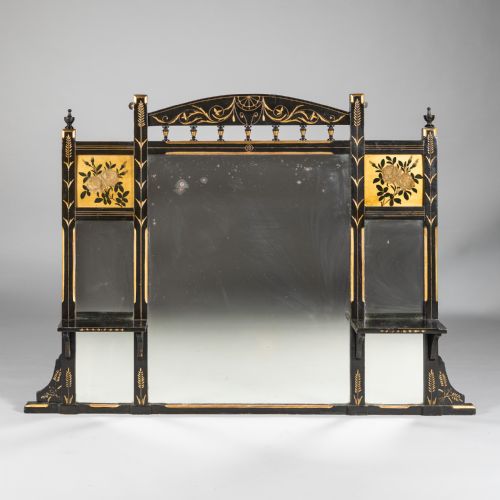
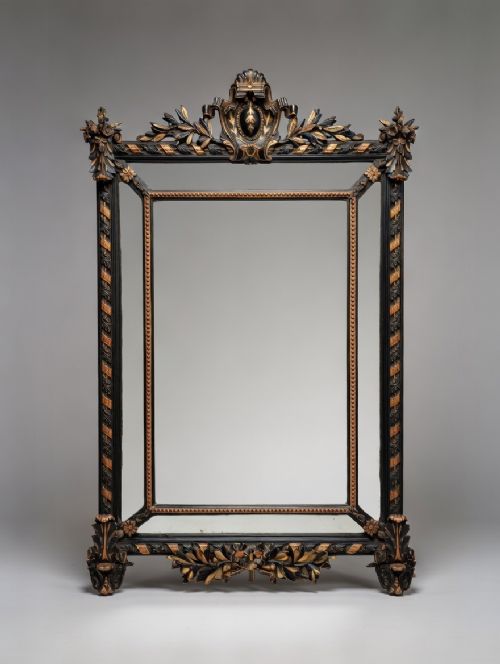
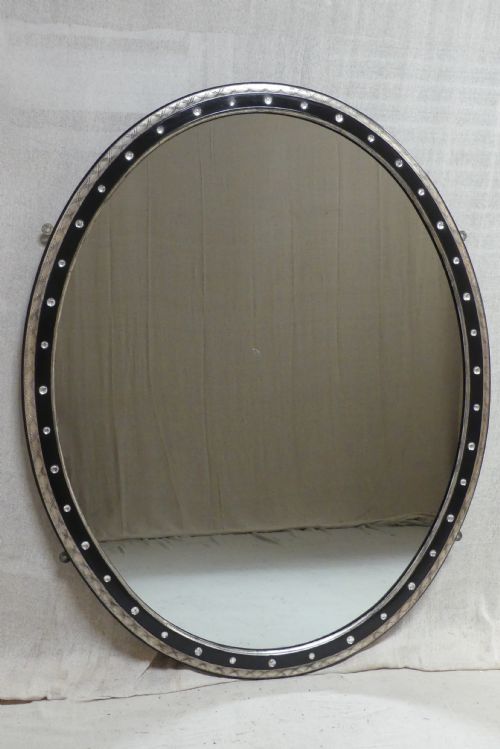
A black parcel gilt mirror combines deep ebonised wooden frames with bright touches of gold leaf, creating a striking contrast that anchors a room.
Black Parcel Gilt Mirror
A black parcel gilt mirror is defined by its dark ebonised or japanned surface paired with partial gilding, highlighting carved details. When searching for a black parcel gilt mirror, buyers encounter grand Victorian overmantle pieces and smaller wall-hanging formats dating from the nineteenth century.
The dominant forms on this page include large arch-top overmantle mirrors, wide rectangular frames, and oval wall mirrors. These pieces date across the nineteenth century, spanning the eighteen sixties to the eighteen nineties under styles such as Victorian and the Aesthetic Movement.
Materials and construction methods
Frames are constructed from carved wood, often utilising composition material and gesso to build up intricate surface ornamentation. Artisans applied ebonised paint or japanning to achieve the deep black ground across the wooden structure.
Gold leaf or giltwood was then applied selectively to raised carvings, mouldings, and inner bezels. This parcel-gilt technique draws the eye to specific decorative motifs against the dark background.
Nineteenth-century makers ensured these dark frames caught every flicker of candlelight by placing gold leaf only where the shadows could not reach.
Judging quality and craftsmanship
Quality rests in the crispness of the carved wood and the depth of the ebonised finish. Superior examples display hand-carved ornamentation rather than moulded composition alone, showing precision in every botanical or classical scroll.
The application of the gold leaf dictates visual impact. Better pieces demonstrate skilful parcel gilding that catches the light naturally, whereas lesser examples can appear heavy-handed or flat in their contrast.
The Black Parcel Gilt Mirror Glossary
- Parcel Gilt
- A decorative technique where only specific parts of an object are covered in gold leaf. This method leaves the underlying ebonised wood exposed to create a contrasting two-tone effect.
- Ebonised
- Wood treated with stain, dye, or paint to imitate expensive ebony. This dark finish provides the primary backdrop for nineteenth-century mirrors.
- Gesso
- A plaster-like mixture applied to wood frames to create a smooth surface for carving and gilding. It allows for intricate relief details that hold gold leaf securely.
- Japannan
- A European imitation of East Asian lacquer work used on wooden furniture and mirror frames. It produces a glossy black finish popular in nineteenth-century decorative arts.
- Overmantel Mirror
- A large mirror designed to hang above a fireplace mantelpiece. These grand rectangular or arch-top pieces frequently dominate the wall space of Victorian interiors.
Black Parcel Gilt Mirror: Frequently Asked Questions
Where should I hang a large overmantle mirror?
These large mirrors are traditionally hung directly above a fireplace mantelpiece to reflect light and anchor the room's proportions.
They also function well on prominent living room walls where their dark frames can create a striking focal point.
How do I date a nineteenth century mirror?
Dating relies on examining the frame style, construction techniques, and materials such as ebonised wood or gesso. Victorian pieces often combine neoclassical revival motifs with heavy proportions typical of the period.
Looking at the backboards, fixings, and the clarity of the glass can also provide additional clues to the age of the piece.
What is the difference between ebonised and japanned finishes?
Ebonised finishes involve staining or painting wood directly to achieve a uniform black surface resembling ebony. This technique was widely utilised during the Victorian era.
Japanning is a specific type of lacquer finish that mimics Asian lacquered wares, often featuring a harder, glossier sheen built up in layers.
Are these mirrors suitable for modern interiors?
The bold contrast of black ebonised wood and gold leaf bridges period and contemporary aesthetics easily. Their clean monochrome lines suit minimalist spaces as well as traditional rooms.
Placing one opposite a window maximises natural light while adding a strong decorative element to the interior.