


Antique Stoneware Jar
These antique stoneware jar examples bring dense utility and robust historic character into modern spaces.
Antique Stoneware Jar
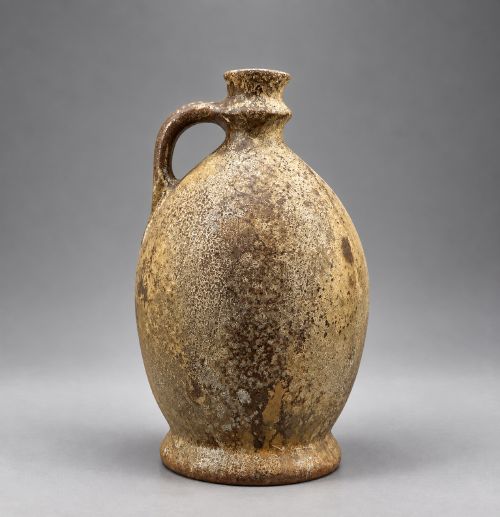
When you search for an antique stoneware jar, you encounter heavy utilitarian vessels designed for storage, preservation, and everyday provisions across past centuries. The selection encompasses salt-glazed containers, spirit barrels, tobacco jars, and confit pots originating from English, French, German, and Asian workshops.
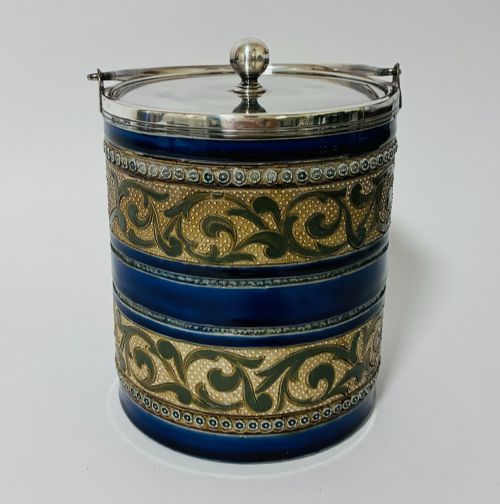
Most pieces you meet on this page date from the nineteenth century, reflecting the industrial expansion of durable ceramics used for household goods, apothecary supplies, and tavern provisions. Forms range from utilitarian pouring jugs and oil containers to decorated biscuit barrels fitted with silver plate.
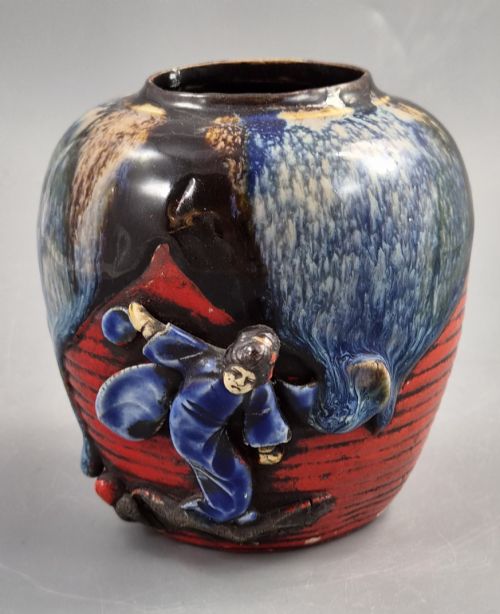
Alongside standard kitchen and cellar storage, the evidence includes specialised forms such as Chinese celadon pieces, Japanese studio vases, and heavy Victorian planters. Each item retains the distinct marks of its original domestic or commercial service.
How they were made
Potters shaped these vessels from dense clay bodies fired at high temperatures to achieve vitrification, ensuring the walls remained impermeable to liquids. Many English and European pieces utilise salt glazing, where salt thrown into the kiln during firing creates a characteristic textured surface.
Some items feature applied cream sprigged ornaments or hand-applied glazes, ranging from simple green lead glazes on French terracotta to deep blue flambé effects. Metal mounts in silver plate and brass frequently appear on nineteenth-century biscuit barrels and tobacco jars to finish the rims and lids.
The listings on this site span multiple centuries, incorporating English, French, German, and Asian origins in materials ranging from salt-glazed stoneware to terracotta.
What varies in quality
Quality in these pieces rests upon the crispness of the moulding, the control of the kiln firing, and the sophistication of the glaze finish. Exemplary items display precise sprigged relief work and even surface textures without excessive distortion from the heat of the kiln.
The presence of maker marks, detailed inscriptions, or named tavern origins elevates the historical interest of a container. Furthermore, original matching lids and uncompromised metal hardware contribute significantly to the integrity of finished table and display pieces.
Doulton Lambeth·Royal Doulton·Wedgwood·Makuzu Kozan II·C And A Painter·L Lumley
The Antique Stoneware Jar Glossary
- Stoneware
- A robust ceramic type fired at high temperatures until the clay body vitrifies and becomes non-porous. It provides a durable surface impervious to moisture without requiring complex glazing.
- Salt glaze
- A surface finish achieved by throwing common salt into the kiln at the height of the firing. This process vaporizes the salt, reacting with the silica in the clay to produce an orange-peel texture.
- Sprigged
- An ornamental technique where moulded clay motifs are applied directly to the surface of an unfired vessel before glazing. It creates low-relief decorative patterns common on English jugs and biscuit barrels.
- Confit pot
- A traditional French earthenware or terracotta storage vessel, usually partially glazed, used historically for preserving meats and fats. They are recognised by their rounded bodies and dipped glaze lines.
- Bartmann jug
- A German stoneware drinking or storage vessel featuring a bearded mask moulded on the neck. Also known as a bellarmine, these pieces date from early European manufacturing periods.
Antique Stoneware Jar: Frequently Asked Questions
What were antique stoneware jars used for?
These sturdy vessels primarily served practical functions in domestic kitchens, cellars, and commercial taverns. They held liquids such as gin, whiskey, vinegar, and milk, alongside dry goods like tobacco, biscuits, and preserved foods.
Over time, many utilitarian containers transitioned into decorative display items or were repurposed as planters and table lamps once their original storage purpose ended.
How can I tell the age of a jar?
Dating relies on observing manufacturing techniques, material composition, and stylistic markers recorded across different production periods. Early European pieces often display handmade irregularities and traditional salt glazing, while nineteenth-century factory items exhibit standardised moulding and maker marks.
Comparative analysis with documented examples from specific potteries helps narrow down the decade or century of origin for unmarked pieces.
Can I use them for food storage?
Historic containers often absorbed contents over centuries of use and may contain residual materials within unglazed interior pores. Additionally, older glazes on some antique ceramics can contain trace elements unsuitable for modern food consumption.
It remains best to treat these pieces as decorative objects, planters, or dry display items rather than using them for active food preparation or storage.