


Vintage Stoneware Bottle
These vintage stoneware bottle pieces are heavy utility vessels holding spirit, wine, and advertising history.
Vintage Stoneware Bottle
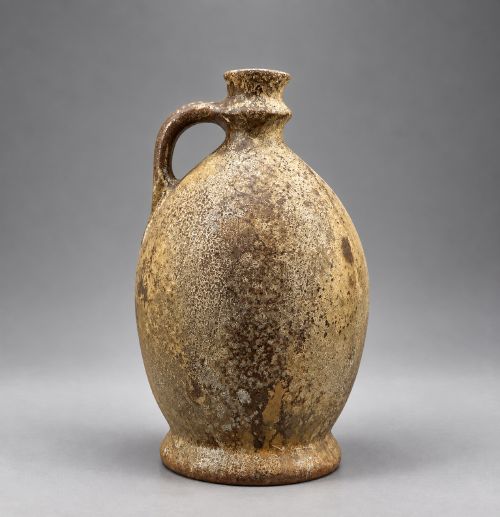
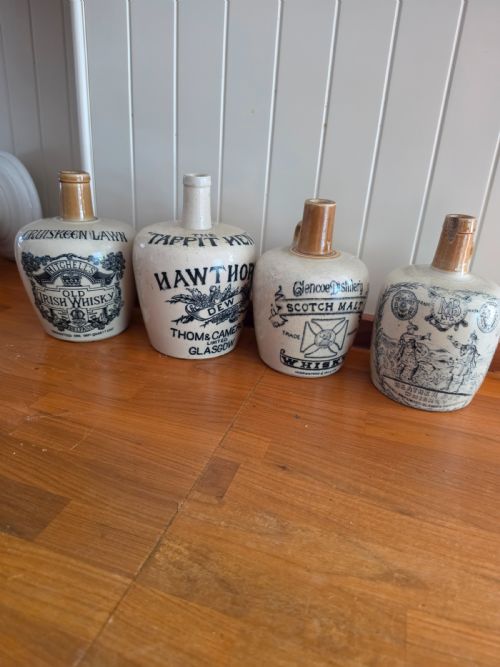
A vintage stoneware bottle is a dense ceramic vessel designed originally for storing spirits, wine, oil, or household provisions. The examples seen here span from the eighteenth century through to the mid-twentieth century, encompassing utilitarian flagons, whisky flasks, and decorative vases.
Most pieces encountered on this page belong to the nineteenth century, often bearing salt glaze surfaces or brown glazes associated with distilleries and merchants. Alongside utilitarian flagons, the selection includes decorative vases and spirit decanters from periods like the Victorian era, Art Nouveau, and Art Deco.
How they were made
Potters utilised heavy stoneware clay fired at high temperatures to achieve a vitrified, impermeable body suitable for holding liquids without a modern interior seal. Salt glaze was frequently applied by throwing common salt into the kiln during firing, creating a distinctive pitted texture on the surface.
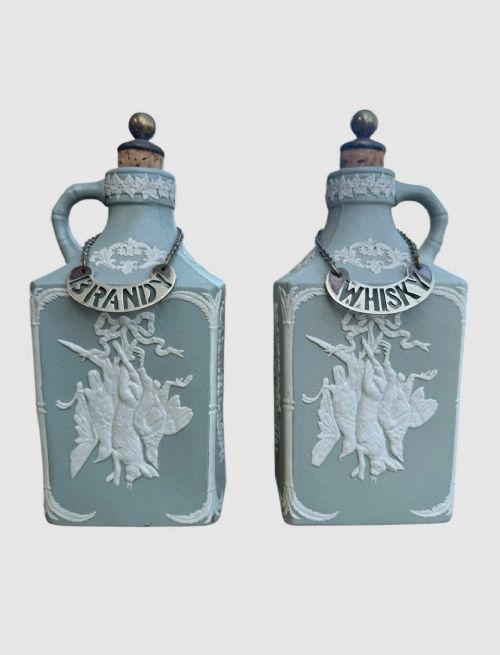
Other pieces feature applied brown or lustrous glazes, sometimes incorporating detailed moulded motifs, golf scenes, or metallic lustre finishes. Cork stoppers and metal or silver plate elements occasionally complete the construction of flagons and decanters.
A solitary nineteenth-century whisky flask preserves a detailed golfing motif, proving that early drinkers liked their sports alongside their spirits.
What varies in quality
Quality in these vessels is dictated by the crispness of moulded details, the evenness of the glaze, and the presence of specific advertising or artistic motifs. Early German salt-glazed bottles demonstrate high craftsmanship through hand-formed loop handles and incised numbering, while later pieces rely on factory moulding.
Artistic attribution also separates standard utilitarian wares from studio productions, such as pieces bearing recognisable factory marks or specific designer signatures. The sophistication of the glaze effect, from simple brown slips to complex lustre finishes, marks the distinction between everyday containers and display pieces.
Royal Doulton·Royal Lancastrian·Roger Guerin·Port Dundass
The Vintage Stoneware Bottle Glossary
- Salt Glaze
- A glossy, slightly textured finish created by introducing salt into the kiln at the peak firing temperature. This chemical reaction forms a durable silicate coating over the stoneware body.
- Flagon
- A large vessel with a handle and sometimes a spout, traditionally used for holding liquids such as whisky or wine. Many surviving examples served commercial merchants and distilleries.
- Jasperware
- A type of fine stoneware pioneered by Josiah Wedgwood, characterised by a matte unglazed surface often featuring applied contrasting ornamentation. It appears on decorative spirit flagons.
- Kingsware
- A specialised brown-glazed pottery introduced by Royal Doulton, typically decorated with historical or sporting scenes in relief. Golfing motifs are a notable example within this grouping.
Vintage Stoneware Bottle: Frequently Asked Questions
What were vintage stoneware bottles used for?
These robust vessels primarily served to transport and store liquids such as whisky, wine, oil, and household spirits before the widespread use of glass. Distilleries and merchants relied on their durable, impermeable nature to keep contents secure during transit.
Over time, many of these utilitarian containers transitioned into decorative items, whilst others were produced purely as ornamental vases or decanters by major potteries.
Are all stoneware bottles waterproof?
Stoneware is fired at very high temperatures, causing the clay body to vitrify and become naturally non-porous and water-resistant. This made them ideal historical containers for liquids.
Even when used today as decorative vases or display pieces, most retain their original capability to hold water safely without interior leakage.
How should I display these bottles at home?
Their earthy tones and varied textures suit rustic, industrial, or traditional interior settings, whether grouped together or displayed singly as statement vases. Placing them where natural light can catch salt-glazed surfaces or metallic lustre highlights their tactile qualities.
Because of their heavy stoneware construction, they provide stable bases for floral arrangements or stand securely on open shelving.