


Antique Stoneware Cachepot
These antique stoneware cachepot pieces bring robust historic character to interior planting, offering tactile surfaces shaped across the nineteenth and early twentieth centuries.
Antique Stoneware Cachepot
An antique stoneware cachepot serves as a decorative outer vessel designed to house potted plants inside the home. These pieces emerge primarily from the nineteenth century and the early twentieth century, spanning Victorian, Arts and Crafts, Regency, and Meiji aesthetics.
The selections available here range widely in form and origin, appearing predominantly as jardiniere vessels and planters. British potteries dominate the offerings, alongside notable examples from continental Europe and Japan.
How They Were Made
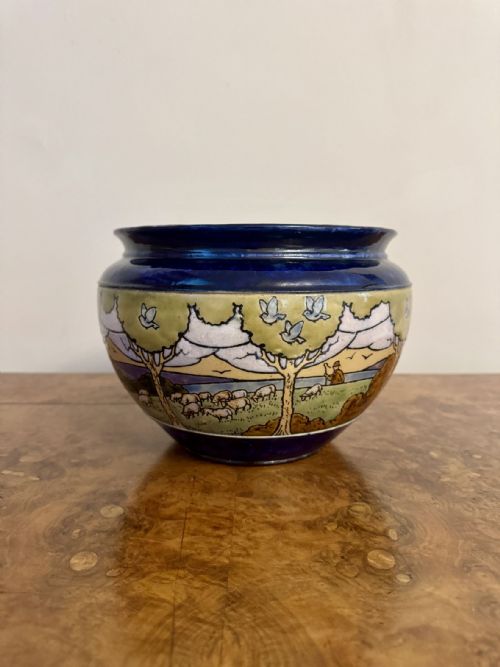
Potters shaped dense clay bodies into heavy vessels, often employing salt glazing to produce a durable, textured exterior. Artisans applied coloured enamels and raised patterns directly onto the stoneware surface.
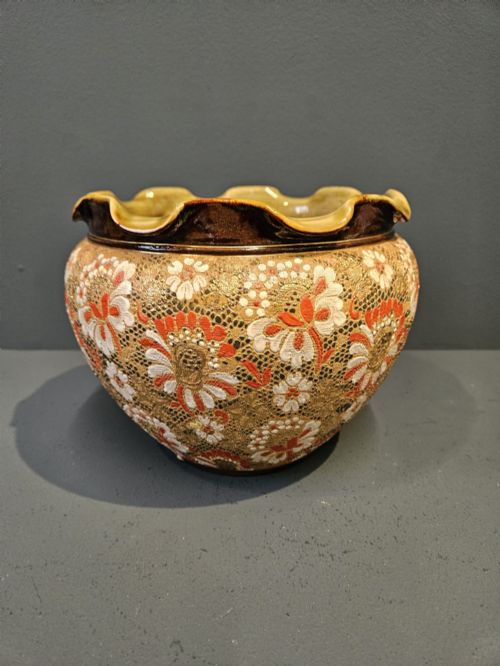
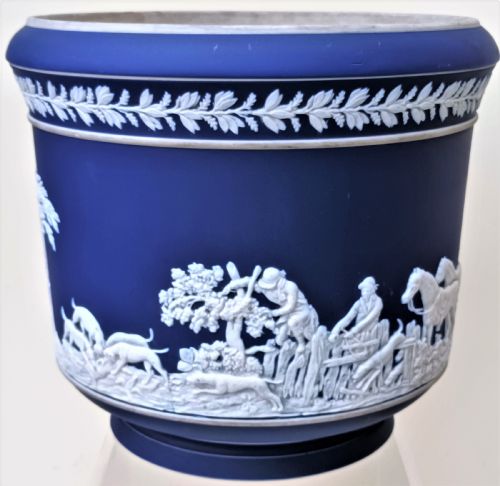
Specialised techniques such as Slaterware utilised textured lace pressed into damp clay before firing. Other pieces incorporated fine Jasperware reliefs applied to contrasting ceramic grounds.
Some Victorian potters pressed actual lace into damp clay before firing, leaving permanent textile textures frozen in stone.
What Varies in Quality
Excellence in these vessels rests upon the crispness of the modelled relief and the control evident in the glaze application. Finer examples display precise hand-tooling and deliberate decorative planning rather than monotonous repetition.
The reputation of the maker and the sophistication of the surface ornamentation elevate certain pieces above standard utility wares. Superior specimens maintain structural integrity alongside well-preserved surface textures and colour tones.
Royal Doulton·Doulton Lambeth·William Adams And Sons·Doulton Burslem·Enoch Wood And Sons·Makuzu Kozan II
The Antique Stoneware Cachepot Glossary
- Cachepot
- A decorative container designed to conceal an ordinary flowerpot. The term translates from French as hiding pot.
- Jardiniere
- A large ornamental pot or stand for holding plants or flowers. These vessels form the majority of the current selection.
- Slaterware
- A ceramic decorative technique involving lace or fabric pressed into damp clay. This method created textured patterns resembling woven textiles before firing.
- Salt glaze
- A vitreous coating of glossy, translucent and slightly textured texture. This finish results from throwing common salt into the kiln during high-temperature firing.
Antique Stoneware Cachepot: Frequently Asked Questions
What is an antique stoneware cachepot used for?
These vessels were originally created to hold potted plants indoors, protecting tabletops and interior furnishings from water drainage. They functioned as decorative indoor planters rather than garden pots.
Today, they continue to serve their original purpose while functioning as sculptural decorative objects in domestic interiors. Collectors often display them empty on pedestals or tables to highlight their surface textures.
How do I care for my cachepot?
Stoneware is remarkably durable, but historic pieces require gentle handling to preserve their glazes and surface details. Use a soft, dry cloth for dusting and avoid harsh chemical cleaners.
When using them for live plants, place a smaller plastic pot inside with a saucer to catch excess water. This prevents moisture from seeping into unglazed interior clay and protects the historic material.
How do I identify a Victorian piece?
Victorian examples often display characteristic period traits such as rich cobalt blues, neoclassical motifs, or dense Arts and Crafts incised patterns. Look for the weight and density typical of nineteenth-century ceramic production.
Maker marks and impressed registry numbers on the base often provide definitive dating clues. Comparing the decorative style against known Victorian design movements helps confirm the era.
Are these pots waterproof?
Most stoneware and glazed ceramic vessels are effectively water-resistant due to the vitrification process during high-temperature firing. However, historic pots may have minor porosity or unglazed interior surfaces.
It remains wise to use an internal liner or saucers when housing living plants to prevent any moisture seepage. This protects both the antique ceramic body and your furniture.