


Earthenware Flower Pot
An earthenware flower pot brings organic warmth to a room, offering a tactile home for indoor planting.
Earthenware Flower Pot
An earthenware flower pot encompasses a range of planting vessels designed to hold greenery, appearing across various historical periods including the Georgian and Victorian eras. These items serve a practical horticultural purpose while acting as decorative accents for interiors and conservatories.
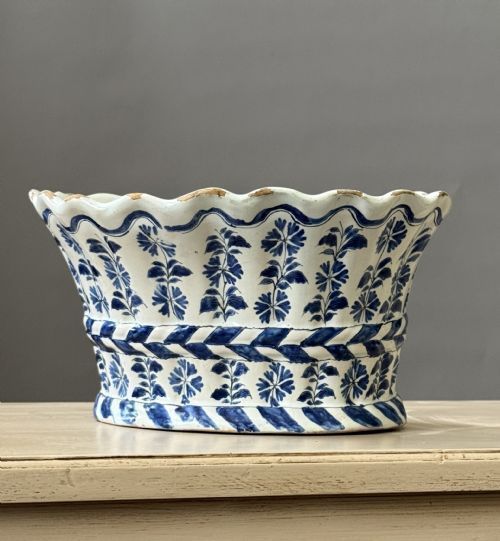
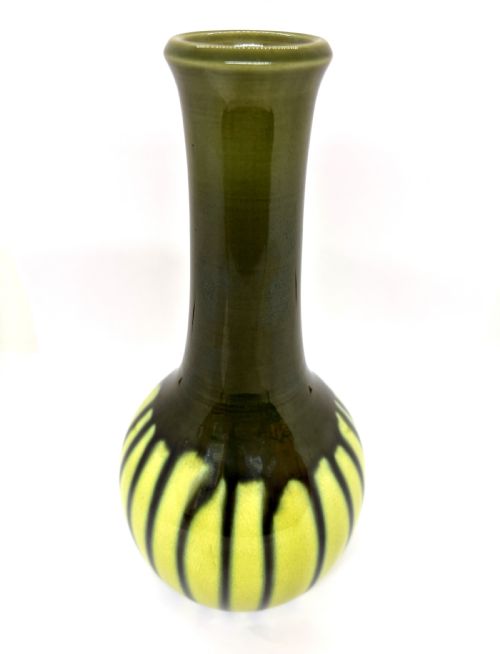
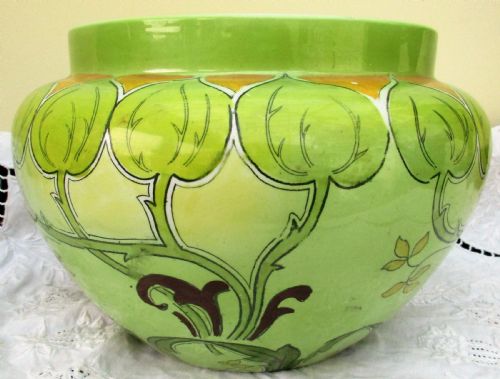
Buyers encountering this selection will frequently find items styled as jardinieres, cachepots, and planters alongside related ceramic forms like vases and bough pots. Originating from English, Scottish, and Japanese traditions, the pieces span stylistic expressions from Delftware and Arts and Crafts to Art Nouveau and Majolica taste.
The assortment on this page reflects traditional ceramic crafts produced across the eighteenth, nineteenth, and early twentieth centuries. Each vessel demonstrates the utilitarian design and aesthetic preferences of its specific period of manufacture.
Materials and production methods
Makers shaped these pots primarily from earthenware and stoneware, utilising clay bodies fired to create durable vessels suited for holding soil and moisture. Many examples receive protective coatings including glazes, tin-glazes, and enamel finishes to seal the porous ceramic material.
Decorative surfaces often incorporate colourful glazes and metallic lustre applications that catch the light and enhance the visual depth of the modelled forms. Potteries employed moulding, throwing, and hand-finishing techniques to achieve the sculptural details seen on cache pots and jardinieres.
Materials represented across the selection include earthenware, stoneware, tin-glazed earthenware, and metallic lustre finishes.
Distinctions in quality and execution
The standard of a piece rests in the crispness of the modelling and the control demonstrated during the firing and glazing processes. Superior examples display balanced proportions and cleanly applied decorative schemes that remain faithful to their stylistic period.
Artistic collaboration elevates certain works, particularly when notable designers or specific potteries contribute to the conception and execution of the vessel. The complexity of the glaze work and the refinement of any transfer-printed or hand-painted details further separate standard production items from distinguished studio pieces.
Burmantoft's Pottery·Makuzu Kozan II·Enoch Wood & Sons·Royal Worcester·Charles Noke for Royal Doulton
The Earthenware Flower Pot Glossary
- Earthenware
- Porous pottery fired at relatively low temperatures, requiring a glaze to become watertight. It forms the baseline material for traditional flower pots and garden ceramics.
- Jardiniere
- A large ornamental pot or stand for holding flowers or plants, typically designed to sit on the floor or a prominent tabletop. These pieces often feature substantial decorative ornament.
- Cachepot
- An ornamental flower pot cover designed to conceal a plain inner plant pot without a drainage hole. The term translates from French as hiding pot.
- Majolica
- Pottery decorated with opaque tin glazes and bright colours, popular during the nineteenth century for vibrant ornamental wares. It imitates earlier Italian Renaissance majolica techniques.
- Bough pot
- A vessel specifically constructed to hold cut branches and greenery for interior decoration, commonly produced in eighteenth-century Delftware.
Earthenware Flower Pot: Frequently Asked Questions
What is an earthenware flower pot used for?
These vessels were historically utilised to house growing plants, display cut flowers, or decorate interior spaces like parlours and conservatories. Their porous clay construction allowed air and moisture to pass through to the plant roots.
Over time, many of these pots transitioned into purely decorative objects, serving as cachepots to hide plain nursery containers or standing alone as sculptural mantel and table ornaments.
How do I care for an antique flower pot?
Antique ceramic vessels require gentle handling and protection from extreme temperature fluctuations that can stress old glazes. Cleaning should involve only a soft, dry cloth to remove dust without damaging the surface.
If used for live plants, placing a modern plastic liner inside prevents moisture from seeping into porous antique earthenware and causing structural damage to the historic ceramic body.
How do I distinguish Victorian pieces from Georgian ones?
Georgian pieces often display restrained lines, tin-glazed earthenware bodies, or simple blue and white transfer printing characteristic of the eighteenth and early nineteenth centuries. Forms tend to focus on traditional utility and classical proportions.
Victorian examples frequently embrace heavier ornamentation, vibrant Majolica glazes, or flowing Art Nouveau motifs that reflect the industrial expansion and eclectic design revivals of the later nineteenth century.
What distinguishes a jardiniere from a standard planter?
A jardiniere is typically an elaborate, highly decorative vessel meant to stand prominently in a room, often accompanied by a matching pedestal or stand. These pieces emphasise artistic appearance over simple garden utility.
Standard planters and cachepots generally focus on straightforward containment of greenery, featuring more modest forms while still incorporating decorative glazes or moulded reliefs.