

Antique Stick Holder
An antique stick holder corrals walking canes, umbrellas and hall furniture with sturdy utility and period grace.
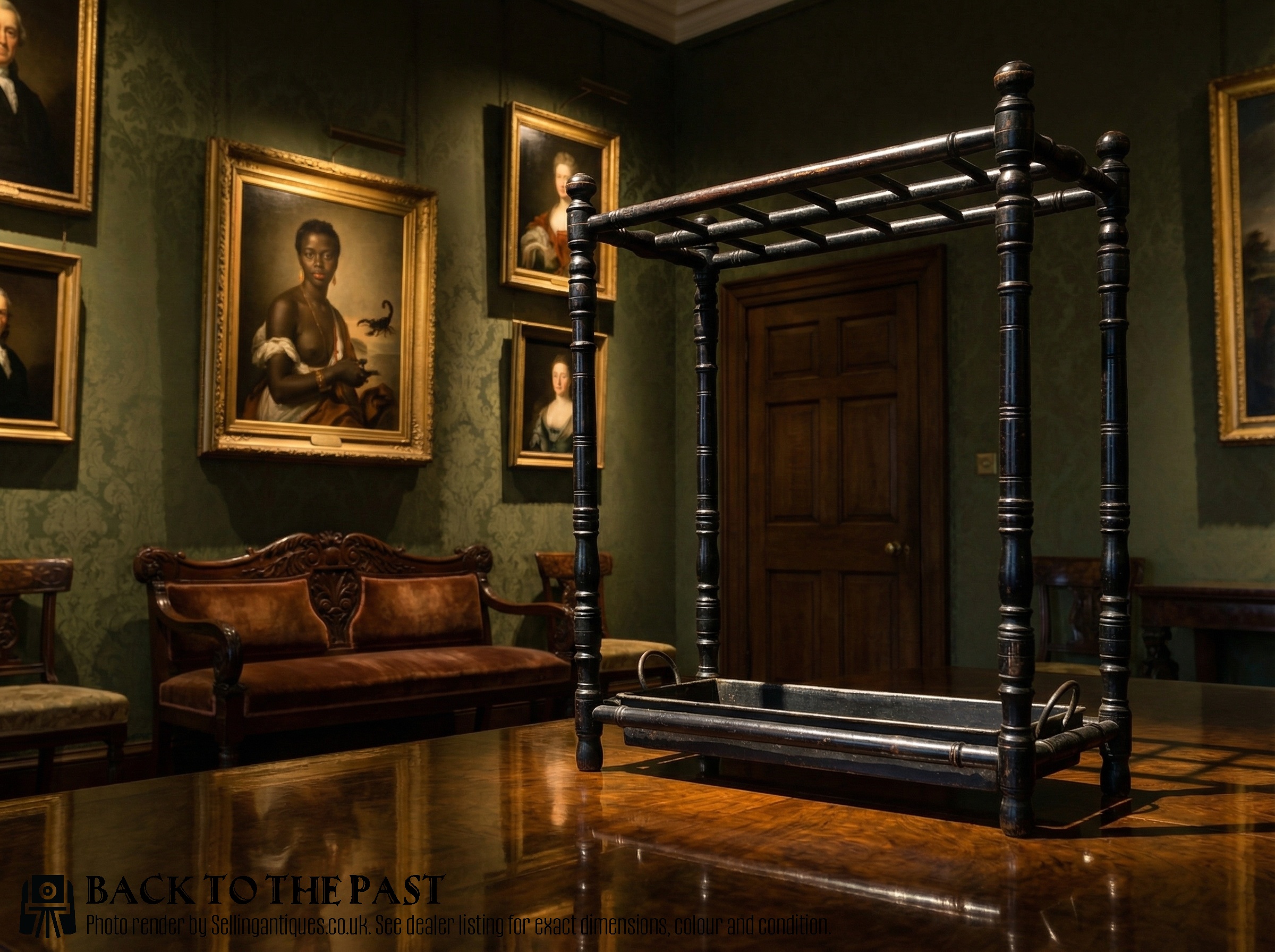
Antique Stick Holder
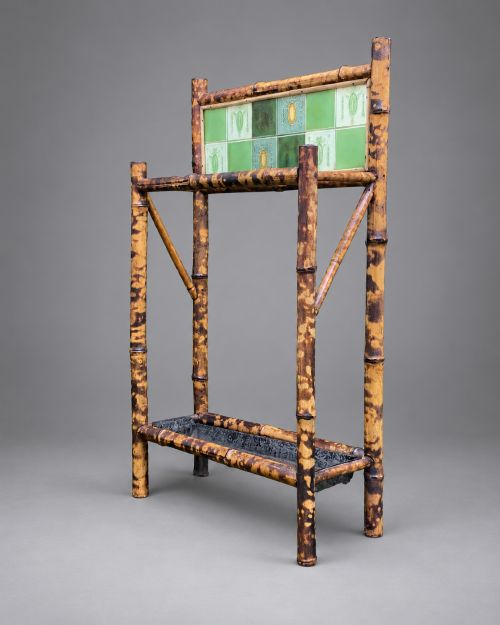
An antique stick holder spans umbrella stands, hall stands and fitted barrel forms designed to receive wet walking sticks and parasols upon entry. These pieces accommodate long handles and heavy timber frames intended for domestic hallways.
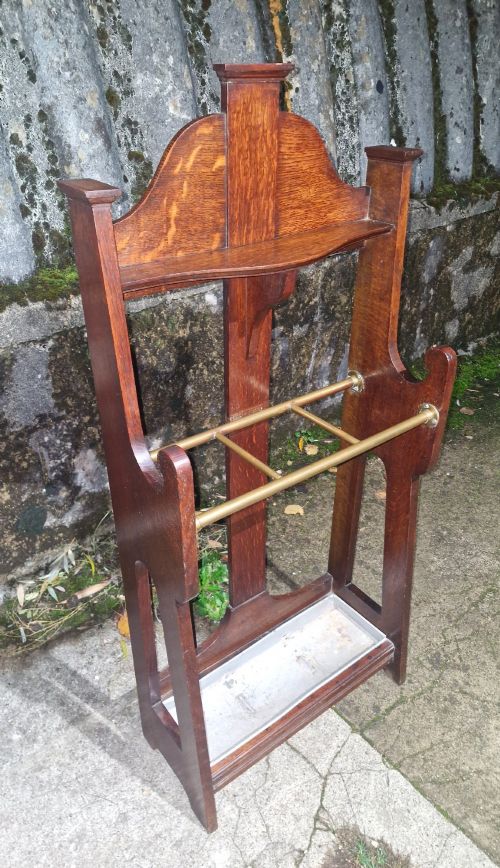
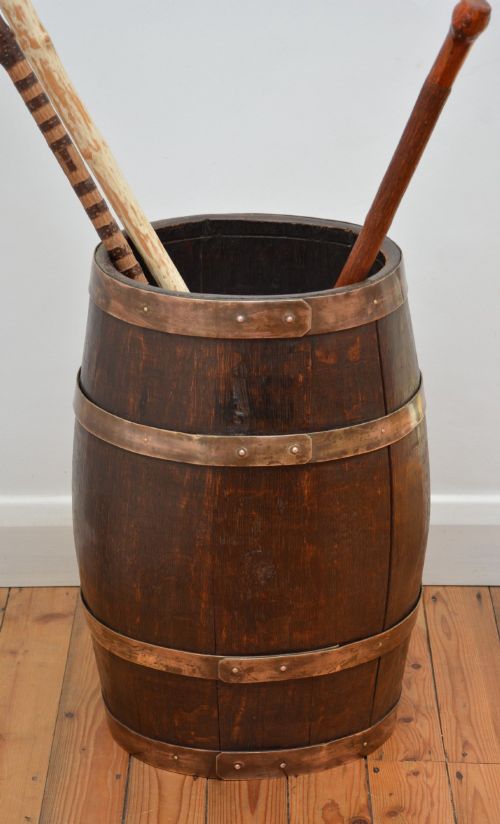
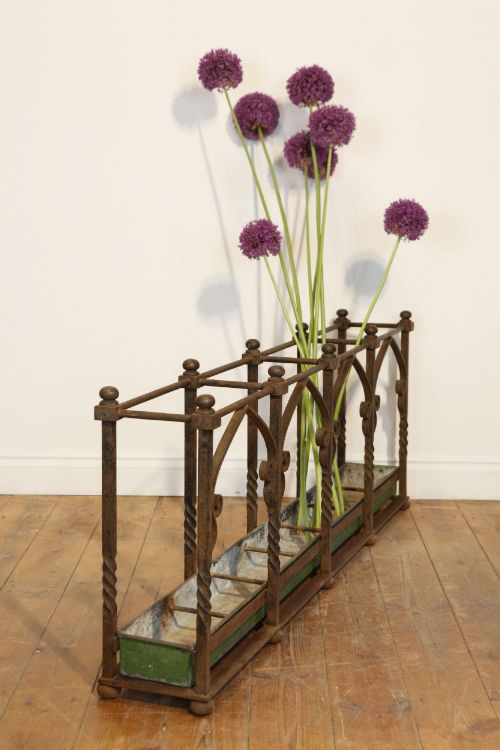
The selection here draws heavily upon Edwardian, Victorian and nineteenth-century examples executed in oak, cast iron and brass. Many take the form of coopered barrels bound in metal or open-frame Arts and Crafts designs with internal drip trays.
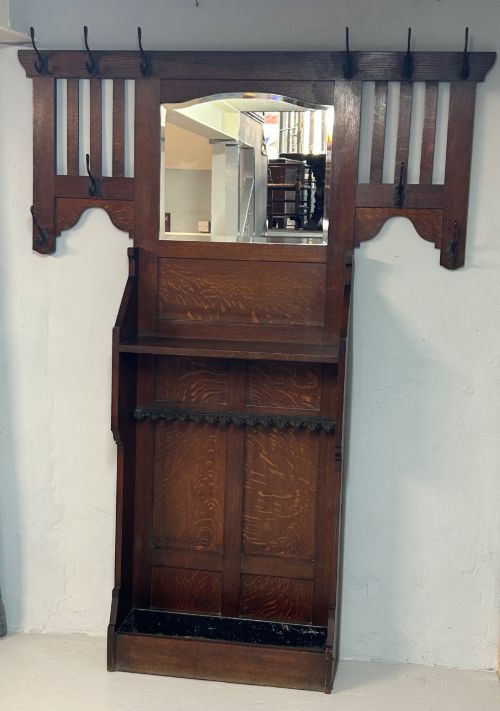
Makers occasionally produced larger hall furniture combining coat hooks, mirrors and stick holders into a single unit. Alongside these, buyers find novelty cocktail stick sets and smaller desk accessories that share the same descriptive terminology.
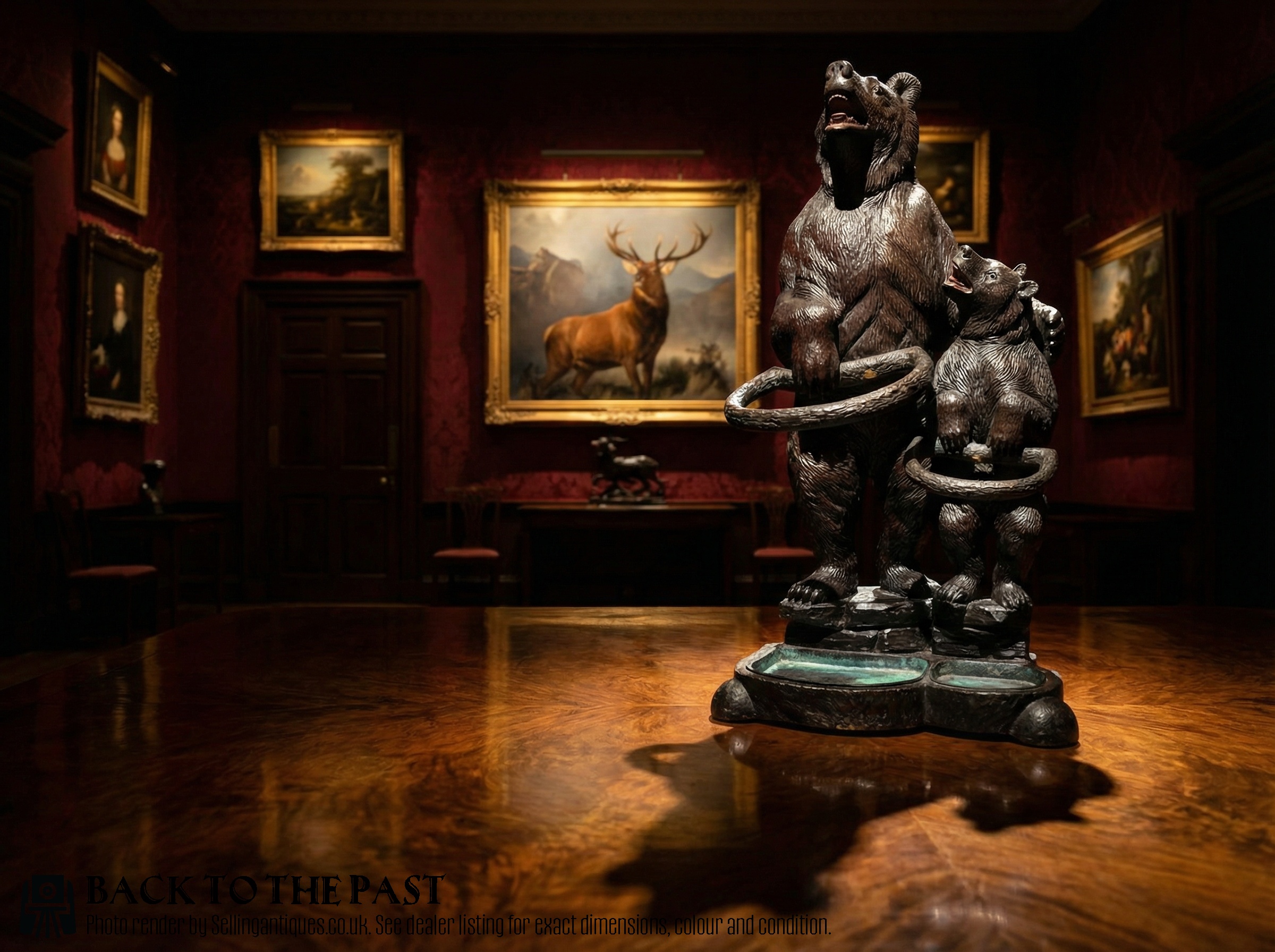
How they were made
Carpenters constructed timber versions using solid oak and mahogany, often employing cooperage techniques with stave construction and metal binding. These wooden frames relied on natural grain patterns and sturdy corner joints to withstand daily dampness.
Metal components utilised cast iron, brass and nickel plating, frequently shaped through founding or spinning. Cast iron examples often bear manufacturer marks or intricate openwork patterns derived from Victorian and Aesthetic Movement designs.
Antique Stick Holder Retail Price Guide 2026
Typical asking prices for stick holder among the pieces listed under this phrase on Sellingantiques today, from the lower quarter to the upper quarter. They describe what is for sale here now, not the wider market.
Listings feature oak, cast iron, brass and mahogany across Victorian, Edwardian and Art Deco periods.
What varies in quality
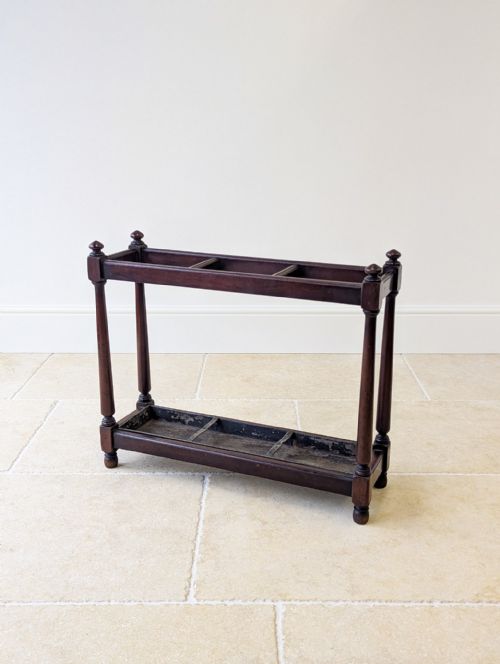
Substantial differences in quality emerge through the integrity of the metal fittings and the retention of original drip trays. Retaining the internal metal or zinc tray indicates a complete piece that has survived without missing components.
Construction methods also separate standard production items from workshop-attributed pieces, such as those associated with Coalbrookdale or Liberty design. Crisp casting details in ironwork and tight cooperage in timber barrels reflect higher standards of period craftsmanship.
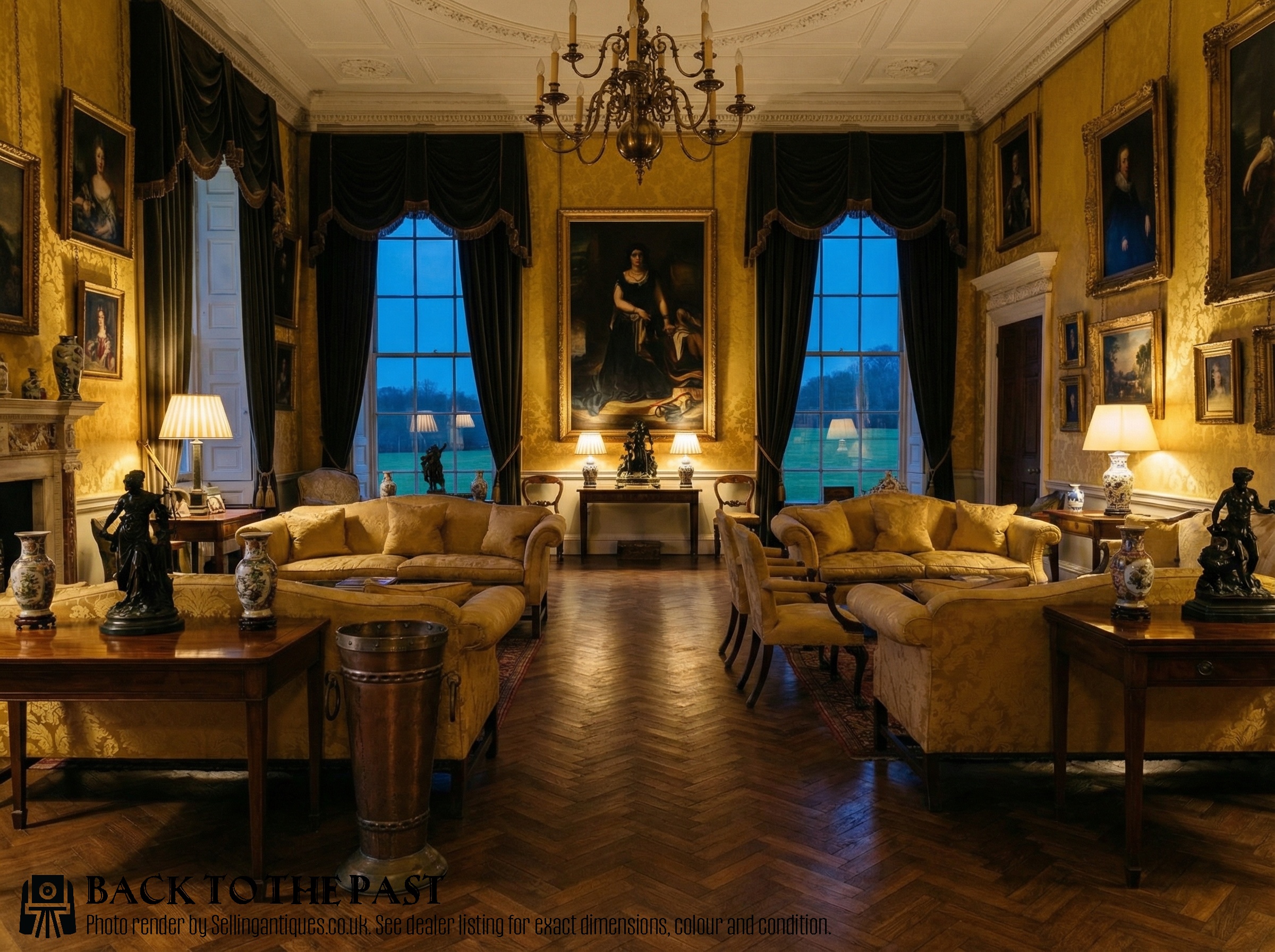
Coalbrookdale·Liberty·Mappin and Webb·Sudre·Théodore Deck
The Antique Stick Holder Glossary
- Coopered
- Built from vertical wooden staves bound together with metal hoops, much like a traditional drinking barrel.
- Drip tray
- A removable metal pan placed at the base of a stand to catch water running off wet umbrellas.
- Aesthetic Movement
- A late nineteenth-century design style emphasising visual beauty over narrative meaning or moral purpose.
- Demi-lune
- A half-moon shape often seen in wall-hugging furniture and slim hallway umbrella stands.
- Japanned
- Finished with a hard, glossy black or coloured lacquer inspired by traditional Japanese decorative arts.
Antique Stick Holder: Frequently Asked Questions
Where were stick holders placed?
These items typically stood in entrance halls, vestibules and porches where guests arrived with wet coats and walking gear. Their primary function was protecting interior timber floors from dripping rainwater.
Larger versions were often integrated directly into hall stands featuring mirrors and coat hooks. Smaller standalone barrels sat neatly beside the main front door for quick access.
Are original drip trays common?
Original metal trays frequently went missing or rusted through decades of heavy domestic use. Finding a piece retaining its fitted pan is a notable bonus for collectors.
Replacement trays are common, so buyers should examine the base closely to verify period origin. The presence of patinated zinc or copper usually confirms authenticity.
What defines Arts and Crafts examples?
Arts and Crafts pieces emphasise visible construction methods, honest materials and simple geometric forms. They avoid excessive surface decoration in favour of clean architectural lines.
Oak is the predominant timber in this style, frequently paired with hand-hammered copper or brass bands. These stands reflect a reaction against mass-produced industrial manufacturing.