



Antique Steel Firearms
These antique steel firearms span flintlock, percussion, and pinfire mechanisms from the eighteenth and nineteenth centuries, offering collectors tangible pieces of military and domestic history.
Antique Steel Firearms
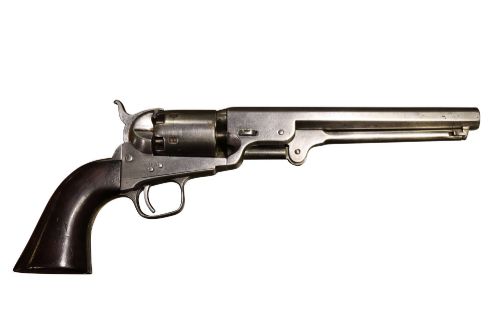
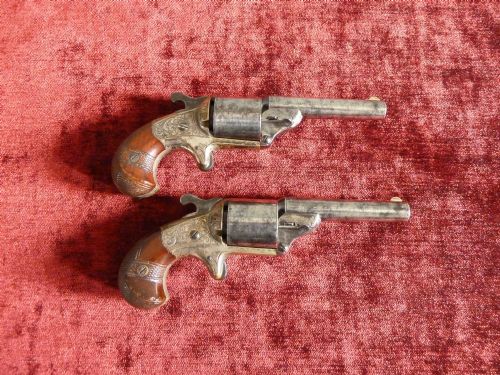
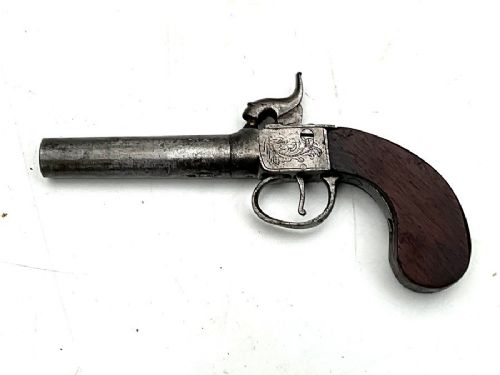
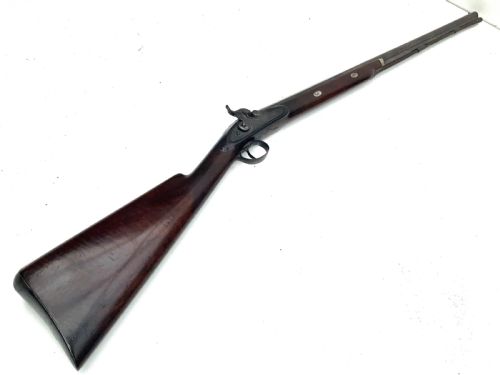
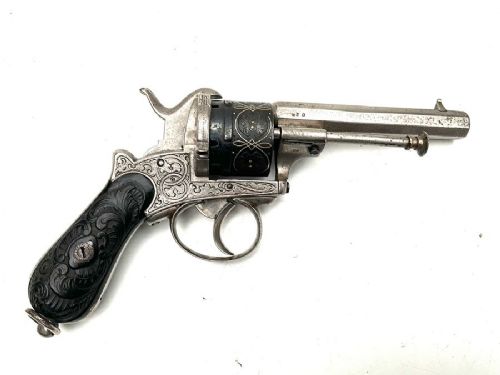
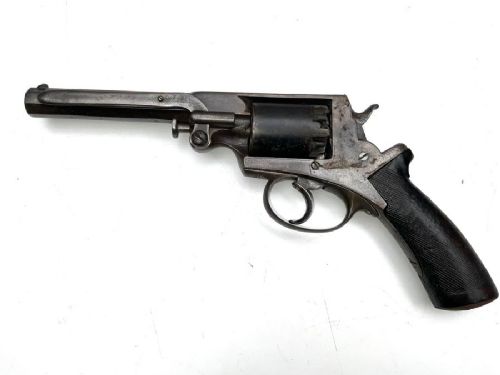
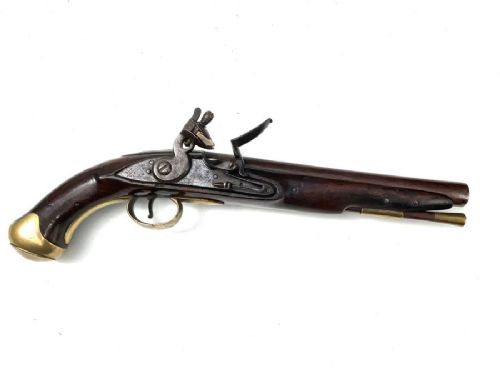
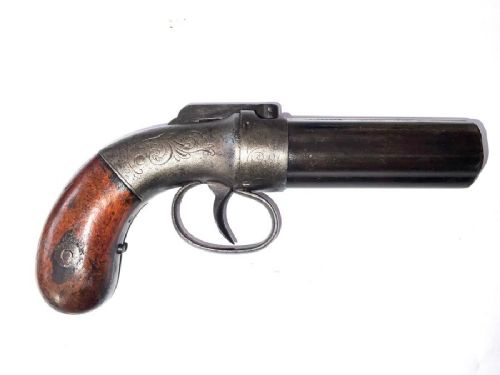
When searching for antique steel firearms, a buyer encounters a diverse range of weaponry spanning the eighteenth and nineteenth centuries, including flintlock pocket pistols, percussion revolvers, and military muskets. These pieces represent technological transitions from smoothbore flintlock ignition systems to percussion caps and pinfire cartridges used by civilians and armed forces alike.
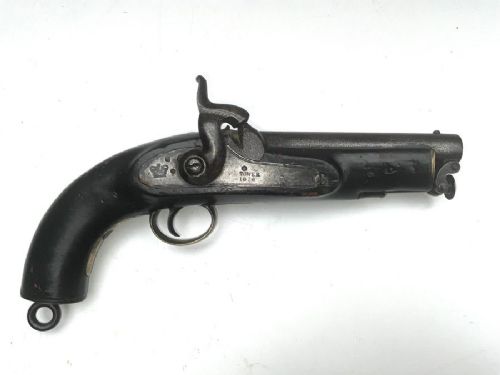
The selections available here lean heavily toward mid-nineteenth-century percussion revolvers and pocket pistols, alongside Georgian and Victorian flintlock arms. Makers such as John Manton, Joseph Egg, and Thomas Henshaw appear alongside military ordnance stamped by Tower Armoury.
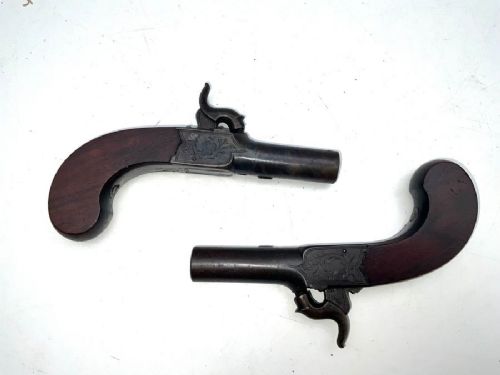
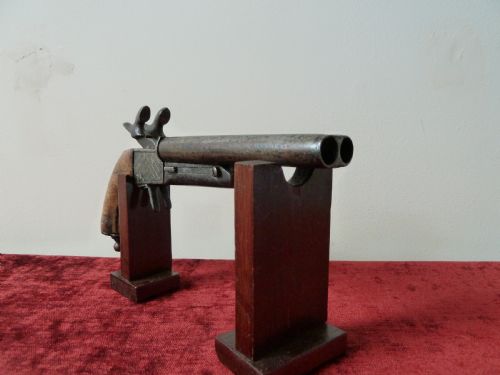
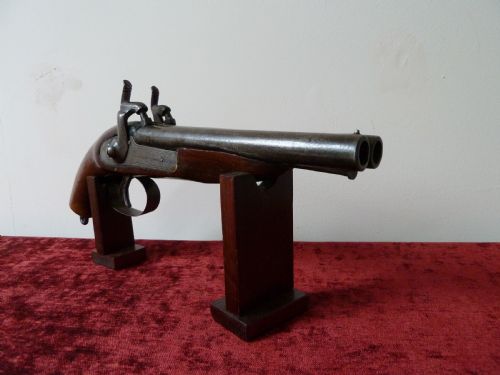
Forms vary from compact pocket muff pistols with folding bayonets to large cavalry holster pistols, double-barrel fowlers, and Indian matchlock torador muskets. Each item carries specific proof marks and mechanics appropriate to its period of manufacture.
How they were made
Makers constructed these firearms using forged steel barrels and actions paired with stocks carved from dense hardwoods such as walnut. Metal components often received hand-engraving, while finer examples incorporated brass mounts, silver wire inlays, or mother-of-pearl coverings.
Mechanisms relied on precision machining and hand-fitting of springs, hammers, and triggers, particularly in multi-shot pepperbox revolvers and breech-loading systems. Proof marks stamped into the steel or iron barrels indicate official testing by London or Birmingham authorities.
Several pocket pistols feature ingenious foldaway bayonets that spring forward at the touch of a trigger, ready for unexpected close-quarters encounters.
What varies in quality
Quality in these firearms is determined by the crispness of the lock mechanism, the legibility of maker signatures, and the preservation of original metal finishes and stock checkering. Pieces retaining matching serial numbers and working half-cock and full-cock actions sit at the upper end of the spectrum.
John Manton & Son·Allen & Thurber·John Campbell of Doune·T. Potts·Joseph Egg·James Barber·Thomas Henshaw·Timothy Hughes
The Antique Steel Firearms Glossary
- Flintlock
- An ignition mechanism utilising a piece of flint held in a cock to strike a steel frizzen, creating sparks to ignite the priming powder. This system dominated military and civilian firearms from the seventeenth through the early nineteenth century.
- Percussion cap
- A small metal cup containing a detonating compound placed on a nipple, which is struck by the hammer to fire the powder charge. It replaced the flintlock system in the nineteenth century.
- Pinfire
- An early metallic cartridge containing a protruding pin struck by the hammer to detonate the internal priming composition. It was widely used in European revolvers and double-barrel pistols during the mid-nineteenth century.
- Boxlock
- A firearm design where the breech and action are forged as an integral block with the breech screw, often featuring internal hammers or central positioning. This layout provides a streamlined profile for pocket pistols.
- Tower stamp
- Official government inspection and property markings applied to British military arms produced or stored at the Tower of London. These stamps often include crown ciphers and broad arrow property marks.
Antique Steel Firearms: Frequently Asked Questions
What is the difference between flintlock and percussion pistols?
Flintlock pistols rely on a flint striking a steel frizzen to generate sparks into an open pan of powder. This system requires dry conditions and external priming.
Percussion pistols use a closed nipple covered by a detonating cap struck directly by the hammer. This innovation improved reliability in wet weather and accelerated loading times.
Were these firearms used in military campaigns?
Many listings include military-issue arms bearing Tower stamps or government inspection marks intended for cavalry, navy, or infantry service. Standard-issue smoothbore and percussion pistols equipped troops throughout the Georgian and Victorian eras.
Civilian counterparts, such as pocket and belt pistols, served for personal protection during travel.
What do proof marks tell us about an antique firearm?
Proof marks indicate that a firearm barrel successfully passed regulated pressure testing at an official proof house such as London or Birmingham. These stamps verify the legality and safety standards of the piece at the time of manufacture.
Examining these stamps helps confirm the period and place of origin.