


British Percussion Pistols
British percussion pistols are nineteenth-century firearms driven by the percussion cap lock mechanism, offering collectors robust mechanics and historical military or civilian utility.
British Percussion Pistols
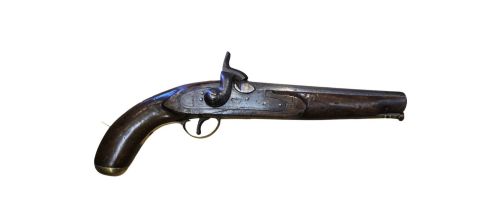
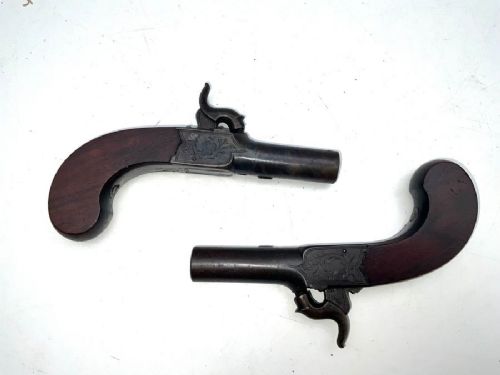
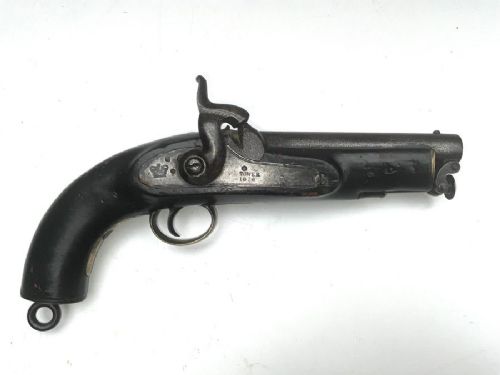
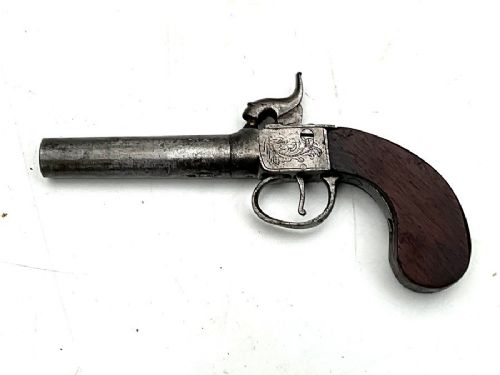
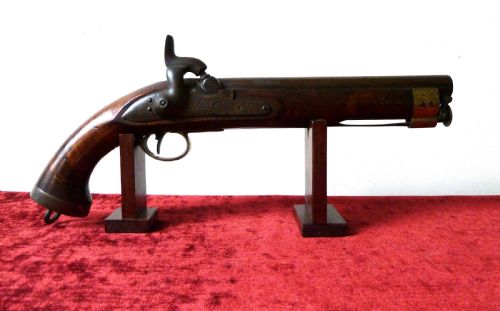
British percussion pistols encompass nineteenth-century firearms built around the percussion cap system that superseded flintlocks. These pieces range from military horse pistols and East India Company issues to compact pocket pistols and officers' belt sidearms.
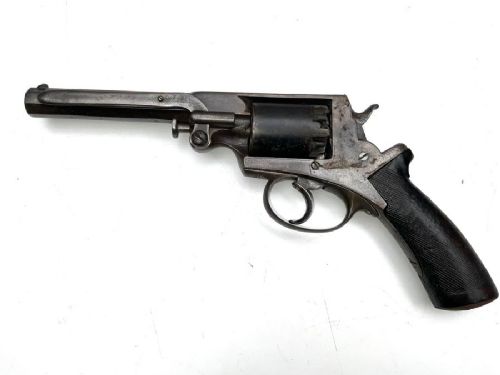
Most examples originate from the Victorian and Regency periods, featuring styles spanning civilian gentlemanly carry to strict Victorian military specifications. Buyers encounter diverse formats, including cavalry horse pistols, box-lock pocket variants, and Beaumont-Adams or Adams revolvers.
The nineteenth century saw rapid firearm evolution, producing both government contract pieces stamped with Tower markings and private London or Birmingham maker items. This variety lets collectors focus on specific military campaigns or civilian self-defence tools from the 1850s and 1860s.
Materials and Construction
Makers built these arms using robust combinations of steel, iron, and brass for barrels, locks, and furniture. Stocks and grips relied on shaped walnut or other dense wood, often finished with checkering to secure the hand during firing.
Proof marks from Birmingham and London stamped into the metal verify the testing of barrels before assembly. Internal lock mechanisms required precision filing and hardening of springs to ensure reliable ignition of the percussion cap.
Current listings feature steel, iron, brass, wood, and baize across nineteenth-century military and civilian forms.
Grading Quality and Execution
Quality separates mass-produced military contracts from bespoke civilian arms through the crispness of lock engraving and the precision of metal-to-wood fit. Top-tier pieces carry named London makers and retain sharp inspection or proof stamps on barrel and action.
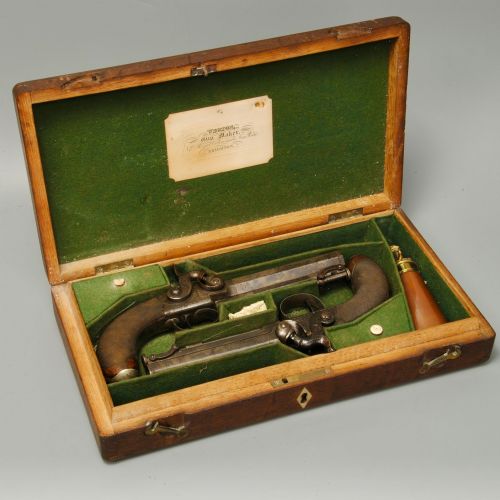
The condition of the walnut stock and the legibility of markings such as Tower crowns directly influence desirability. Complete sets, including boxed revolvers with accessories, stand apart from sidearms showing heavy field wear or replacement parts.
Deane Adams And Deane·Mortimer
The British Percussion Pistols Glossary
- Percussion cap
- A small metal cup containing a priming explosive placed on the nipple to ignite the main powder charge when struck by the hammer.
- Tower marking
- An official stamp indicating manufacture or inspection associated with the Board of Ordnance at the Tower of London.
- Smoothbore
- A barrel lacking internal rifling, typical of many mid-nineteenth-century military horse and belt pistols before widespread adoption of rifled systems.
- Birmingham proofs
- Official certification stamps applied by the Birmingham Proof House to verify barrel strength.
- East India Company
- A powerful British trading enterprise that contracted specific military arms for its own armed forces.
British Percussion Pistols: Frequently Asked Questions
What is a percussion pistol?
A percussion pistol is a nineteenth-century firearm that uses a percussion cap struck by a hammer to ignite gunpowder.
This system replaced flintlocks, offering greater reliability in wet weather and faster reloading times for military and civilian users.
How do I identify a military percussion pistol?
Military pieces often feature government acceptance stamps, Tower markings, or East India Company property proofs on the lock plates.
They typically present sturdy steel and brass mountings paired with robust walnut stocks suited for rough service.
What distinguishes pocket pistols from belt pistols?
Pocket pistols are smaller, often concealed arms designed for discreet civilian carriage and self-defence in town environments.
Belt pistols are larger sidearms intended to be worn in a holster or attached to a belt by military officers and travellers.
How should I care for antique percussion pistols?
Keep the metal surfaces lightly oiled and store the firearms in a stable, dry environment away from excessive humidity.
Display cases lined with materials like baize help protect the wood and metal from physical scratches and dust accumulation.