





Collectable Pistols
These collectable antique pistols span centuries of engineering, holding practical history in walnut and steel.
Collectable Pistols
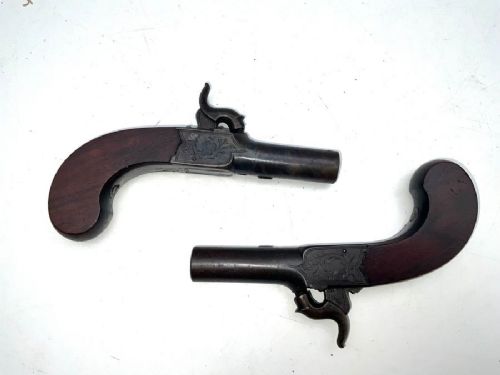
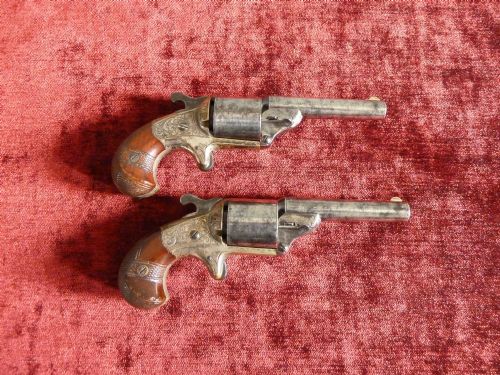
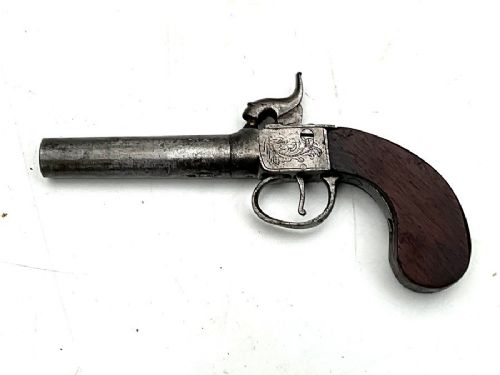
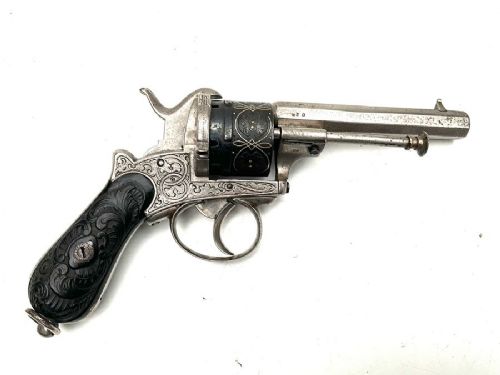
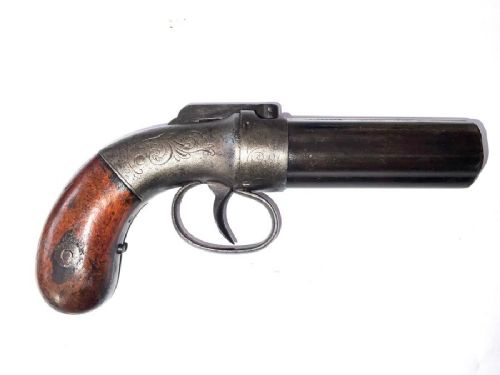
When you search for collectable antique pistols, you encounter historical firearms spanning the eighteenth and nineteenth centuries, taking forms such as flintlock pocket models, percussion revolvers, and military belt pistols. These objects originate from British, European, American, and Ottoman makers, reflecting diverse tactical needs of their eras.
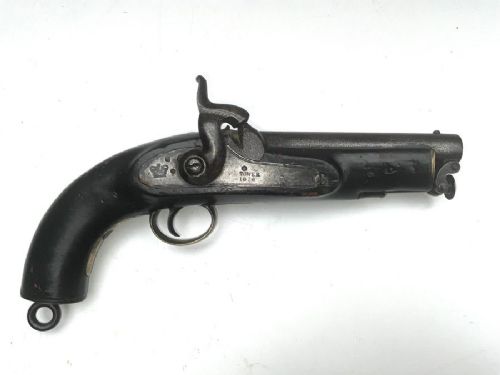
On this page, you are most likely to meet nineteenth-century percussion systems and eighteenth-century flintlocks, often appearing as matched pairs or single pocket pieces. Forms range from heavy regulation military service arms to small concealable overcoat and muff pistols designed for personal defence.
The styles encompass Georgian elegance, Regency restraint, Victorian militaria, and Ottoman decorative traditions, showing how firearm design evolved alongside manufacturing capability. Collectors encounter everything from plain government-issued martial arms to privately commissioned officers' pieces featuring intricate silver wire inlay.
Materials and construction
Makers built these pieces primarily using steel and iron for barrels and lock mechanisms, paired with stocks fashioned from dense hardwoods like walnut, ebony, and oak. Brass frequently appears in trigger guards, butt caps, and frames, particularly on cannon-barrel and Queen Anne designs.
Some pocket protectors hide their triggers until the hammer is cocked, surprising any unfortunate pickpocket.
Factors determining quality
The standing of the maker heavily influences value, with signed London pieces by known figures holding distinct advantages over unsigned provincial work. Original finish retention on the steel and crispness of barrel proof marks or maker engravings also separate standard items from superior examples.
Stock integrity and metal matching further define the tier of a piece, alongside the presence of specialised accessories or fitted housing boxes. Artistry in secondary decoration, such as silver wire inlay or cast brass relief, elevates the standard of craftsmanship well beyond basic utilitarian issue.
Henry Nock·James Barber·Thomas Henshaw·Timothy Hughes·Auguste Francotte·John Rimes·John Manton·Meyer And Mortimer·Barber Of Newark·Dutton·Allen And Thurber
The Collectable Pistols Glossary
- Flintlock
- An ignition mechanism utilising a piece of flint held in a cock to strike a steel frizzen, creating sparks to ignite the priming powder. This system dominated European and American firearm production throughout the eighteenth century.
- Percussion cap
- A small metal cup containing fulminate of mercury placed on a nipple, struck by the hammer to fire the charge. This mid-nineteenth-century innovation largely replaced the earlier flintlock method.
- Boxlock
- A firearm action where the breech and lock mechanism form a single solid metal housing, frequently seen with central hammers and turn-off barrels. It provides a compact profile suited to pocket pistols.
- Queen Anne style
- A form characterised by a breech and barrel forged as one single piece that unscrews from the front, popular from the early eighteenth century onwards. These pieces usually feature a distinctive rounded butt shape.
- Frizzen
- The vertical steel plate struck by the flint in a flintlock mechanism to generate sparks and expose the priming pan. Its design and movement are crucial for reliable ignition.
Collectable Pistols: Frequently Asked Questions
Were these pistols used in combat?
Many examples on this page served active military or naval roles, while others functioned as civilian pocket weapons for personal protection against highwaymen and thieves. Regulation service pieces saw direct deployment during major European conflicts and the American Civil War.
Duelling and officers' models were carried by gentlemen and military commanders as symbols of status and readiness. The presence of government ownership marks and regiment stamps often confirms active service deployment.
How can I tell the period?
Dating relies on mechanical evolution, maker signatures, and proof marks stamped onto the metal components. Flintlock mechanisms typically indicate eighteenth or very early nineteenth-century manufacture, whereas percussion caps point towards the mid-nineteenth century.
Stylistic cues in the woodwork, such as grip shaping and brass mount designs, also align with specific historical eras like the Regency or Victorian periods. Maker directories help cross-reference working dates for recorded names.
Can I fire these antique pistols?
Operating historical firearms requires professional inspection by a qualified gunsmith to test metal fatigue and structural integrity. Most collectors treat them as historical artefacts rather than functioning weapons due to their age and material degradation.
Using modern ammunition or incorrect powder loads can cause catastrophic failure in antique frames and barrels. Preservation dictates that these pieces are best appreciated within collections and displays.