




Percussion Cap Handgun
A percussion cap handgun is a nineteenth-century firearm relying on a striking hammer and priming cap to ignite gunpowder.
Percussion Cap Handgun
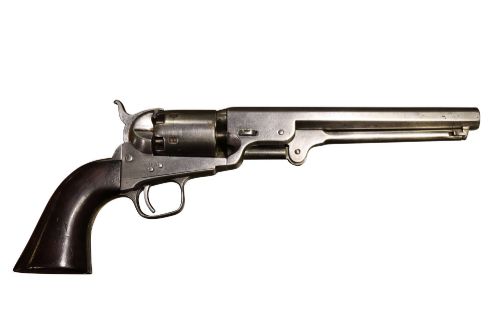
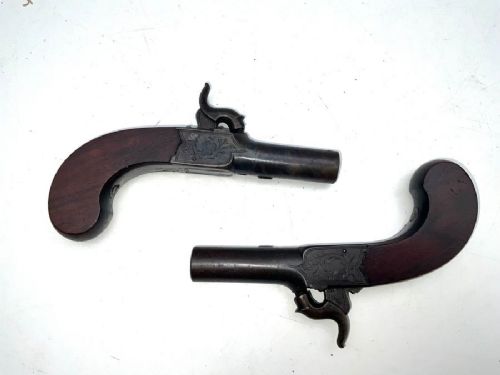
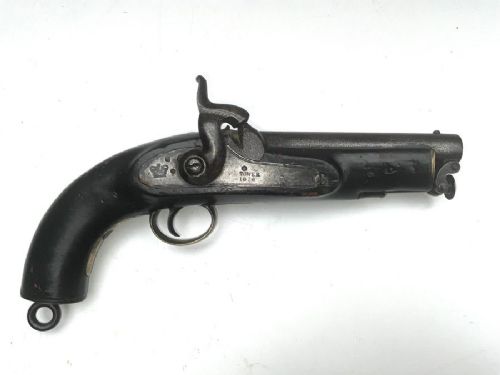
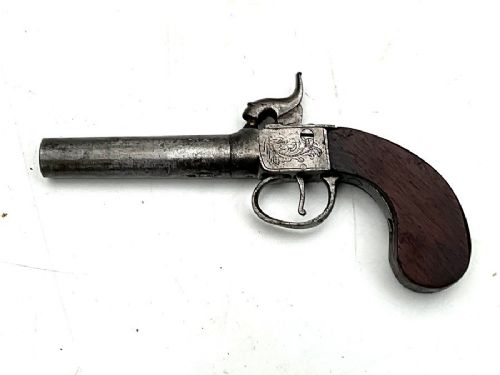
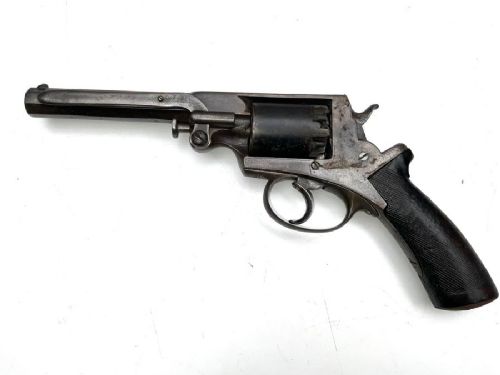
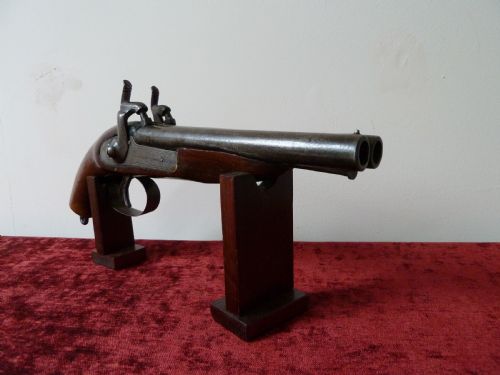
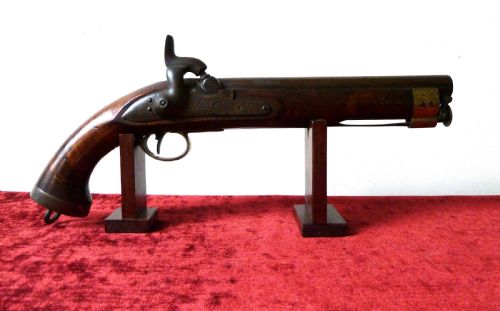
When you search for a percussion cap handgun, you are looking at nineteenth-century firearms from the 1850 and 1860 periods that superseded flintlocks by using an external percussion cap to ignite the powder charge. The selection on this page centres on military and civilian sidearms, including single-shot pocket pistols, belt pistols, and multi-shot revolvers.
Most examples you will meet here date from the mid-nineteenth century, associated with Victorian military service, the American Civil War, and domestic self-defence. Forms vary from compact pocket models intended for concealed carry to substantial service revolvers and cavalry pieces issued to British and American forces.
How they were made
Makers constructed these firearms using forged steel and iron for barrels, frames, and internal lockwork mechanisms, paired with stocks formed from dense timbers such as walnut, oak, and mahogany. Some military issues incorporate brass trigger guards and backstraps for added durability in the field.
Cased sets often feature fitted wooden presentation boxes lined with velvet to secure the handgun alongside its loading accessories and bullet moulds. Metal components frequently exhibit stamped inspection marks, proof houses, or maker details inscribed directly onto the steel or iron surfaces.
What varies in quality
The degree of original finish remaining on the metal components and the sharpness of checkering or grain on the wooden grips determine the standing of an individual piece. Matching serial numbers across frames, cylinders, and trigger guards indicate a firearm kept together since its original manufacture.
The presence of factory-cased sets complete with contemporary accessories, loading tools, and powder flasks elevates certain revolvers above standard sidearms. Furthermore, documented military provenance, such as East India Company or United States martial issues, distinguishes standard civilian models from government-contract pieces.
Colt·Deane Adams And Deane·Tower
The Percussion Cap Handgun Glossary
- Percussion cap
- A small metal cup containing a sensitive explosive compound placed on the nipple to ignite the main powder charge when struck by the hammer.
- Calibre
- The internal diameter of the firearm barrel, which determines the size of the projectile utilised.
- Cylinder
- The rotating component in a revolver that contains multiple chambers for holding powder and shot.
- Smoothbore
- A barrel lacking internal rifling grooves, designed to fire lead balls without imparting spin.
- Serial number
- An identifying number stamped onto metal components during production to track the manufacture and assembly of matching parts.
Percussion Cap Handgun: Frequently Asked Questions
How do percussion cap handguns work?
Operation relies on placing a small primed cap onto a hollow nipple at the rear of the barrel or cylinder chamber. Pulling the trigger releases the spring-driven hammer to strike the cap, creating a spark that travels inward to ignite the gunpowder.
Loading requires measuring gunpowder down the barrel or cylinder chambers, seating a lead ball on top, and placing the percussion cap on the nipple just before firing.
What is the difference between a pocket pistol and a belt pistol?
Pocket pistols are compact, short-barrelled firearms designed for discreet personal carrying within clothing during the nineteenth century. They often feature folding triggers to prevent snagging when drawn.
Belt pistols are larger service arms intended to be worn openly in holsters or tucked into waist belts by officers, travellers, and military personnel requiring greater range and stopping power.
Were these used in the American Civil War?
Numerous nineteenth-century handguns on this page date directly to the American Civil War period of the 1860s. Martial issue revolvers were carried extensively by cavalry and infantry officers on both sides of the conflict.
These military sidearms often bear specific government inspection stamps or serial numbers indicating official procurement for troop deployment.
What does matching numbers mean on a revolver?
Matching numbers indicate that the primary metal components, such as the frame, trigger guard, cylinder, and barrel assembly, share the exact same factory serial number. This confirms the pieces were fitted together during original production and have not been assembled from disparate parts over time.
Collectors look for this characteristic because it preserves the historical integrity and originality of the firearm.