



Vintage Military Firearm
A vintage military firearm carries the mechanical history of the battlefield, offering collectors tangible links to past conflicts.
Vintage Military Firearm
When you search for a vintage military firearm, you encounter pieces that span the eighteenth and nineteenth centuries, including the Napoleonic Era and Victorian military campaigns. These arms served state forces, ranging from British army officers to cavalry regiments and French infantry.
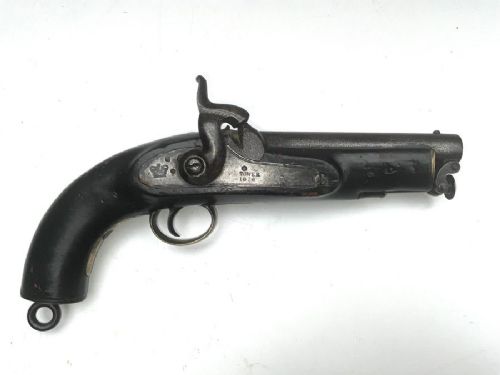
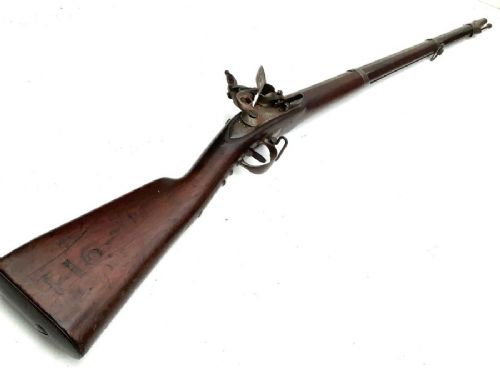
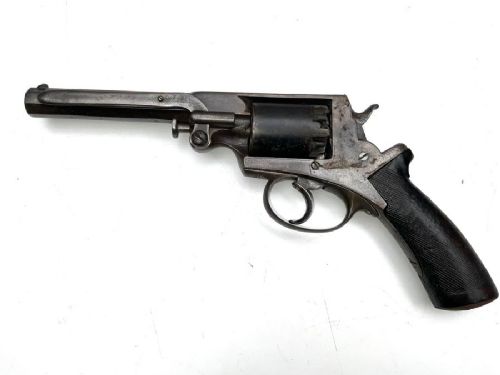
The pieces listed on this page appear in various forms, most commonly as belt pistols, percussion pistols, muskets, and rifles. You find items like the Tower stamped percussion pistol and the Enfield rifle alongside French musketoons and Beaumont-Adams revolvers.
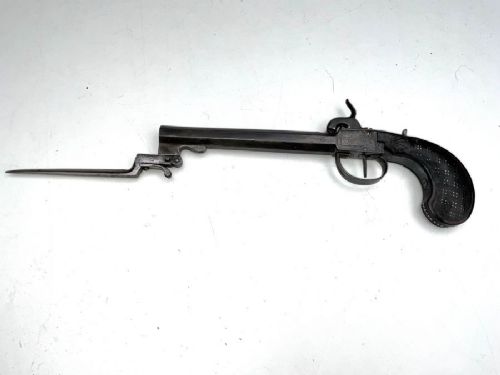
Many items bear specific regimental connections or maker marks, reflecting their official deployment. Others include accessories such as sprung bayonets, leather elements, and fitted wooden boxes.
How They Were Made
Makers constructed these arms using durable materials suited for field use, combining steel barrels and locks with robust hardwoods such as walnut and general wood stocks. Brass and iron furniture reinforce the frames, while leather appears on associated gear and holsters.
Mechanisms evolved across the periods represented, shifting from flintlock ignition systems to percussion cap technology and later pinfire and cartridge developments. Metal components received hand finishing, with brass barrels and lock plates appearing on specific service models.
Listings feature walnut stocks, brass barrels, and iron furniture across eighteenth-century and nineteenth-century periods.
What Varies in Quality
The standard of a vintage military firearm depends heavily on the crispness of government or maker stampings upon the metal and wood. Clear touches, inspector marks, and legible barrel signatures elevate an arm above examples with worn or scrubbed surfaces.
Originality of components and matching serial numbers govern the standing of the piece within its type. Altered configurations or replaced furniture alter the historical integrity, whereas untouched service condition retains the character imparted by its period of issue.
A.W Spires·WILSON
The Vintage Military Firearm Glossary
- Percussion
- An ignition system utilising a priming cap struck by the hammer to detonate the main charge. This method replaced the earlier flintlock mechanism during the nineteenth century.
- Flintlock
- A firearm ignition mechanism that uses a piece of flint striking a steel frizzen to produce sparks. It dominated military arms through the eighteenth and early nineteenth centuries.
- Smoothbore
- A barrel lacking internal rifling grooves, designed to fire lead balls or shot. These barrels appear on muskets and early service pistols before rifled arms became standard.
- Bayonet
- A blade designed to attach to the muzzle end of a rifle or musket for close combat. Many military pieces feature foldaway or socket variations.
- Bore
- The interior diameter of the firearm barrel. Collectors reference bore sizes and gauges such as borer measurements and specific calibre designations like the .577 rifle.
Vintage Military Firearm: Frequently Asked Questions
How do I care for a vintage military firearm?
Keep the metal lightly oiled with a suitable preservative to prevent active corrosion, and store the arm in a stable, dry environment away from direct heat sources.
Inspect wooden components periodically and treat them sparingly with traditional conservation wax to maintain the finish without softening the grain.
Were these firearms actually used in combat?
Many examples bear the marks of active service, with specific pieces linked directly to conflicts such as the American Civil War or volunteer regiments like the Essex Volunteers.
Regimental stamps, unit markings, and field wear suggest active deployment rather than mere ceremonial use.
How do I identify the period of a piece?
Look to the lock mechanism type, such as the transition from flintlock to percussion, alongside any stamped dates and reigning monarch ciphers on the metal plates.
Stylistic cues in the furniture, wood shape, and barrel mounting pins further help narrow the era of manufacture.