


Antique Standing Light
An antique standing light brings height and purposeful illumination to a room, spanning tall floor-standing standards and substantial table candlesticks.
Antique Standing Light
An antique standing light encompasses tall floor lamps, standard lamps, torcheres, and heavy table candlesticks designed to elevate a flame or bulb. The selection spans the 18th century, the Victorian and Edwardian eras, up through the 1920s and 1930s, reflecting shifts from rush lights and oil burners to early electric conversions.
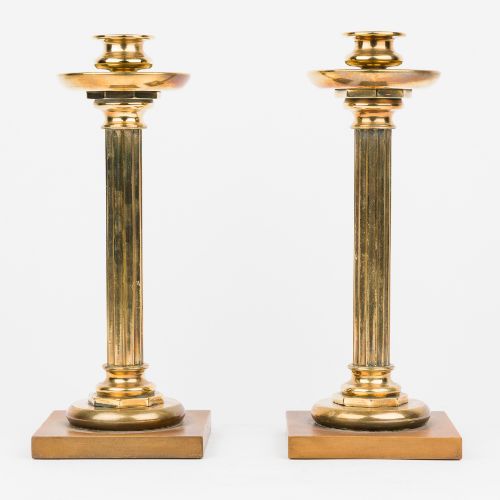
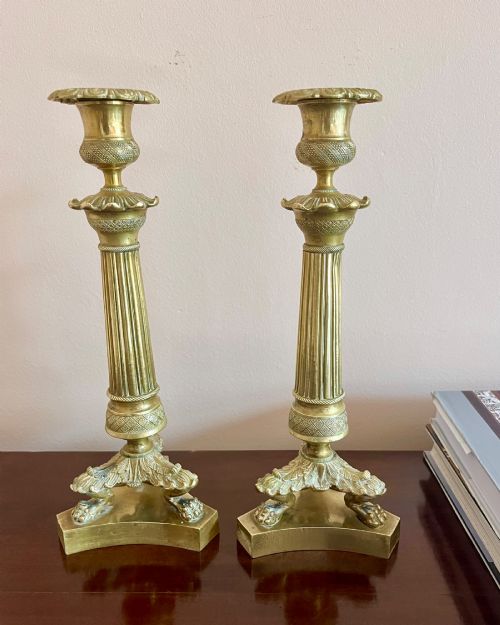
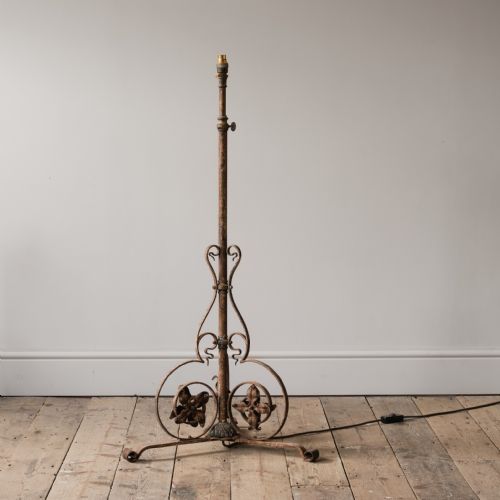
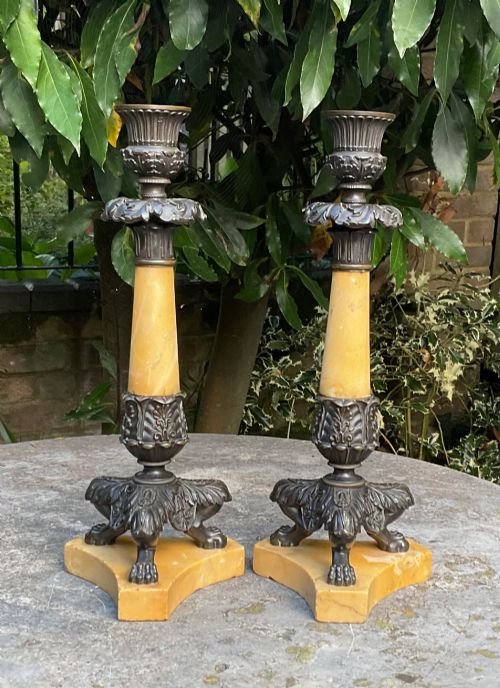
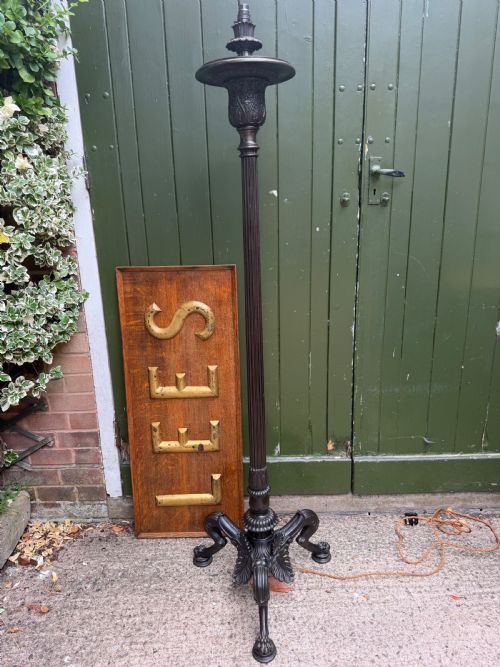
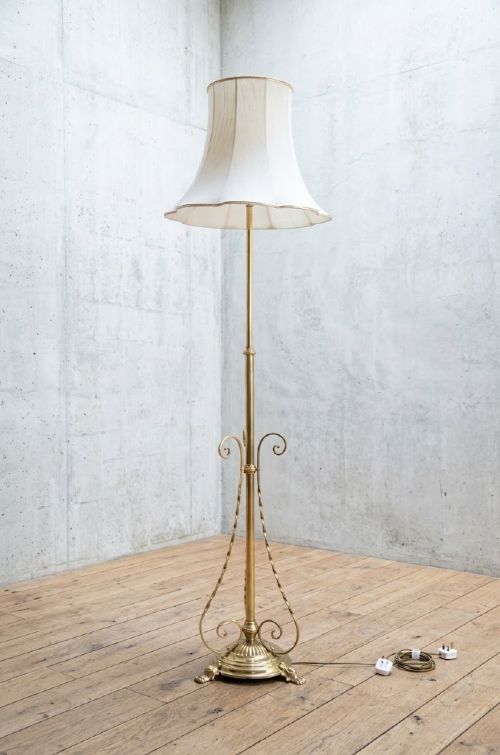
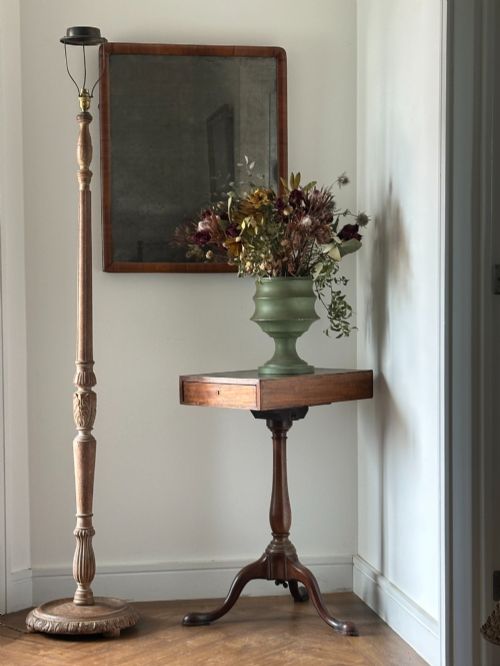
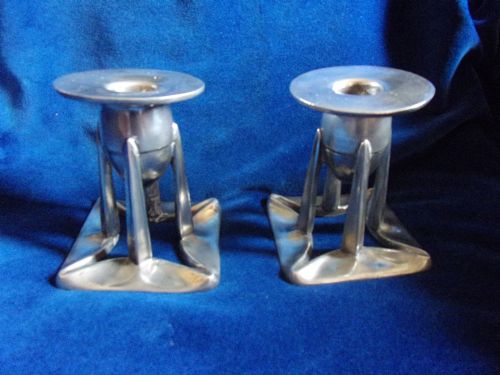
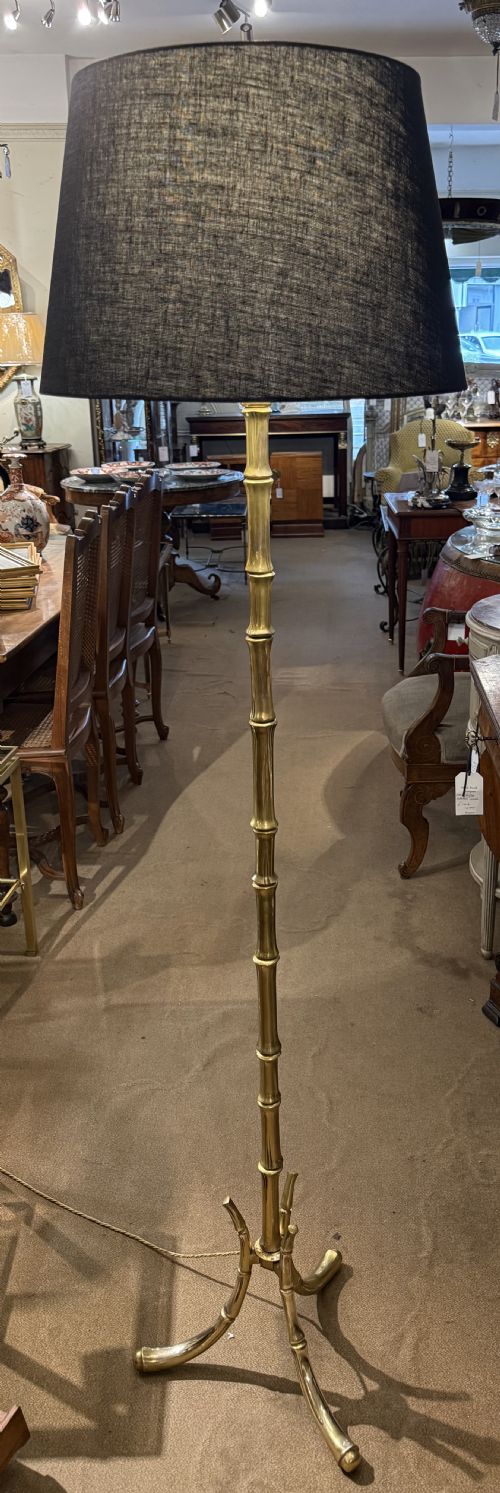
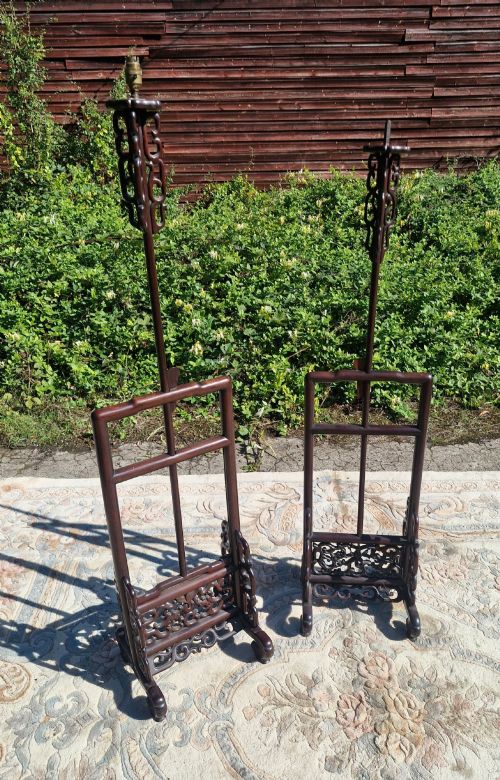
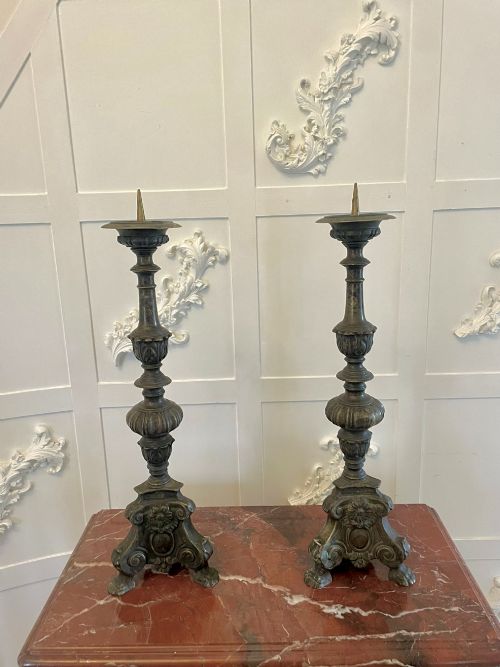
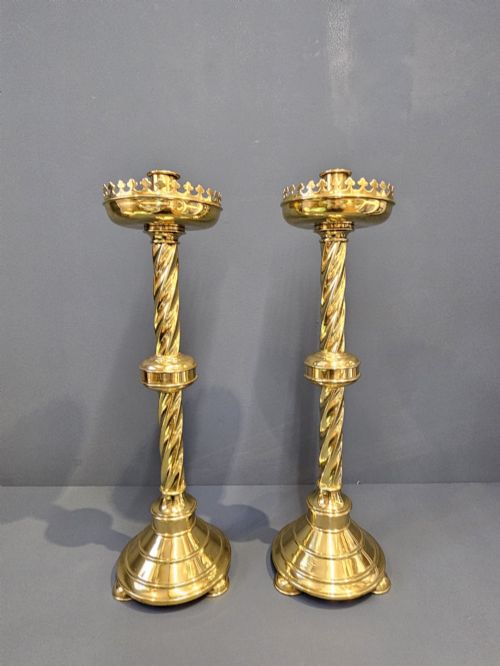
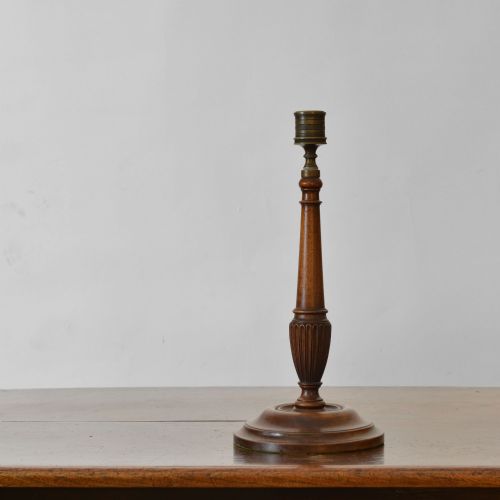
Floor-standing examples include carved oak and mahogany columns, cast-iron classical designs, and forged metal standards, while shorter forms comprise pairs of heavy brass, bronze, and ormolu candlesticks. Buyers encounter both single statement pieces and matched pairs intended for symmetry on furniture or flanking architectural spaces.
Origins range widely across British, French, Italian, and Asian workshops, incorporating decorative styles from Regency and Gothic Revival to Art Nouveau, Art Deco, and Chinoiserie.
How They Were Made
Metals dominate the construction of these pieces, utilising cast brass, bronze, patinated iron, and gilded ormolu, often worked by hand through casting, blacksmithing, and detailed chasing. Wooden examples rely on solid mahogany, oak, and walnut, shaped by turning on a lathe or through intricate hand carving.
Many standing lights incorporate mixed media, pairing carved wood with silvered finishes, or combining bronze figures with marble bases. Surface treatments range from the natural grain of polished timber to patinated metal and gilt leaf applied to carved torcheres.
Antique Standing Light Retail Price Guide 2026
Typical asking prices for standing light among the pieces listed under this phrase on Sellingantiques today, from the lower quarter to the upper quarter. They describe what is for sale here now, not the wider market.
Listings span multiple centuries, uniting 18th-century Italian torcheres with 1930s marble standards and heavy Victorian church brassware.
What Varies in Quality
The standard of a standing light depends on the crispness of its cast ornament and the weight of the materials used in its construction. Heavy gauge metals and deeply carved timber bases indicate superior workshop production compared to lighter, purely decorative castings.
Proportion and structural integrity define the better examples, ensuring tall standards remain stable on their bases and articulated elements, such as telescopic adjustments, operate smoothly without compromising the original silhouette.
Archibald Knox·Maison Bagues·Barbedienne·Heals·Nymphenburg
The Antique Standing Light Glossary
- Torchiere
- A tall stand or floor-standing candlestick designed to hold a light source high above the ground. These often feature carved wooden shafts or tripod bases.
- Ormolu
- Gilded bronze applied to ornamental objects and furniture mounts, popular in Regency and Louis XVI style pieces. It provides a bright golden surface that contrasts with darker metals.
- Pricket candlestick
- A candlestick featuring a sharp metal spike at the top to secure a large wax candle rather than a socket. These frequently appear in church and altar contexts.
- Standard lamp
- A tall floor lamp designed to stand directly on the floor. Many period examples began as oil lamps before later conversion to electricity.
- Rush light
- A simple historical holder designed to grip a dried rush dipped in animal fat for cheap illumination. They represent early floor-standing lighting before widespread candle use.
Antique Standing Light: Frequently Asked Questions
Can I convert an oil lamp standard?
Many standard lamps originating from the Victorian era began life as oil burners before receiving modern electrical fittings. These conversions allow historical wiring paths to be utilised safely while retaining the original brass or bronze columns.
Professional rewiring ensures the standard meets modern electrical safety standards without altering the external patina or structural integrity of the antique base.
How do I place a tall floor lamp?
Tall standards and torcheres suit corners or spaces beside heavy seating where they can project light downward without obstructing walkways. Their substantial height helps balance high ceilings in period rooms.
Pairing a heavy wooden or metal floor lamp with complementary table candlesticks from similar periods creates a cohesive lighting scheme across a room.
What is the difference between a torchere and a standard lamp?
A torchere traditionally holds a candle or a grouping of lights upon a slender, decorative column, often originating from the 18th century or earlier. A standard lamp typically refers to later 19th and early 20th century floor lamps built for illumination.
Both serve to lift light sources well above table height, though torcheres frequently emphasise carved wood and decorative tripod bases.
How do I identify a Georgian candlestick?
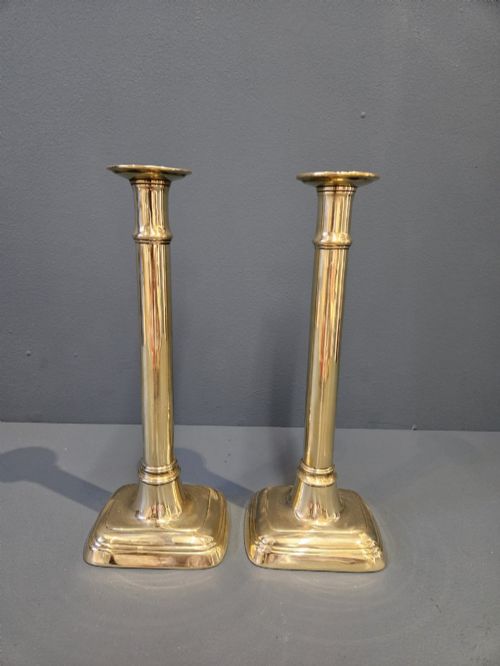
Georgian candlesticks commonly feature heavy cast brass construction with stepped square or scalloped bases, reflecting the formal domestic interiors of the 18th century. Mahogany variants also appear, showcasing hand-turned columns.
Examining the casting seams, weight, and wear patterns on the underside helps confirm the period and distinguishes true Georgian work from later revival styles.