
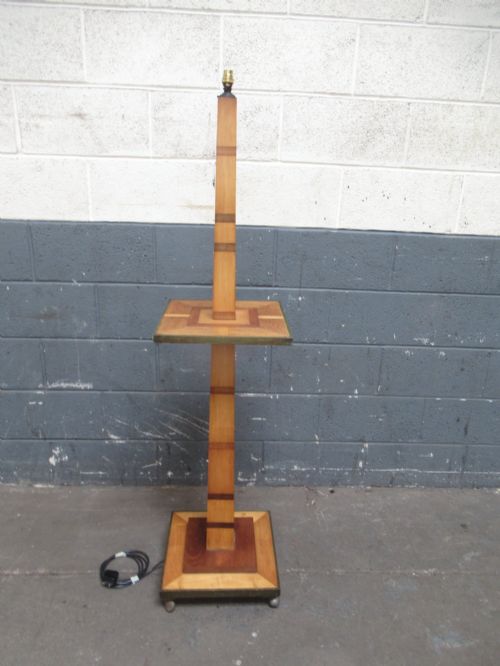
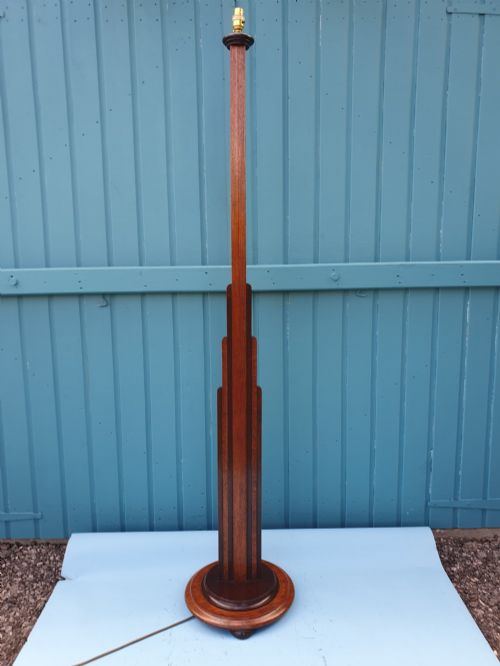


Oak Floor Lamp
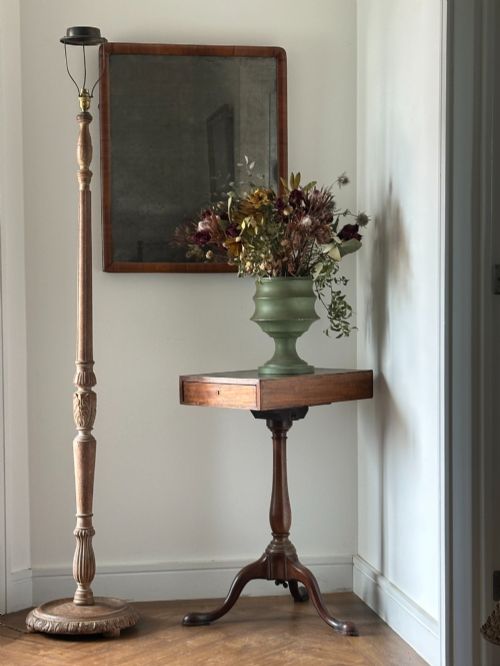
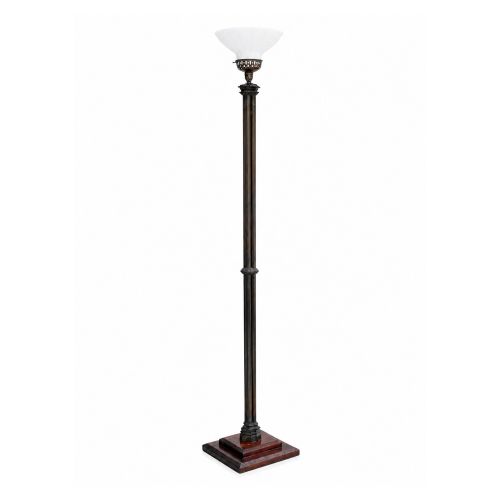
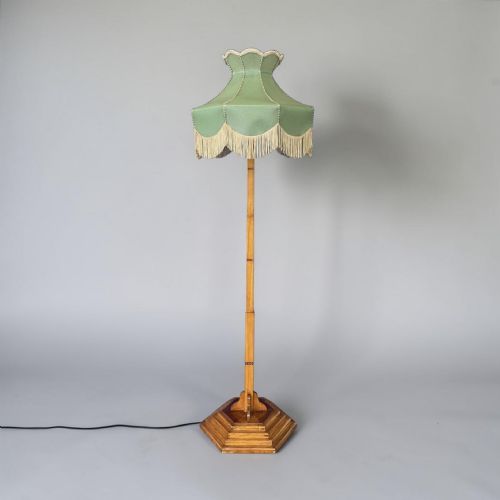
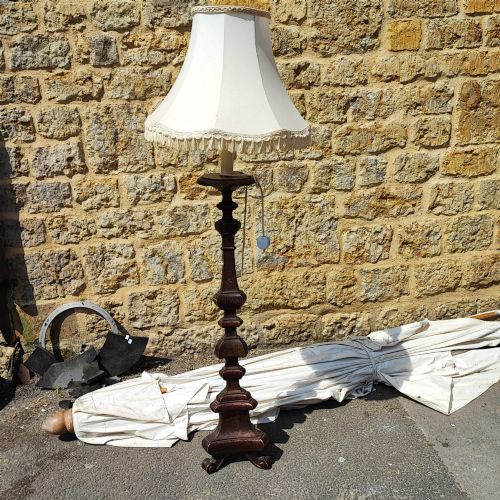
These oak floor lamps bring robust timber columns and period character straight into a reading corner or sitting room.
Understanding the oak floor lamp
An oak floor lamp offers substantial vertical presence, standing as both a practical lighting fixture and a notable piece of furniture. When browsing this selection, buyers encounter standard lamps ranging from early twentieth-century Edwardian designs to striking Art Deco creations.
The prevailing forms span simple turned columns, dramatic barley twist shafts, and geometric skyscraper profiles influenced by the 1920s and 1930s. Makers such as Heals, Edward Barnsley, and Whytock & Reid contributed significantly to this lineage, alongside robust Arts and Crafts and Gothic interpretations.
Edwardian examples tend to emphasise traditional turned woodwork, whereas later Art Deco pieces showcase golden oak, ebony details, and stepped Odeon styling. Buyers find that these freestanding lights anchor a room with architectural weight and warm grain patterns.
Materials and construction methods
Makers utilised solid oak timber, sometimes combining it with contrasting ebony inlays and brass fittings to achieve distinct visual texture. Turning lathes shaped sturdy columns into barley twists or smooth tapered pillars, while joinery techniques ensured stable bases for tall vertical shafts.
Carved ornament appears on specific Gothic and Arts and Crafts pieces, executed by hand directly into the dense wood. Surface finishing involved polishing to reveal the natural grain and colour variations inherent in solid oak.
Retail Price Guide 2026
Typical UK retail prices for oak floor lamp, calculated from the Sellingantiques database of over a million retail prices indexed since 2003. This retail price guide relies exclusively on Sellingantiques data; no external sources or auction records are used, so the figures do not describe the wider market.
Listings feature oak, brass, and ebony across Edwardian, Art Deco, and Arts and Crafts styles.
Distinctions in craftsmanship
Superior examples distinguish themselves through the weight and selection of the timber, displaying rich medullary rays and stable, well-balanced bases that prevent tipping. The precision of hand-turned twists or crisp carved detailing marks the boundary between standard production and workshop-led artistry.
Attribution to documented makers or specific design movements elevates certain pieces, particularly when original brass components and integrated switches remain intact.
Whytock & Reid·Edward Barnsley·Heals
The Oak Floor Lamp Glossary
- Barley twist
- A spiral turning resembling a twisted barley stalk. This decorative technique appears frequently on the vertical shafts of early twentieth-century standard lamps.
- Torchere
- A tall stand or pedestal originally designed to hold a torch or candle. In later periods, the term describes slender floor-standing lighting fixtures.
- Standard lamp
- A traditional British term for a floor lamp. These tall fixtures support a lampshade at eye level.
- Medullary rays
- Ribbons of tissue running radially across the grain in oak timber. Their visibility indicates quartersawn wood of high quality.
Frequently Asked Questions
How do I date an oak floor lamp?
Dating relies upon stylistic clues such as stepped Odeon silhouettes from the 1930s or simpler turned columns typical of the Edwardian era. Construction methods and recorded workshop signatures also help narrow the period.
Examining the wiring channels and base weight provides additional context for determining the age of standard lamps.
What is a standard lamp?
A standard lamp is simply the traditional British descriptor for a floor lamp. These tall fixtures illuminate a room from a standing position rather than a table.
They typically feature a heavy base to support the vertical wooden shaft and shade securely.
Where should I place a floor lamp?
These lamps suit corners of sitting rooms, beside armchairs, or adjacent to reading desks where vertical illumination is beneficial. Their substantial wooden columns add architectural weight to interior spaces.
Positioning them away from high-traffic pathways ensures the tall shafts remain stable and prominent.
Are barley twist lamps Edwardian or later?
Barley twist floor lamps appear across both Edwardian and later twentieth-century periods. The traditional turning style persisted through the Arts and Crafts movement and into the interwar years.
Comparing the base construction and finish helps distinguish an earlier Edwardian example from a 1920s interpretation.