
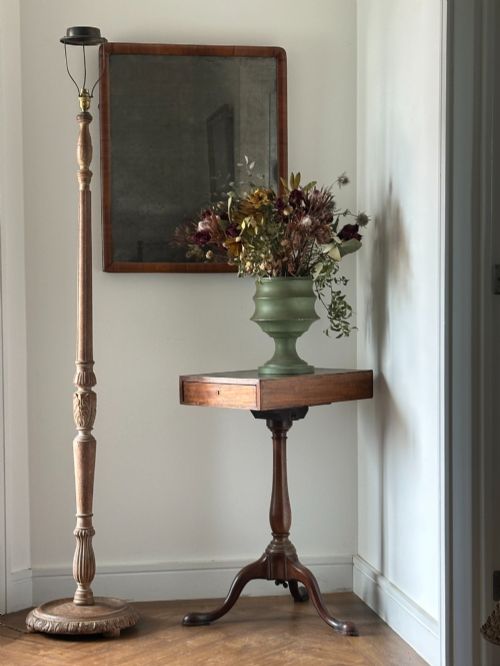
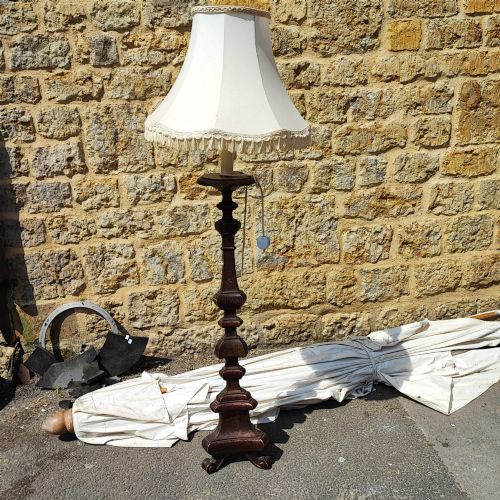
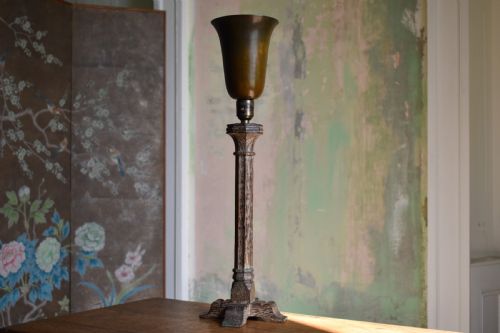


Carved Timber Standard Lamp
A carved timber standard lamp brings height and texture to a room, standing ready to anchor an interior with warm, directional light.
Carved Timber Standard Lamp
A carved timber standard lamp serves as a substantial floor-standing lighting fixture designed to illuminate large spaces from a grounded corner or beside a seating group. These pieces rise from heavy bases to support tall shafts, carrying shades that cast a downward glow across a room.
The selections available here span several distinct periods from the late nineteenth century through to the mid twentieth century, including Victorian, Arts and Crafts, and Interwar eras. Makers drew on diverse global traditions, producing Anglo-Indian, Chinese Oriental, European Folk Art, and traditional English country house designs.
While most examples function as floor lamps, related lighting forms such as table lamps and floor lamps appear alongside the primary standard lamps. The woodwork ranges from heavily carved oriental padauk to limed oak and general carved wood, often paired with brass, metal, glass, and fabric elements.
How they were made
Craftsmen shaped these lamp bodies from dense hardwoods such as oak and padauk, turning the timber on lathes before applying intricate hand-carved details. Certain pieces feature limed finishes that highlight the grain, while others display elaborate regional carving patterns characteristic of Kashmiri or Anglo-Indian workshops.
Makers integrated functional hardware in brass and other metals to mount bulb holders and wiring channels through the heart of the carved shaft. Bases were weighted and proportioned to ensure stability beneath the height of the standard lamp and its shade.
The site listings feature standard lamps spanning the decades from 1880 to 1940, utilising oak, padauk, and brass.
What varies in quality
The distinction between standard examples and superior work lies in the depth and crispness of the carving upon the timber shaft. Fine workshops invested hours in undercutting foliage or geometric motifs, whereas lesser pieces rely on shallow, mechanical tooling that lacks dimension.
Proportion and structural integrity dictate the standing presence of the piece, with better examples maintaining plumb vertical alignment without wobble despite the leverage of height. The choice of timber also elevates the object, favouring richly figured padauk or carefully quarter-sawn oak over plain, utility-grade softwoods.
Whytock and Reid
The Carved Timber Standard Lamp Glossary
- Limed oak
- Timber treated with a white pigment rubbed into the open pores to create a pale, frosted appearance. This finish gained popularity during the interwar decades for domestic furniture and lighting.
- Padauk
- A heavy, durable tropical hardwood prized for its deep reddish-brown colour and ability to hold fine detail. It appears frequently in imported oriental standard lamps from the early twentieth century.
- Standard lamp
- A tall floor-standing lighting column designed to hold an electric or oil lamp above eye level. The term remains the traditional British designation for what is widely called a floor lamp.
- Standard
- The central vertical pillar or shaft of a floor lamp supporting the lamp holder at the top. This structural stem often carries the primary decorative carving of the piece.
Carved Timber Standard Lamp: Frequently Asked Questions
What is a standard lamp?
A standard lamp is a tall, freestanding lighting fixture designed to stand on the floor rather than a piece of furniture. These pieces use a weighted base and a central shaft to elevate a light source and shade above seating height.
Historically, they provided ambient illumination in larger rooms before ceiling fixtures became universal. Today, they serve both a practical lighting role and a decorative sculptural function in an interior.
Where should I place a floor lamp?
Floor lamps sit naturally in corners, beside armchairs, or at the end of a sofa where they can project light downwards for reading. Their height allows them to fill vertical space that lower table lamps cannot reach.
Ensure the lamp stands on a level surface and consider the reach of the flex to the nearest wall socket. Positioning them away from heavy foot traffic protects the stability of the tall wooden shaft.
How do I date a wooden standard lamp?
Dating relies upon examining the timber species, the style of the carving, and any integrated metal hardware. Pieces from the Victorian era often show heavier, darker finishes, while Arts and Crafts examples favour simpler, honest joinery.
Interwar and 1920s pieces frequently introduce limed oak finishes or exotic imported woods like padauk. Original wiring methods, where present, also offer clues to the period of manufacture.