
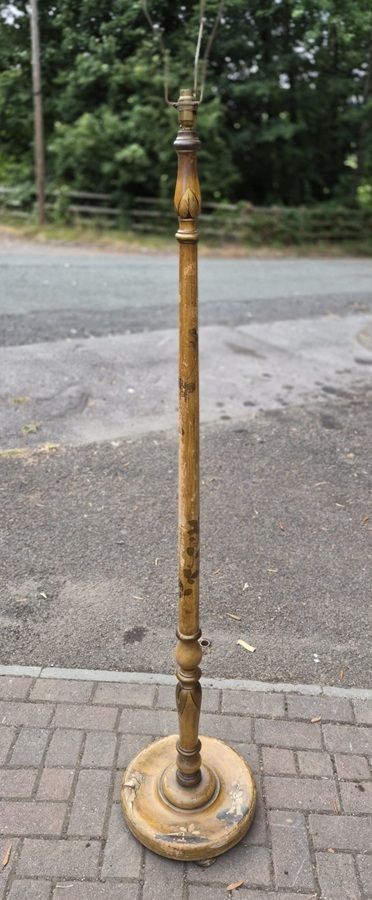
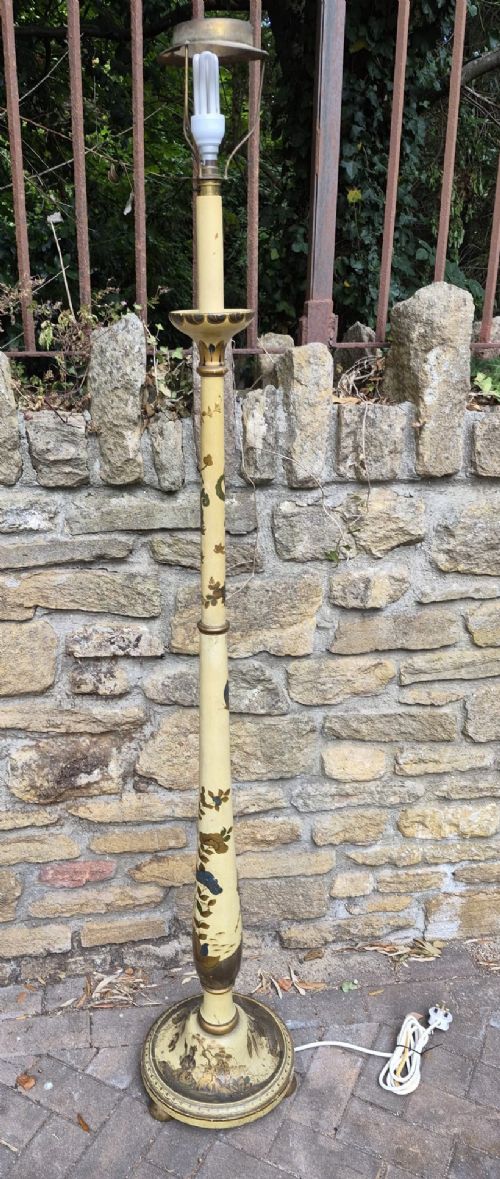
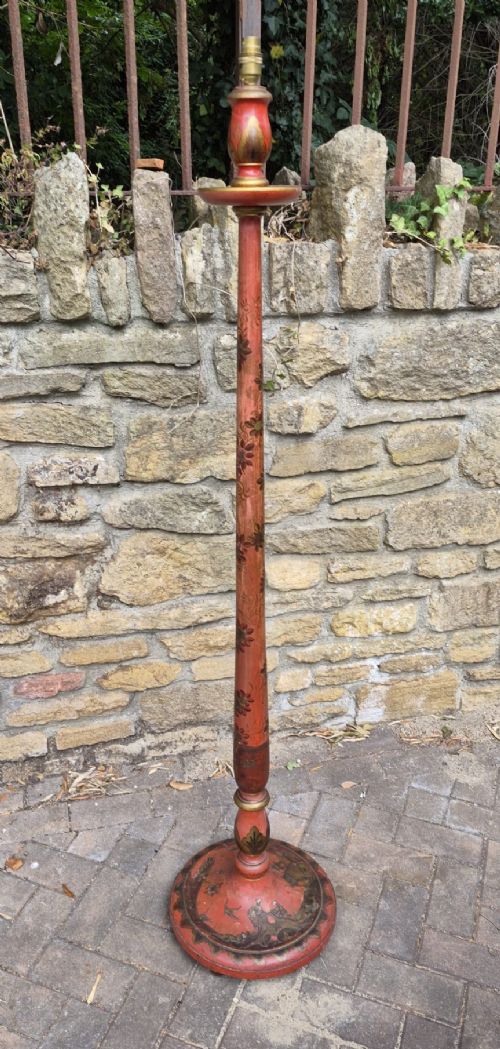
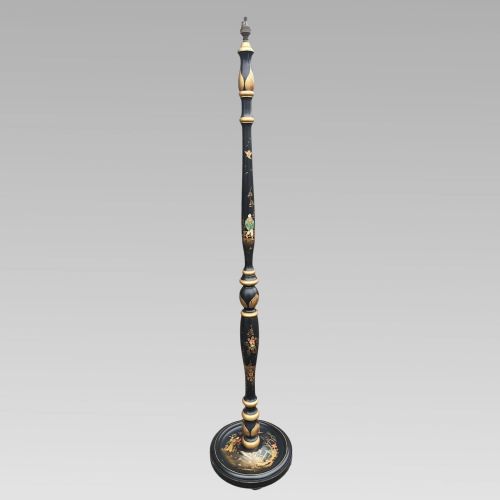
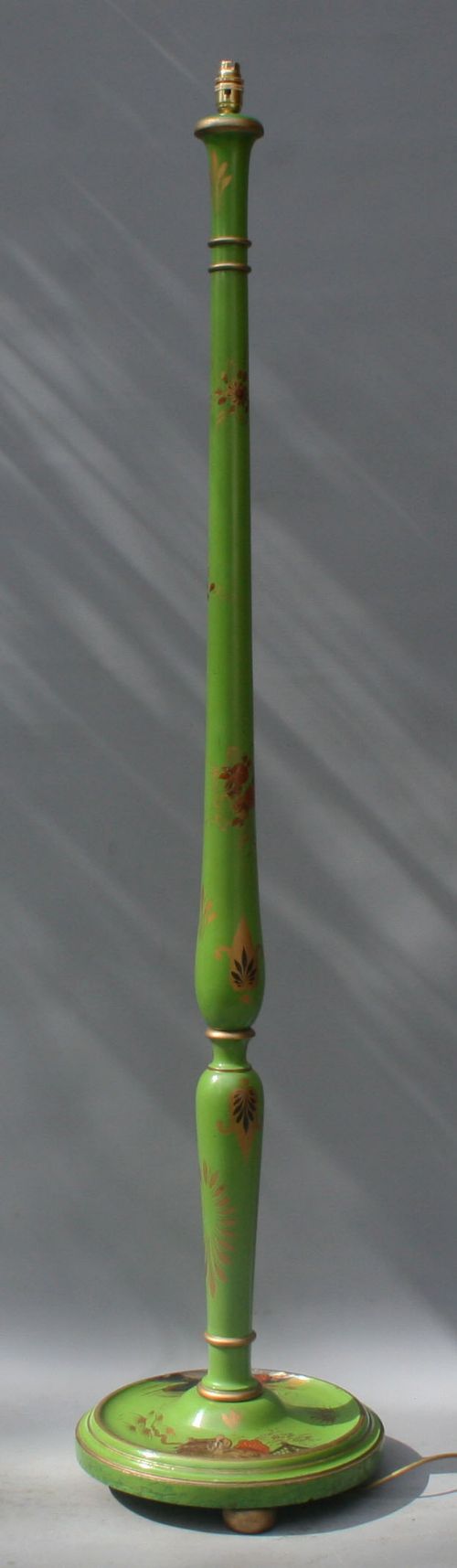


Antique Oriental Floor Light
An antique oriental floor light brings height, character and hand-finished detail to a room, drawing the eye with lacquered surfaces and carved wood.
Antique Oriental Floor Light
An antique oriental floor light stands tall to illuminate a space, taking the form of a standard lamp or adjustable lamp standard. These pieces emerge across the nineteenth and early twentieth centuries, spanning the Edwardian era through to the nineteen-thirties.
The aesthetic leans heavily into Chinoiserie, Japanese Meiji, Anglo-Indian, and Traditional Chinese styles. Makers adapt regional motifs and materials to suit British homes of the period.
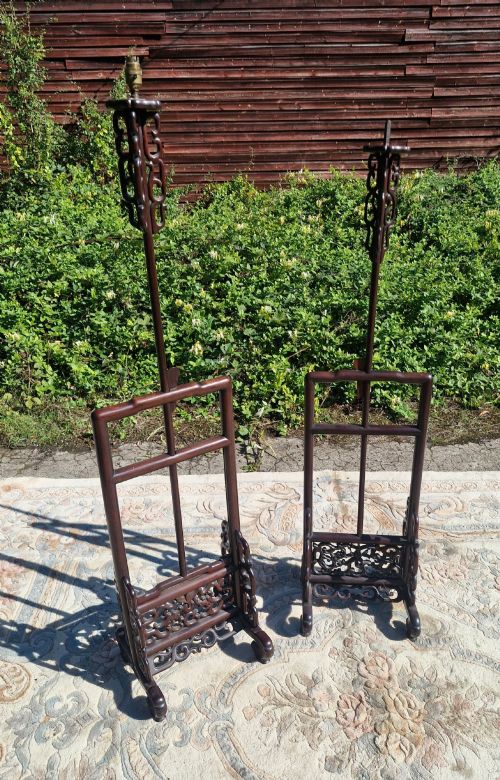
Buyers encounter lacquered wood, painted wood, and hardwoods such as padauk, alongside occasional bronze, copper, and fabric shades. Forms range from simple turned shafts to intricately carved standards.
How they were made
Craftsmen shape dense timbers like padauk and hardwoods by hand, carving intricate patterns or turning standard lamp shafts on a lathe. Other pieces utilise wood or metal foundations prepared for surface decoration.
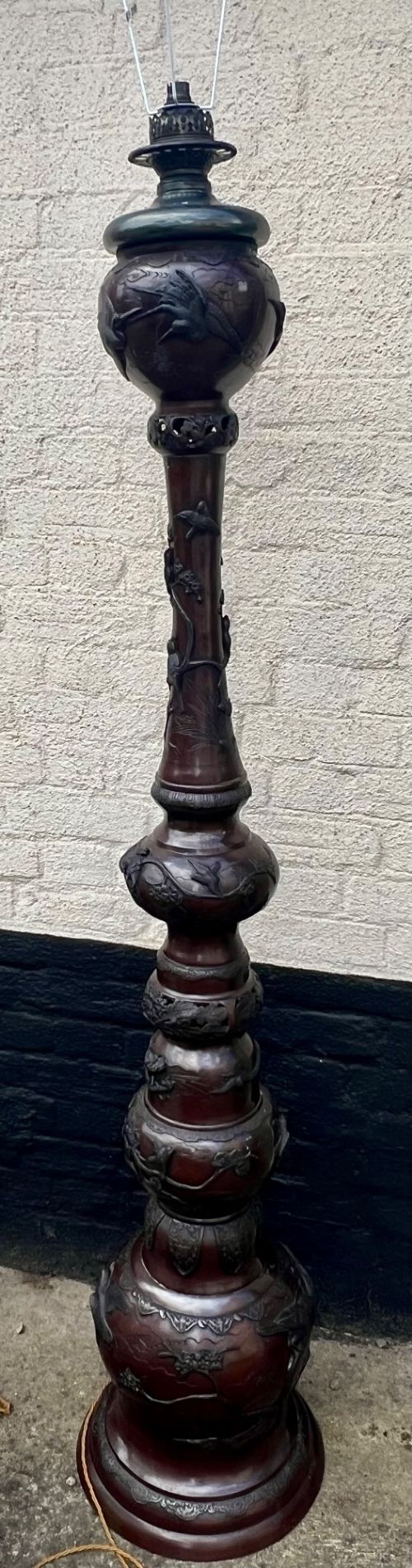
Lacquering and painting demand patient application of layers to achieve deep red, black, or natural finishes. Metal elements, such as bronze and copper, involve traditional casting and beaten work.
Listings feature periods spanning from eighteen hundred through to nineteen thirty, with a strong concentration of Edwardian Chinoiserie examples.
What varies in quality
The depth and preservation of the lacquer or paintwork set examples apart, with layered, hand-decorated surfaces commanding greater attention than flat, uniform coats. Crispness in the wood carving reveals the skill of the original hand.
Structural integrity in the extending mechanisms and the stability of the weighted base dictate everyday practicality. Original wiring configurations give way to modern safety standards while retaining the core standard lamp body.
The Antique Oriental Floor Light Glossary
- Chinoiserie
- European interpretation and imitation of Chinese and East Asian artistic traditions, often applied to furniture and decorative objects. This style dominates the lacquered floor lamps from the Edwardian period.
- Standard lamp
- A tall, freestanding floor lamp designed to hold a light bulb and shade at height. These tall vertical supports often feature adjustable mechanisms or carved wooden shafts.
- Meiji Period
- A Japanese era lasting from eighteen sixty-eight to nineteen twelve, known for fine metalwork and craftsmanship. Bronze floor lamps from this time display distinct regional artistry.
- Padauk
- A heavy, durable tropical hardwood prized for its rich grain and reddish-brown colour. Makers utilise this timber for carved standard lamps and extending columns.
- Hoshiarpur
- A town in India renowned for intricate wood inlay work using brass, bone, or shesham. Pieces from this tradition feature dense geometric patterns across the timber.
Antique Oriental Floor Light: Frequently Asked Questions
How do I place a floor lamp in a room?
Position the standard lamp beside a reading chair or in a dark corner to draw height and illumination upward. Ensure the weight of the base provides stability on carpets or wooden flooring.
Pair the lacquered or carved wooden shaft with a complementary fabric shade to balance the visual weight. Keep the piece clear of heavy foot traffic to protect delicate lacquer and carved details.
Can I update the electrical wiring safely?
Modern safety standards require professional rewiring of antique floor lamps to ensure domestic compliance. An electrician can thread modern flex through the internal channel without damaging the historical timber or metal.
Retain original brass switches and bulb holders where possible to maintain the character of the piece. Regular testing keeps the standard lamp safe for daily use in the home.
What defines the Edwardian Chinoiserie style?
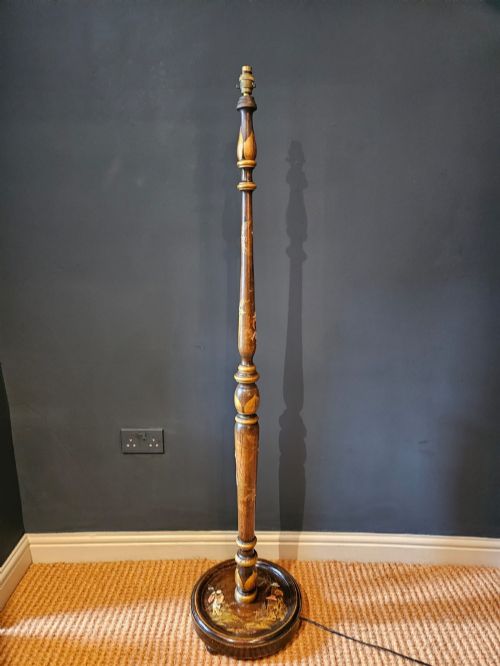
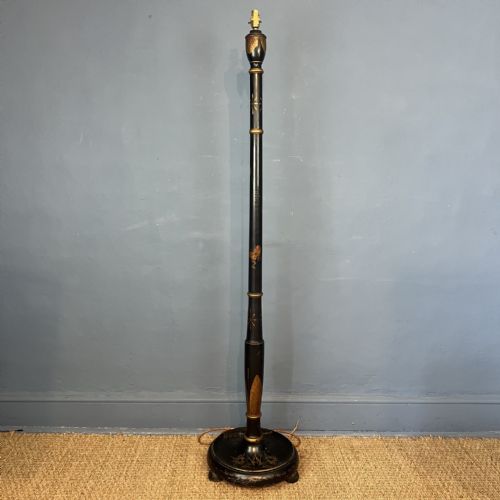
Edwardian Chinoiserie combines early twentieth-century British furniture forms with black or red lacquered finishes and hand-painted Asian motifs. Artisans decorated standard lamps with gilt figures, landscapes, and floral patterns.
This aesthetic reflects a sustained fascination with eastern design adapted for formal drawing rooms. The pieces provide a dramatic vertical accent against neutral walls.