


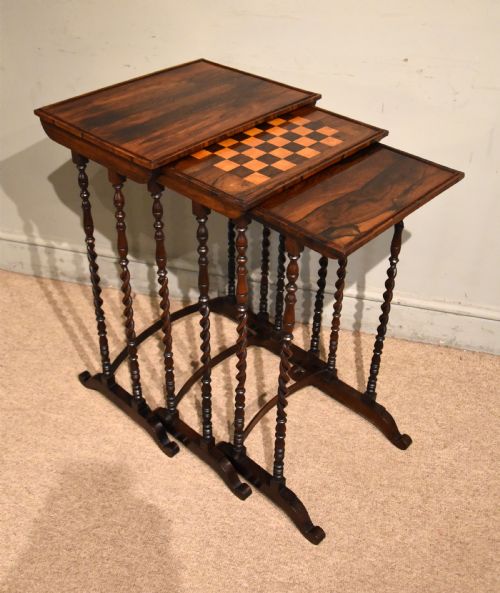


Antique Stackable Tables
Antique stackable tables are clever multi-tiered surface groups that slide neatly together to save floor space without sacrificing surface area.
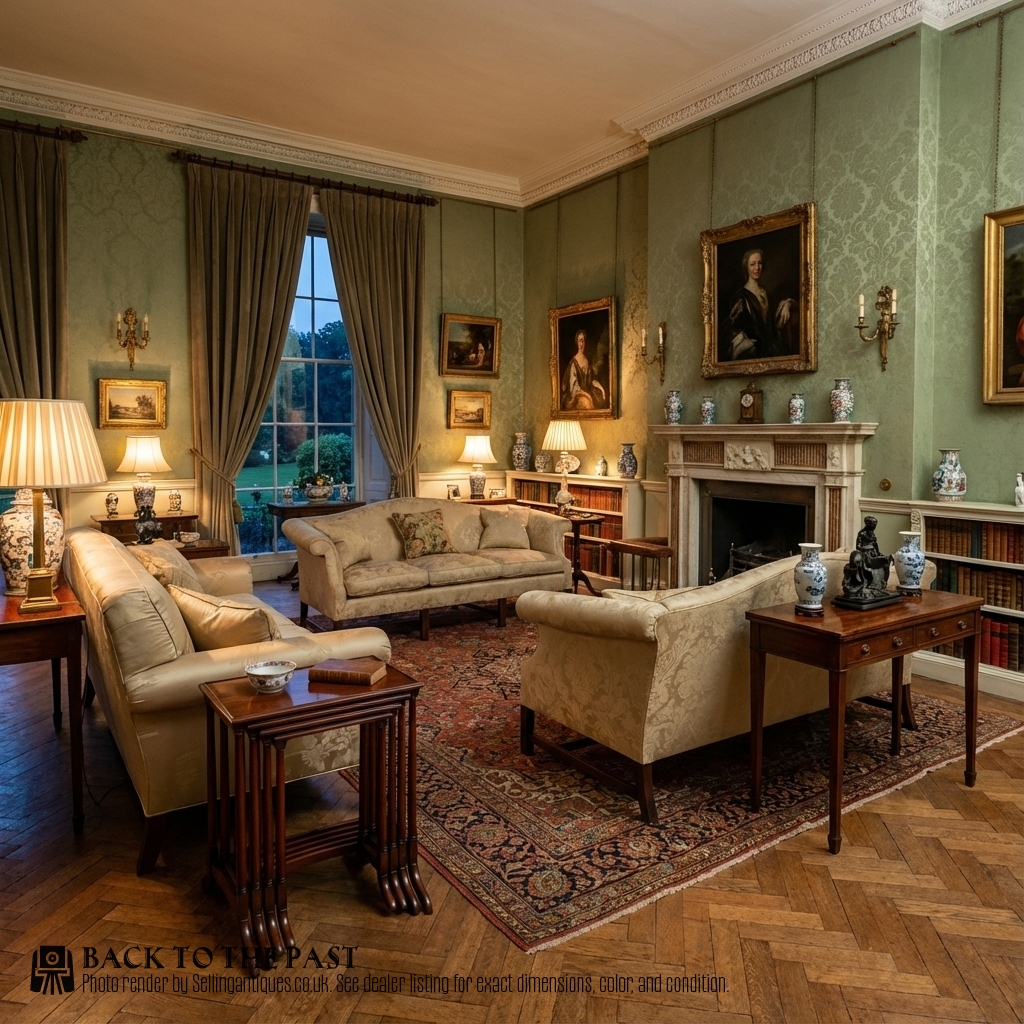
Antique Stackable Tables
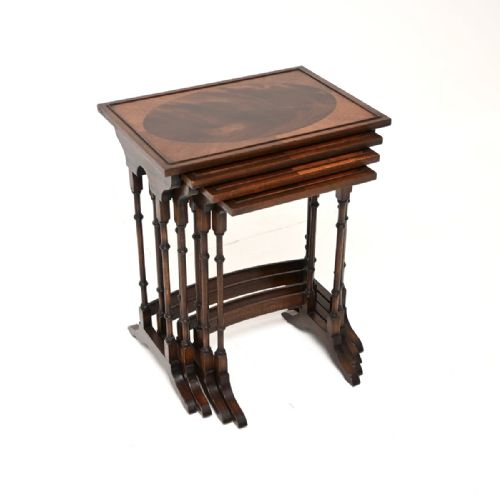
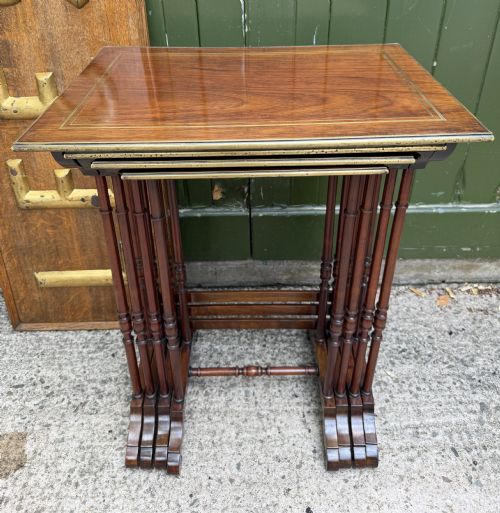
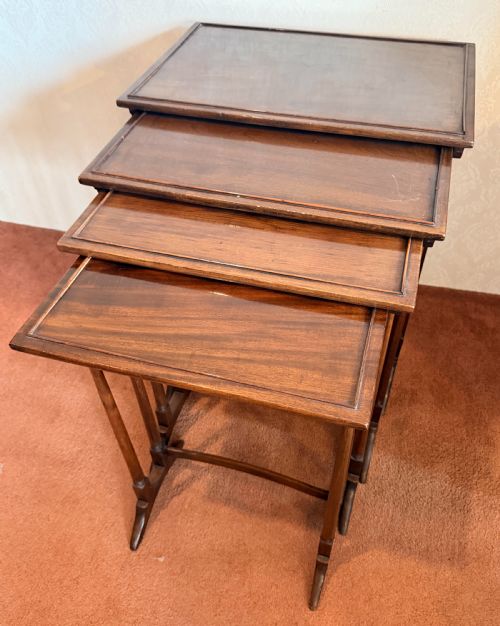
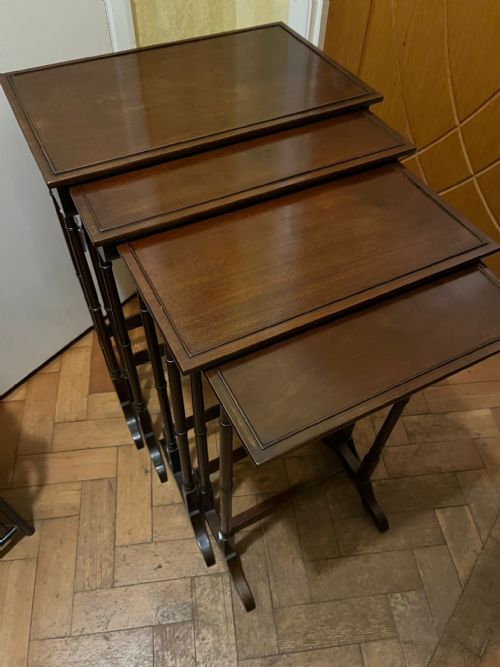
When you search for antique stackable tables, you encounter matching sets of graduated occasional furniture designed to deploy independently around a room and store as a single column. The most common form met on this page is the traditional nest of four tables, frequently known historically as a quartetto.
The material record spans the nineteenth and early twentieth centuries, drawing heavily upon periods such as Regency, Victorian, and Edwardian production alongside Chinese hardwood and hongmu examples. These pieces served practical domestic roles in drawing rooms and parlours for tea, needlework, or games.
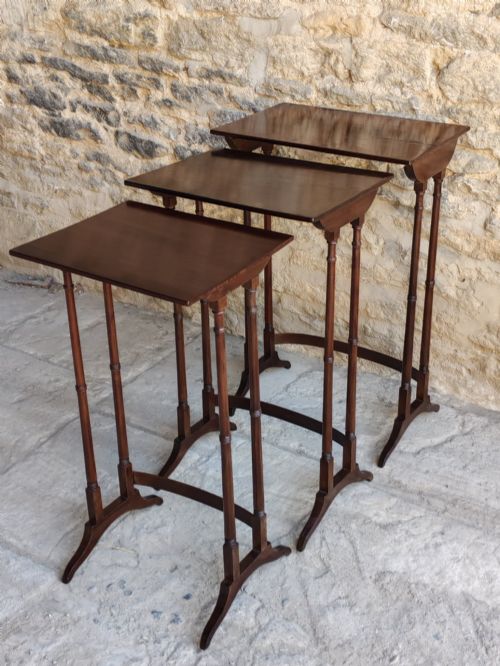
Makers and workshops utilised specific timber traditions, ranging from British mahogany and rosewood to exotic hardwoods from Qing Dynasty workshops. Sets typically comprise either three or four graduated tables built to fit precisely beneath one another.
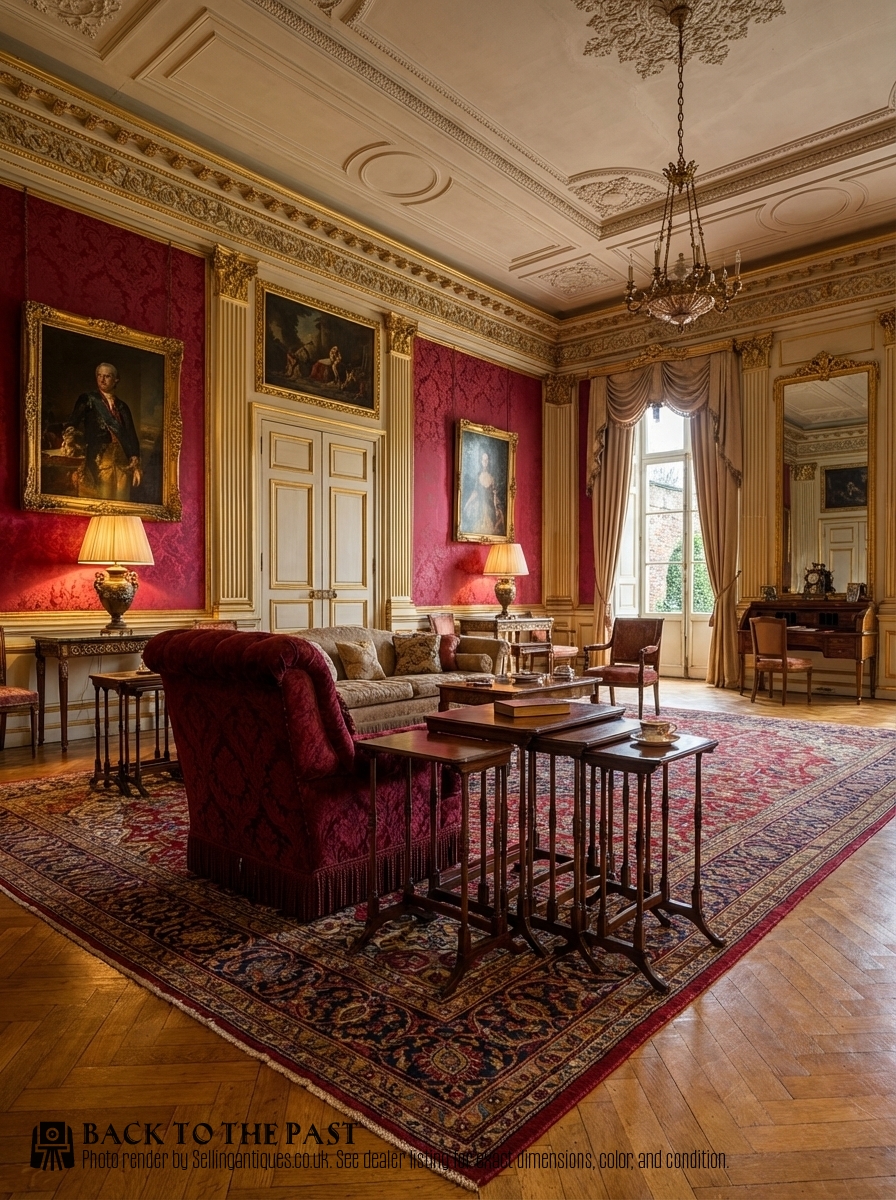
How they were made
Joiners relied on dense hardwoods like mahogany, rosewood, and walnut to withstand the friction of sliding frames repeatedly into position. Timber selection dictated the structural stability required for slender legs and thin tabletops.
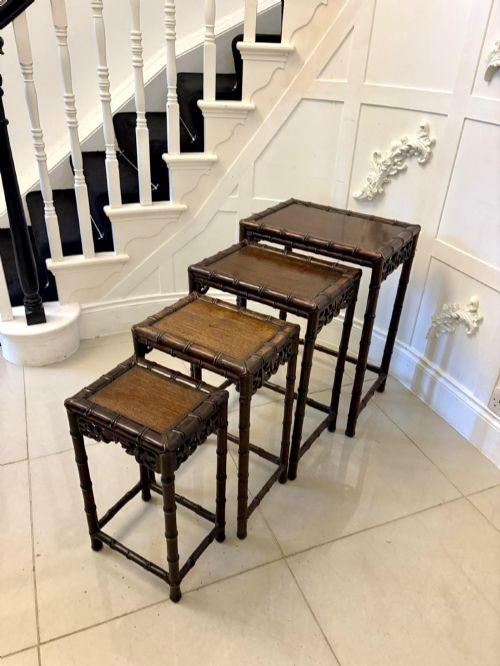
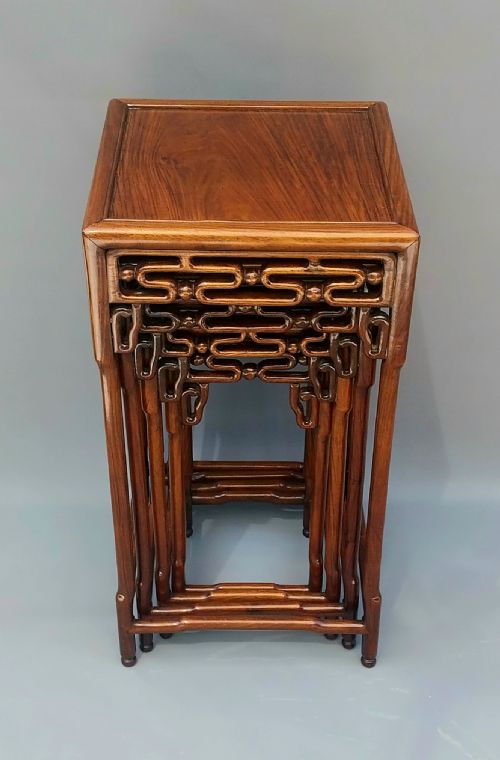
Decorative enhancements involved intricate techniques such as satinwood inlay, boxwood stringing, brass inlays, and parquetry. Chinese examples utilised carved hardwood and faux bamboo turning, while French pieces featured floral inlay upon walnut.
Graduation of size demanded exact proportions so that each smaller table cleared the frame of the one above it. Joints were tightly fitted to ensure stability despite the lightweight profile necessary for portability.
Antique Stackable Tables Retail Price Guide 2026
Typical asking prices for stackable tables among the pieces listed under this phrase on Sellingantiques today, from the lower quarter to the upper quarter. They describe what is for sale here now, not the wider market.
Listings feature mahogany, rosewood, walnut, and satinwood across Regency, Victorian, and Edwardian periods.
What varies in quality
The hierarchy of quality rests primarily upon the choice of timber and the precision of the graduating dimensions. Finer sets employ solid rosewood or figured mahogany with crisp, unrubbed inlay rather than simpler veneered surfaces.
Structural integrity separates standard utilitarian pieces from exceptional workshop output. High-grade examples maintain tight joints and smooth sliding actions across all four tiers without excessive wobble or loose framing.
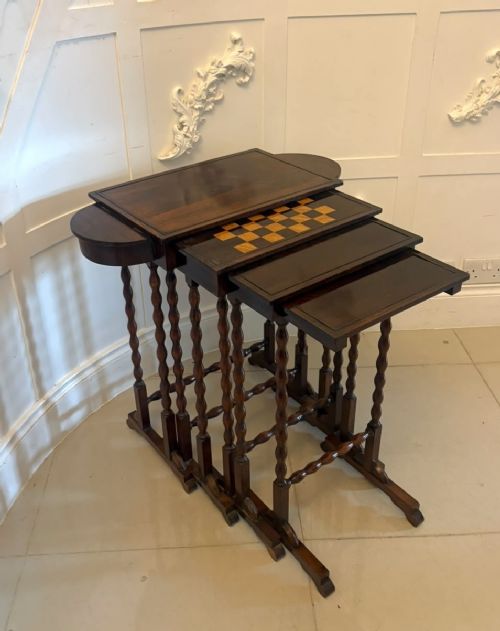
Refinement of detail, such as integrated chess boards, brass stringing, and hand-carved faux bamboo or floral motifs, distinguishes ambitious cabinet-making from basic commercial production.
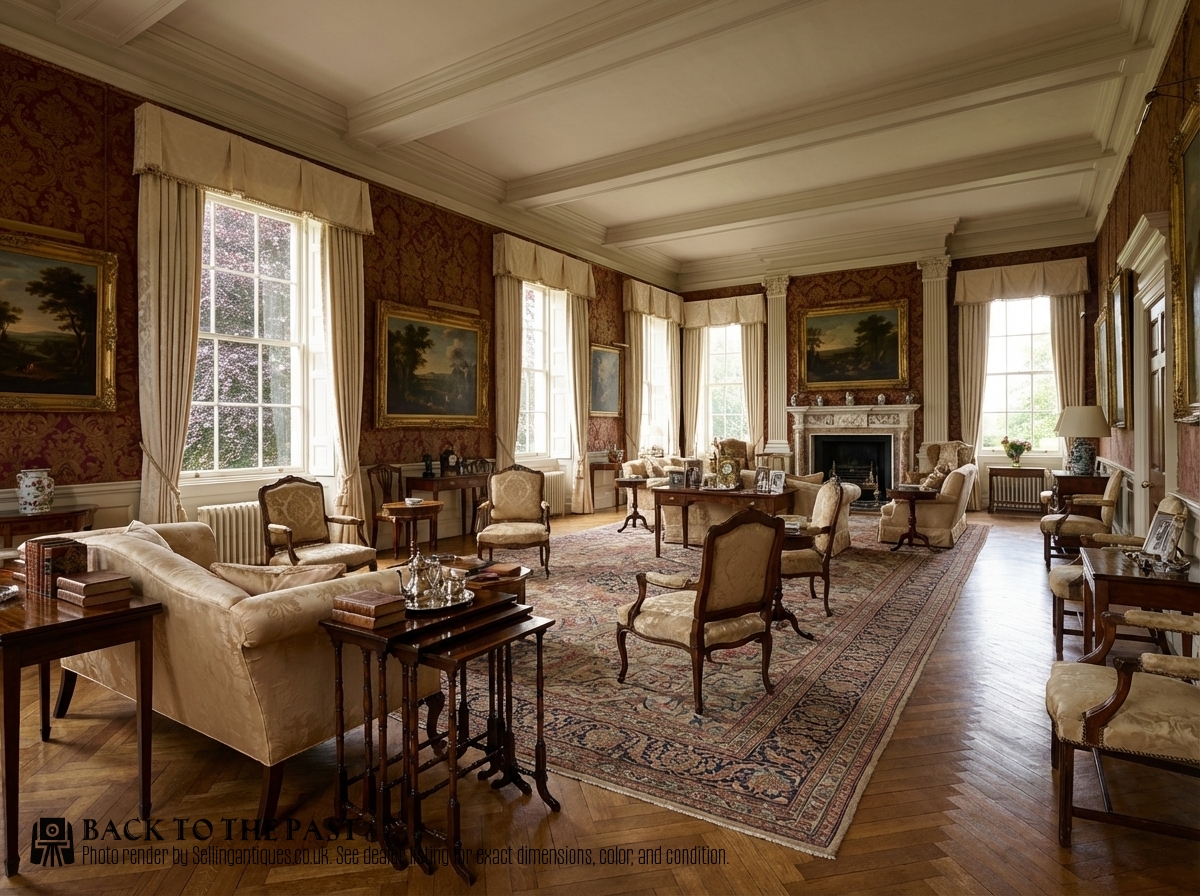
Heal's
The Antique Stackable Tables Glossary
- Quartetto
- A matching set of four nested tables designed to slide one beneath another. This nineteenth-century term frequently appears in Regency furniture descriptions.
- Hongmu
- A traditional Chinese term for dense hardwoods, often translated as red wood. These heavy timbers were utilised in Qing Dynasty nesting sets.
- Inlay
- A decorative technique where contrasting materials like satinwood, boxwood, or brass are embedded into the primary timber surface. This creates geometric or floral patterns.
- Parquetry
- Geometric wood mosaic work used for surface decoration. It commonly appears on continental European tables.
- Graduated
- Describing tables built in decreasing dimensions so they fit inside one another. Each tier drops incrementally in height and width.
Antique Stackable Tables: Frequently Asked Questions
What is a quartetto table?
A quartetto table is a nineteenth-century term for a set of four nesting tables. They are built in graduated sizes to stack together as one unit.
Regency makers frequently utilised rosewood for these specific four-tier sets.
How were nesting tables used?
Victorian and Edwardian households deployed these surfaces around the room for tea, reading, or letter writing. When guests departed, they stacked back together to clear the floor.
Some specialist examples even integrated game boards like chess directly into the top surface.
Are Chinese and British nests different?
Chinese examples from the nineteenth century often feature carved hardwood, hongmu, or faux bamboo construction. British versions lean towards mahogany, rosewood, and inlaid satinwood details.
Both traditions achieve the same core function of graduated stackable storage.
How do I identify an Edwardian set?
Edwardian sets typically date around nineteen hundred and frequently showcase mahogany with inlaid stringing. They often come in configurations of three or four graduated tables.
The lighter proportions distinguish them from heavier Victorian and Regency counterparts.