




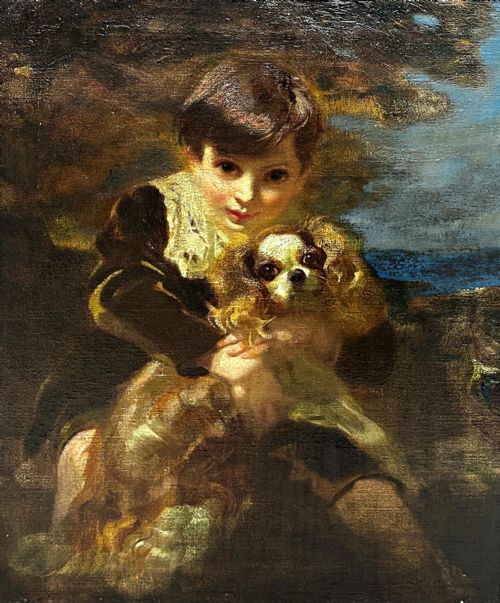
Antique Spaniel Portrait
An antique spaniel portrait captures canine devotion across centuries, moving from grand oil paintings to delicate needlework.
Antique Spaniel Portrait
When you search for an antique spaniel portrait, you encounter a rich tradition of canine depiction spanning from the seventeenth century through the mid twentieth century. These works range from solitary studies of individual dogs to grand sporting art and inclusion in human portraiture.
The nineteenth century yields the highest volume of examples on this page, dominated by oil paintings on canvas alongside watercolours, pencil drawings, and Berlin work needlework. Many pieces place the animal within a landscape, an interior, or alongside human companions.
Origins stretch across British artistic traditions, encompassing Georgian, Regency, Victorian, and Edwardian periods. Collectors also find mid twentieth century interpretations and works after earlier masters.
How They Were Made
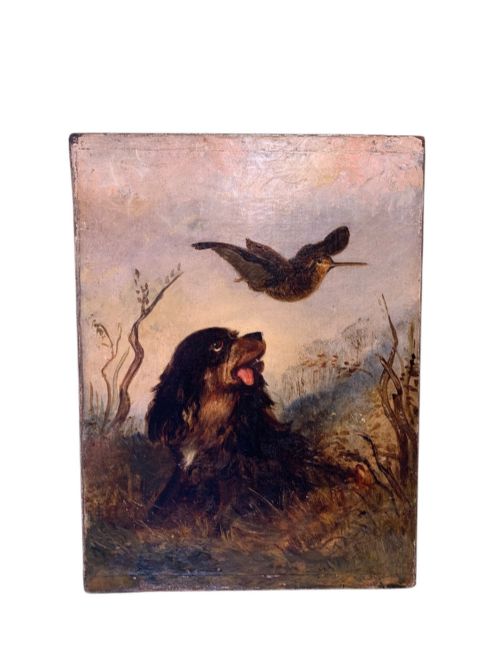
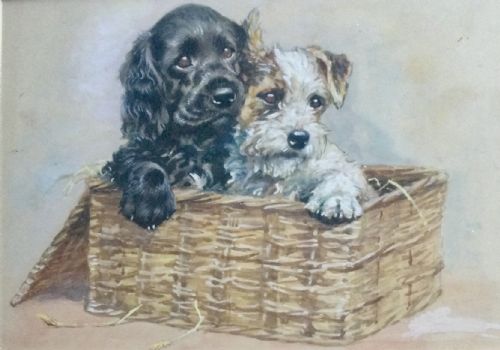
Artists relied primarily on oil paint applied to canvas or wood panel, capturing textures of fur and light within interiors or open landscapes. Watercolour and pencil on paper offered lighter mediums for intimate drawings and studies.
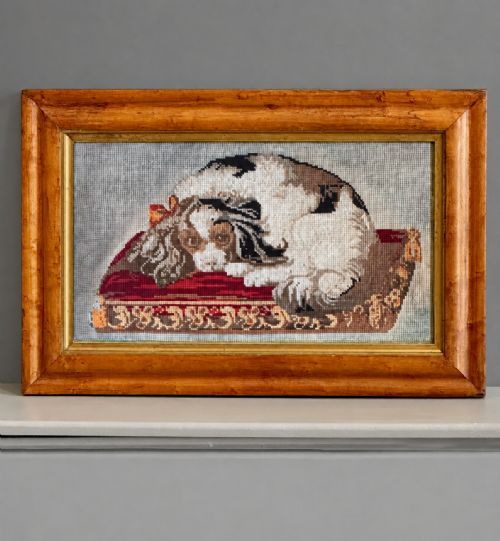
Needlework pieces utilised wool on canvas, known as Berlin work, mounted in original burr maple frames. Graphic works employed etching and framed prints to reproduce canine subjects.
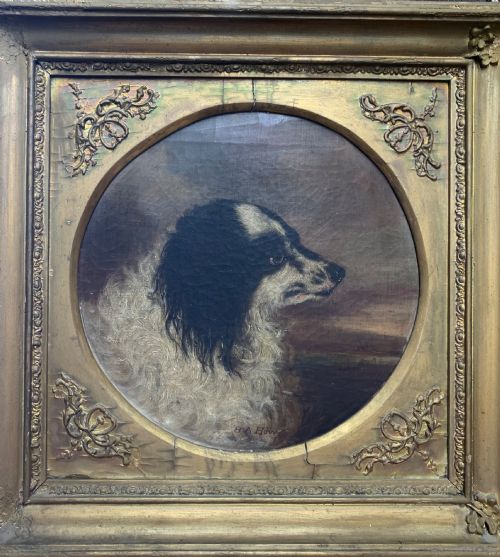
Gilded wood frames completed many of the paintings, preserving the works across generations while reflecting the prevailing decorative tastes of their respective periods.
Listings feature works spanning from the 17th century to the mid 20th century, executed in oil, watercolour, pencil, and needlework.
What Varies in Quality
The fidelity of the animal's anatomical rendering and expression distinguishes finer works from simpler naive pieces. Master painters captured specific breeds, such as King Charles spaniels or cocker spaniels, with distinct personality and anatomical precision.
The context of the portrait matters greatly, as works featuring detailed landscapes, country houses, or named historical dogs carry greater artistic ambition. Condition of the canvas, preservation of original pigment, and the presence of period frames also influence the stature of a piece.
Herbert Dicksee·William Barraud·Mabel Gear·Charles Bilger Spalding·Frederick Tayler·Samuel John Carter·Frank Owen Salisbury·George Romney·Francis Alleyne·Edwin Landseer
The Antique Spaniel Portrait Glossary
- Berlin work
- A type of nineteenth-century canvas needlework charted on squared paper, often using brightly coloured wools to depict animals and figures.
- Oil on panel
- A painting executed on a wooden board rather than stretched canvas, common in earlier periods and smaller formats.
- Sporting art
- Artwork dedicated to rural sports, hunting dogs, and horses, reflecting the leisure pursuits of the landed gentry.
- Etching
- A printmaking technique where lines are incised into a metal plate with acid before being inked and pressed onto paper.
- Circle of
- A designation indicating the work was produced by an artist closely associated with a master, sharing their style and workshop methods.
Antique Spaniel Portrait: Frequently Asked Questions
What breeds appear most often?
King Charles spaniels and cocker spaniels dominate the works, reflecting their popularity as household pets and sporting companions.
Other representations include clumber spaniels and liver and white hunting dogs, often shown alongside game or in rural settings.
How should I hang these works?
Keep oil paintings and watercolours away from direct sunlight to protect pigments from fading over time. Stable room temperatures prevent the canvas and wooden panels from warping.
Pairing smaller drawings or needlework with traditional frames enhances their historical character within a room.
Are these works signed by artists?
Some pieces bear signatures or inscriptions from identified nineteenth and twentieth century painters and illustrators. Many historical works remain attributed through stylistic study or contemporary documentation rather than a direct signature.
Attributions often link pieces to the circle of well-known portraitists or established sporting artists.
Why do humans often appear with the dogs?
Spaniels frequently featured in family portraits to symbolise loyalty, companionship, and the status of the household. Children and gentlemen were painted with their favourite dogs to demonstrate personal affection and rural pursuits.
Solitary dog portraits emerged more strongly as distinct subjects in nineteenth-century animal painting.