

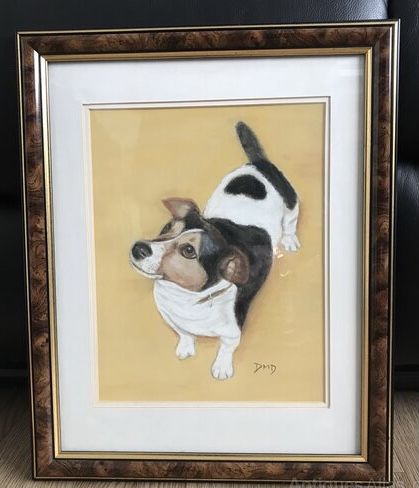
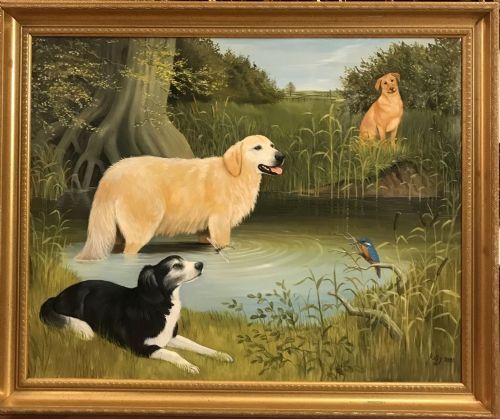

Antique Canine Artwork
Antique canine artwork captures the distinct character and spirit of dogs through centuries of fine painting, drawing and printmaking.
Antique Canine Artwork
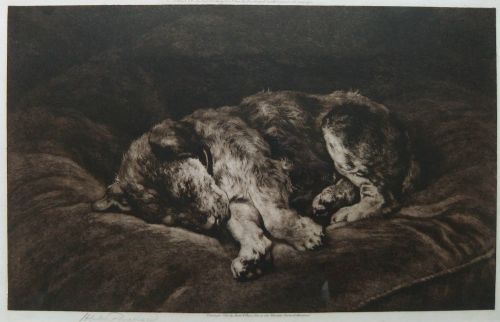
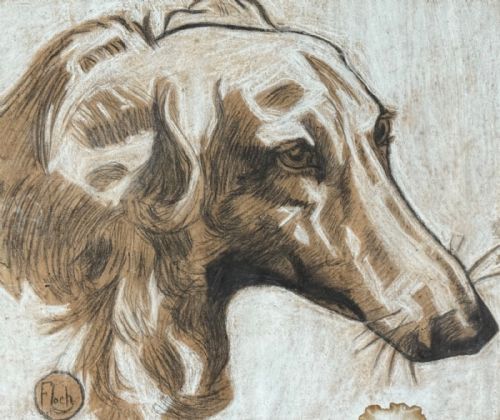
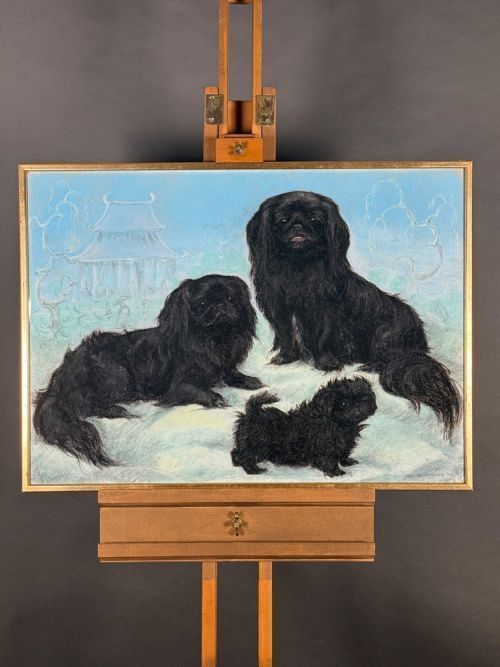
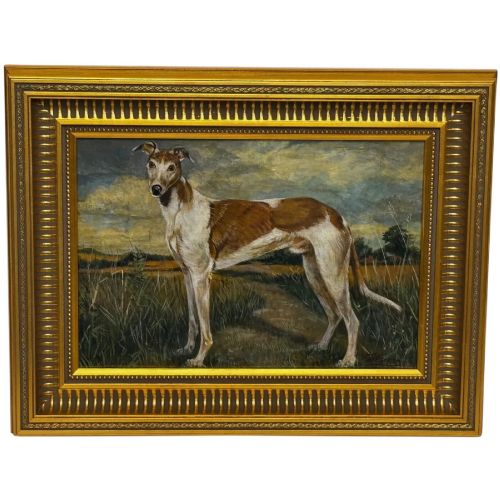
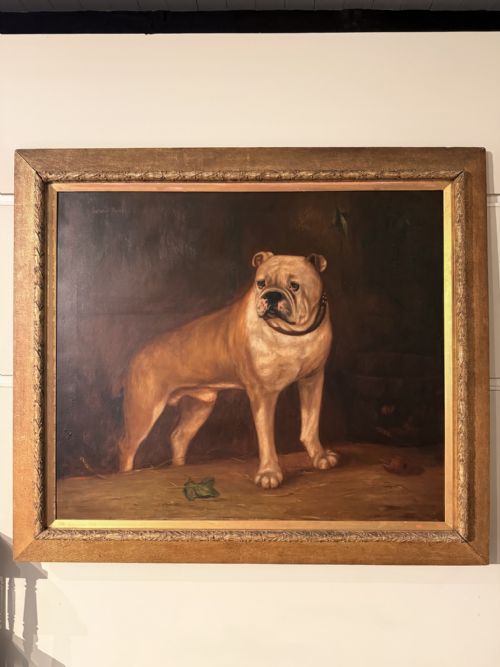
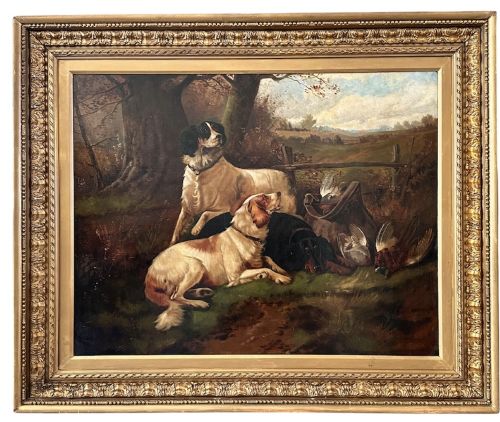
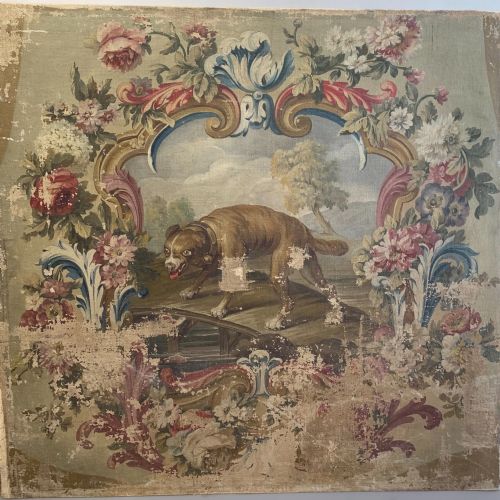
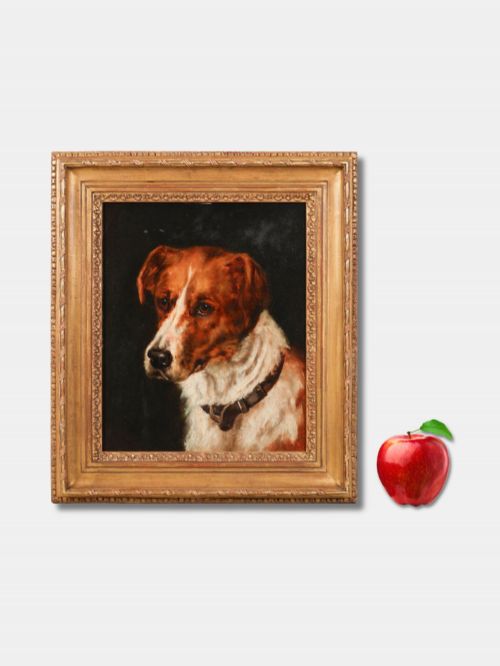
When you search for antique canine artwork, you encounter a rich tradition of dog portraiture spanning oil paintings, watercolours, charcoal sketches and original etchings. These pieces range from intimate sketches of family pets to grand portraits of working hounds and hunting packs.
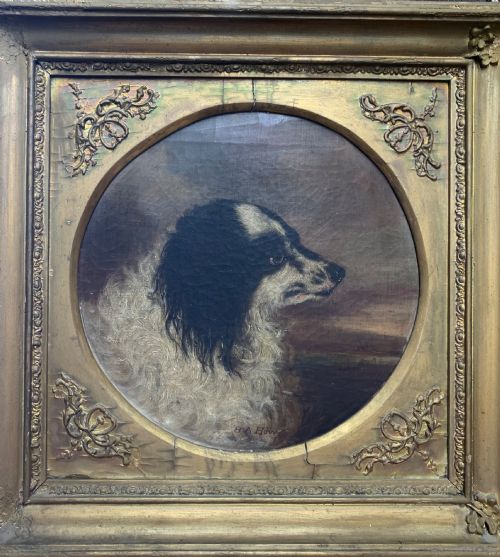
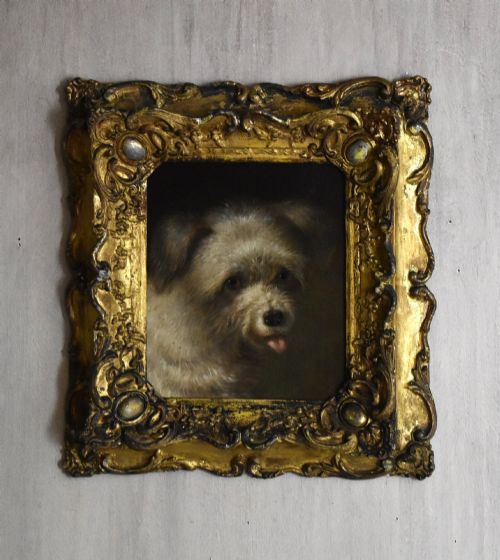
You are most likely to meet 19th-century and early 20th-century British works on this page, reflecting a period when canine subjects held a prominent place in fine art. These depictions frequently showcase recognizable breeds such as spaniels, terriers, collies and setters within detailed landscapes or domestic interiors.
Materials and construction
Painters of these subjects relied primarily on oil paint applied to canvas or wood boards, utilising rich pigments to render the texture of a dog's coat and the natural light of a landscape. Draftsmen worked with charcoal, gouache and pencil on paper, capturing fine details in swift, expressive strokes.
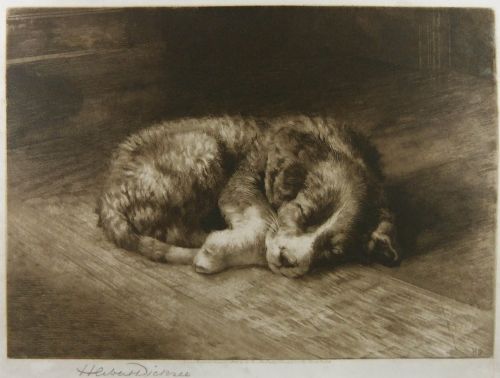
Printmakers employed techniques like original etching, creating detailed plates that allowed multiple impressions of popular canine compositions to circulate. Framing often involved period wooden mouldings finished with gold leaf or giltwood, completing the presentation of the artwork.
Antique Canine Artwork Retail Price Guide 2026
Typical asking prices for canine artwork among the pieces listed under this phrase on Sellingantiques today, from the lower quarter to the upper quarter. They describe what is for sale here now, not the wider market.
Materials documented include oil on canvas, gouache, pencil, charcoal and gold leaf.
Variations in quality
Quality in these works rests largely on the artist's ability to render animal anatomy correctly and convey individual canine personality rather than a generic animal form. Superior pieces demonstrate confident brushwork or etching technique, particularly in the treatment of fur, expression and eye detail.
The sophistication of the composition also separates finer examples from standard decorative pieces, with master artists integrating the animal into a coherent and balanced setting. Provenance and attribution to recognised sporting or animal painters further elevate the standing of a work.
Herbert Dicksee·Valentine T Garland·John Emms·Arthur Wardle·Sir Edwin Landseer
The Antique Canine Artwork Glossary
- Etching
- A printmaking process where lines are bitten into a metal plate with acid before ink is applied and transferred to paper. Herbert Dicksee utilised this technique for many of his detailed canine prints.
- Giltwood
- Wood carved and covered with a thin layer of gold leaf or gold paint. This material frequently frames 19th-century oil portraits.
- Sporting Art
- A genre of painting and illustration focusing on rural sports, including hunting, shooting and the working dogs associated with them. British sporting art flourished during the Victorian period.
- Realism
- An artistic movement focused on depicting subjects truthfully and accurately without artificiality. Victorian realism is evident in detailed dog portraits of the era.
- Provenance
- The documented history of ownership of an artwork, establishing its authenticity and origin. A clear provenance adds significant context to a historical dog portrait.
Antique Canine Artwork: Frequently Asked Questions
What is antique canine artwork?
Antique canine artwork consists of paintings, drawings and prints depicting dogs, produced primarily during the 19th and early 20th centuries. These works range from informal sketches to formal commissioned portraits.
Artists across Britain and Europe recorded the appearance and companionship of dogs, using mediums such as oil on canvas, watercolour and etching.
How were dog portraits used historically?
Dog portraits were commissioned by owners to celebrate prized pets, working dogs or champion hunting hounds. They served as personal tributes within family homes.
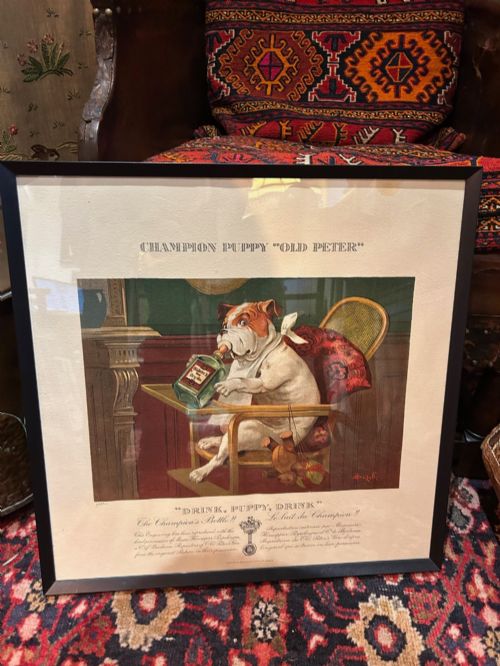
Publishers also produced prints and advertising pieces for a broader audience, allowing people to display popular canine subjects in domestic spaces.
How do I care for antique dog paintings?
Protect antique paintings and works on paper by keeping them away from direct sunlight and sources of excessive heat or moisture. Stable indoor humidity prevents canvas cracking and paper degradation.
Display oil paintings without glass to allow the canvas to breathe, while works on paper require UV-filtering glazing for protection.
How can I tell the period of a piece?
The period can often be identified through clothing styles in portraits containing humans, framing methods and the specific medium or paper type used. Stylistic markers of Victorian or Edwardian art offer further clues.
Signatures, dates inscribed on the reverse and artist biographies help narrow down the exact decade of creation.