



Victorian Canine Oil Artwork
A victorian canine oil artwork captures the distinct personality and loyal stance of nineteenth-century dogs through layered pigment and careful brushwork.
Victorian Canine Oil Artwork
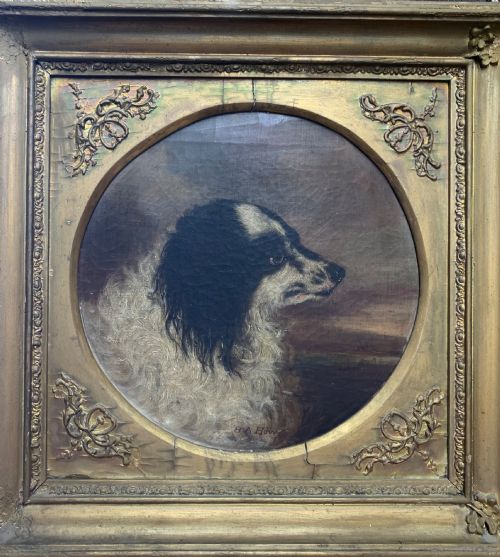
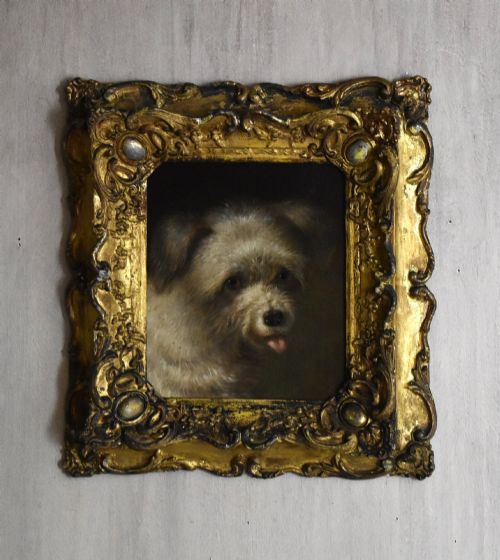
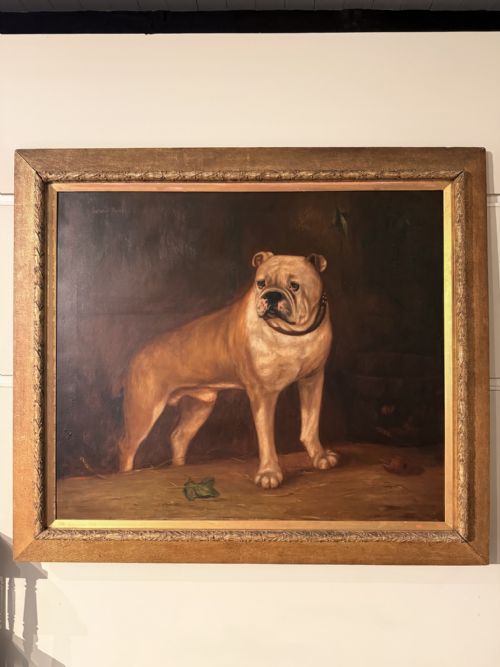
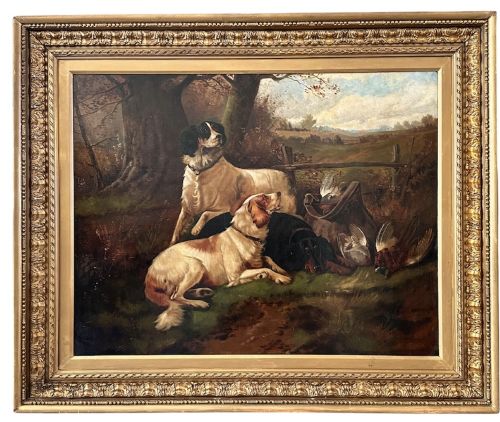
These pieces are period paintings depicting dogs, spaniels, terriers, and sporting hounds rendered in oils on canvas or panel. Buyers searching for victorian canine oil artwork encounter individual portraits, pairs, and narrative hunting scenes set in landscapes or domestic interiors.
Materials and Technique
Painters applied oil paint onto stretched canvas or wooden panels, building up rich textures for fur, foliage, and upholstery. Artists utilised fine brushes to capture the sheen of a coat and the keen gaze of a hound.
Surviving works frequently retain their original gesso and giltwood frames embellished with gold leaf. These heavy wooden surrounds complement the deep tones of the nineteenth-century palette.
Several canvases record working terriers caught red-handed guarding a recently trapped barn rat.
Assessing Quality
Quality rests in the anatomical accuracy of the subject and the psychological depth of the animal's expression. Master painters command the texture of canine fur and integrate the figure naturally into the surrounding landscape or interior.
The handling of light and shadow defines the stronger examples, whereas weaker works rely on stiff postures and flat backgrounds. Hand-carved gilt frames also reflect the original investment in the picture.
Valentine T. Garland·Martin Theodore Ward·John Sargent Noble·John Emms·William Barraud·Sir Edwin Landseer·Colin Graeme Roe·John Trivett Nettleship·Jules Chardigny·George Earl·Philip Eustace Stretton·Charles Bilger Spalding·Henry Frederick Lucas-Lucas·Samuel John Carter·George Armfield
The Victorian Canine Oil Artwork Glossary
- Oil on Canvas
- Pigment mixed with drying oil applied to a woven fabric support stretched across a wooden frame. This primary medium allows for subtle blending and deep colour saturation.
- Giltwood
- Timber carved and coated with gold leaf or metallic powder. It provides a bright, reflective border that enhances the darker tones of oil paintings.
- Gesso
- A plaster mixture applied to wooden frames as a smooth base for gilding. It enables crisp decorative mouldings around the edge of the artwork.
- Sporting Art
- Genre of painting dedicated to hunting, shooting, racing, and the animals associated with field sports. These works document the working breeds of the nineteenth century.
Victorian Canine Oil Artwork: Frequently Asked Questions
What breeds appear most often in these paintings?
Terriers, spaniels, setters, and collies dominate the canine subjects recorded in these nineteenth-century paintings. Artists frequently painted working gun dogs and beloved family pets.
Breeds reflect the rural pursuits and domestic preferences of Victorian households, ranging from ratting terriers to prized show champions.
How do I care for an oil painting on canvas?
Keep the canvas away from direct sunlight and dramatic shifts in household temperature or humidity. Avoid touching the painted surface directly with bare hands.
Dust the canvas and its gilt frame very gently with a soft, dry brush when necessary. Professional conservation is best left to specialists.
Are these paintings usually signed by the artist?
Many works bear a signature or monogram from the painter, often placed discreetly in a lower corner. Unsigned pieces also appear frequently from the period.
Attributions often rely on recorded exhibition history, distinct brushwork, and archival comparisons with known animal painters of the era.
How should I display a gilt-framed oil painting?
Select a sturdy wall anchor capable of supporting the weight of a dense wooden frame. Position the piece at eye level away from moisture sources.
Ensure adequate wall space allows the decorative giltwood moulding to catch natural room light without glare.