




Spaniel Oil Portrait Painting
A spaniel oil portrait painting brings centuries of canine devotion directly onto canvas, capturing the distinct character of these beloved dogs through classical brushwork.
Spaniel Oil Portrait Painting
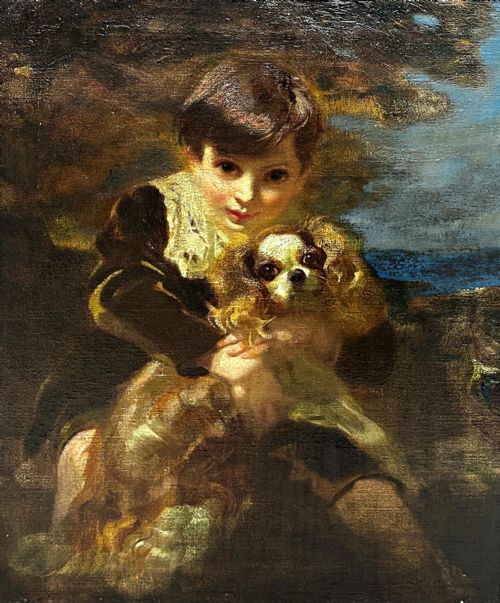
When you search for a spaniel oil portrait painting, you encounter works spanning from the seventeenth century through to the mid twentieth century. These pieces range from intimate studies of individual dogs to grand sporting art and portraits where the spaniel shares the frame with human companions.
You are most likely to meet nineteenth-century examples on this page, alongside works from the eighteenth and twentieth centuries, featuring breeds from King Charles spaniels to working field types.
The subjects appear in varied settings, from simple interiors and country houses to expansive landscapes with distant architecture or hunting bags.
Materials and construction
Artists executed these works primarily using oil paint applied to canvas, wood panels, or tin plates, often building up rich layers to render the texture of dog fur and fine fabrics.
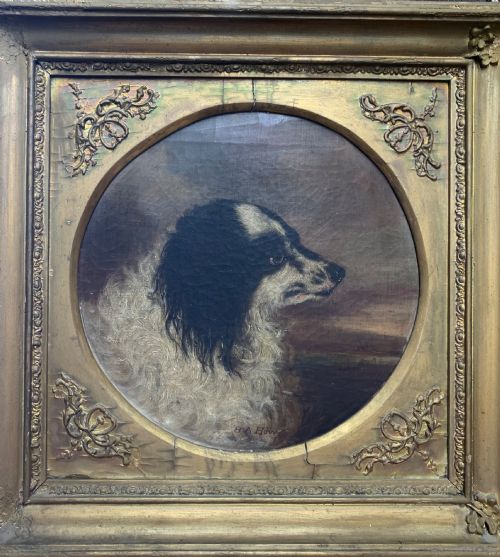
Many surviving canvases retain their original gilded wood or giltwood and gesso frames, which frequently display period ornamentation that complements the composition.
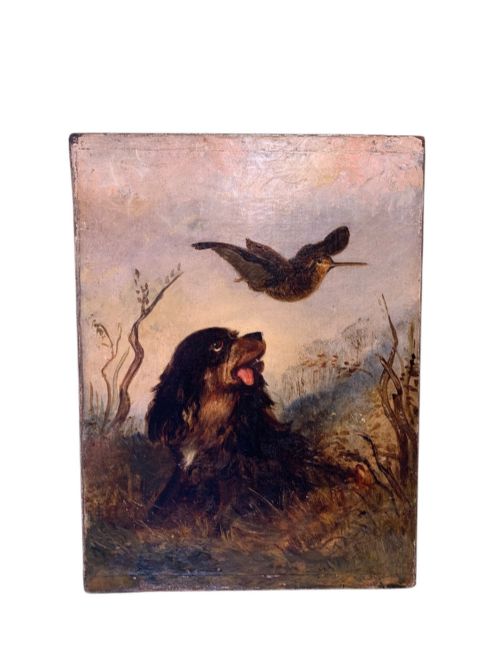
Several portraits capture spaniels immortalised alongside unexpected companions, including a pug and a woodcock.
Assessing quality and execution
Quality rests in the anatomical accuracy of the dog, the expressiveness of the gaze, and the skill with which the artist handles light across both animal coat and background landscape.
Works attributed to notable circles or named artists demonstrate a higher sophistication in composition, depth of tone, and the subtle rendering of movement compared to anonymous school pieces.
B A Howe·William Barraud·Mary Beale·Charles Bilger Spalding·George Stubbs·Samuel John Carter·Frank Owen Salisbury·George Romney·William Albert Clark·Francis Alleyne·John Verelst·Johannes Vollevens I·Charles D'Agar·James Maubert·Edwin Landseer
The Spaniel Oil Portrait Painting Glossary
- Oil on Canvas
- A traditional painting medium where oil-based pigments are applied to a woven fabric support stretched over a wooden frame. This method allows for subtle blending and rich colour depth.
- Giltwood
- Wood carved and coated with gold leaf or a gold-coloured metallic finish. It forms the decorative border of many traditional picture frames.
- Circle of
- Attributed to an artist working in the style and period of a master, often in their immediate workshop or following their exact methods. This term denotes close association rather than direct authorship.
- Oil on Panel
- A painting created by applying oil paint directly to a prepared wooden board rather than canvas. This solid support provides a rigid surface for detailed brushwork.
Spaniel Oil Portrait Painting: Frequently Asked Questions
How do I date a spaniel oil portrait painting?
Dating relies heavily on costume details, framing styles, and the specific brushwork techniques characteristic of periods like the Georgian or Victorian eras.
Inscribed signatures, historical records, and biographical details of the sitter or artist further help narrow down the exact decade of creation.
What is the difference between a solo dog portrait and a sporting painting?
Solo portraits focus entirely on the individual dog, highlighting its breed characteristics and personality often within an interior or simple landscape setting.
Sporting paintings place the spaniels in an active hunting context, frequently showing them with game birds, guns, or working alongside handlers in the field.
How should I care for an antique oil painting?
Keep the painting away from direct sunlight and fluctuating temperatures to prevent the canvas from sagging and the oil paint from cracking.
Dust the surface gently with a soft, dry brush and avoid using water or chemical cleaners on either the canvas or the gilded frame.
Why do some listings mention a circle of an artist?
The term indicates that the painting was produced by an unidentified hand working closely in the manner and studio tradition of a well-known master.
These pieces offer high artistic merit and period authenticity from the same era as the named painter without carrying direct attribution.