

Antique Slope Desk Box
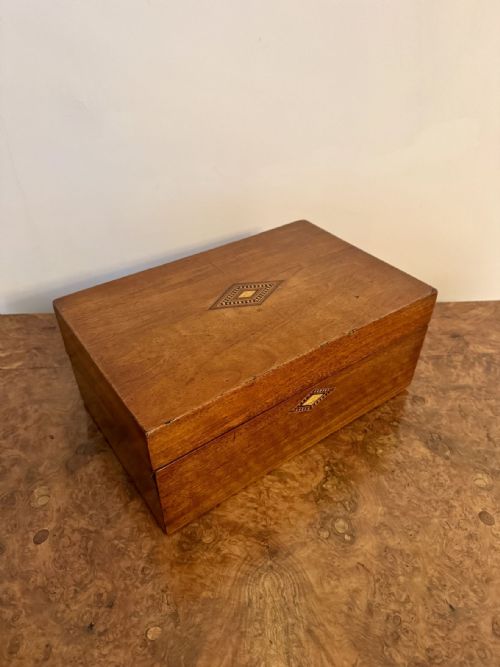
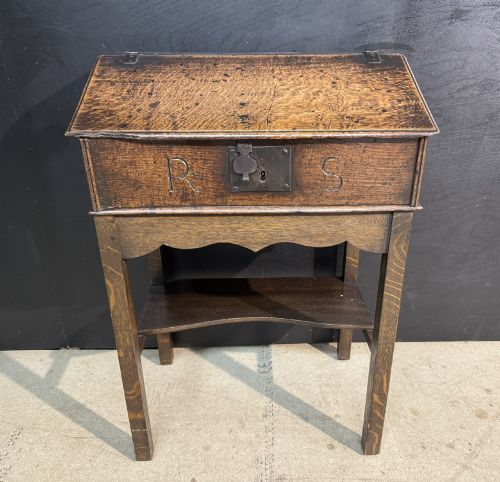
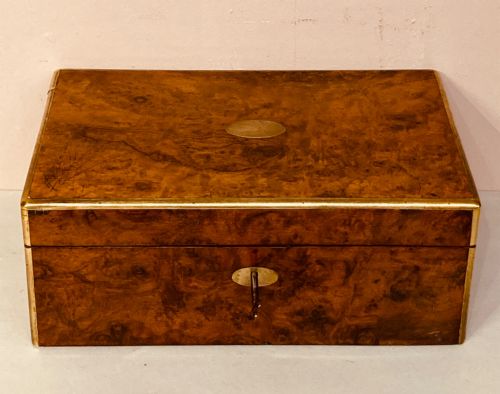
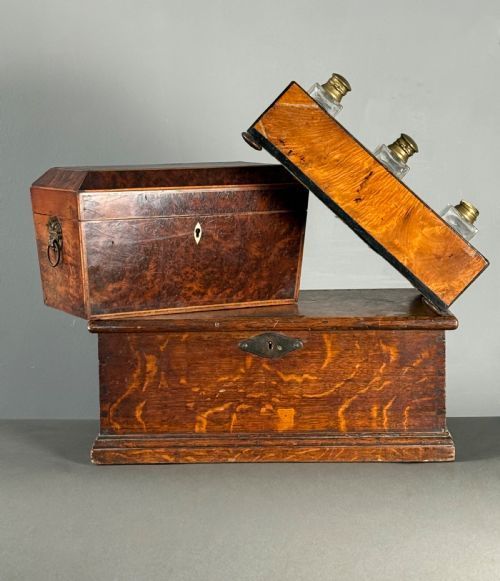
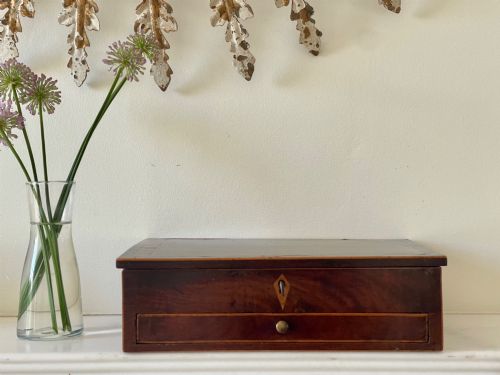
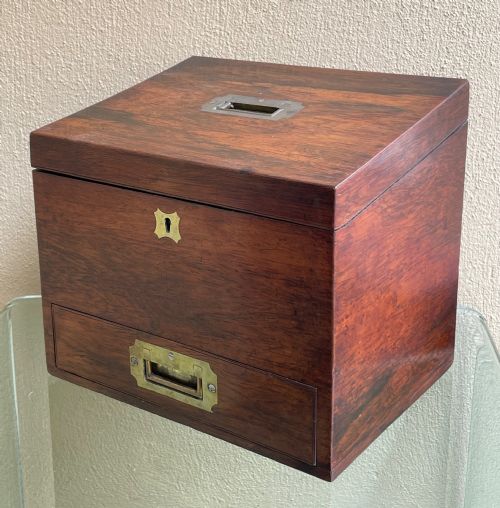
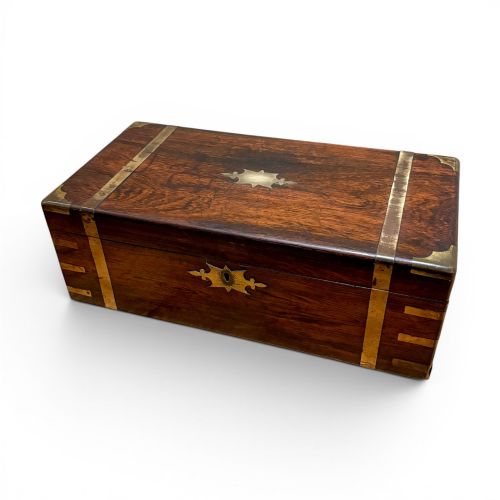
An antique slope desk box is a portable repository for correspondence, designed for travel or desktop writing and constructed in timber.
Antique Slope Desk Box
An antique slope desk box serves as a portable writing surface and document repository, featuring a hinged lid that opens at an angle to create a writing slant. These pieces span from the seventeenth century through the Edwardian period, encompassing functional desk accessories and stationery cabinets.
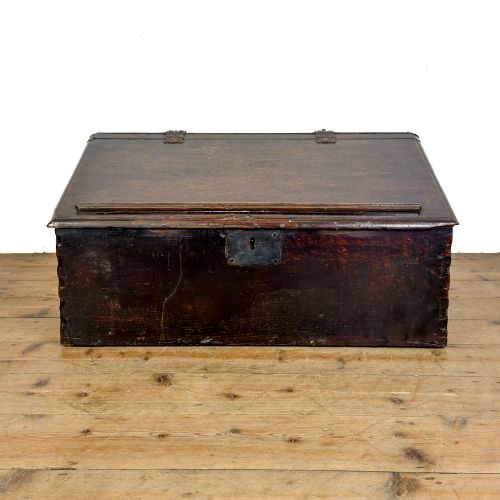
Mahogany, oak, and walnut dominate the offerings, alongside rosewood and camphor wood. Variations range from early oak bible boxes to Victorian campaign writing slopes outfitted with brass corners and secret compartments.
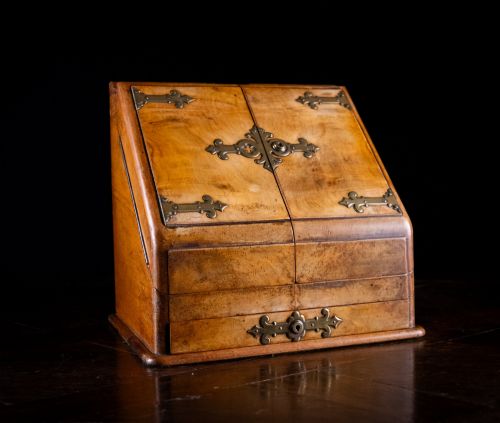
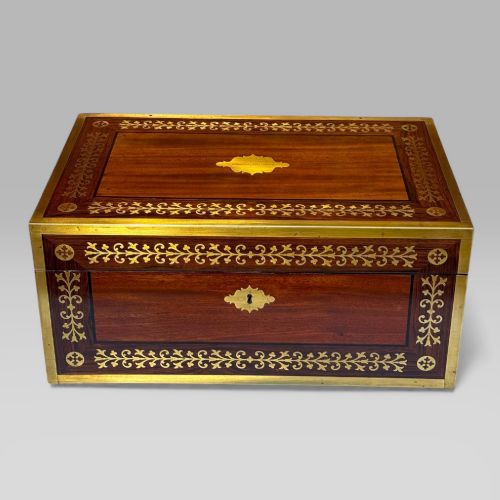
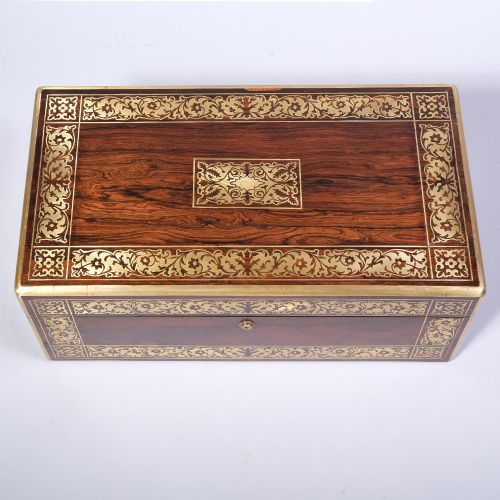
The nineteenth century yields numerous mahogany and rosewood examples, frequently detailed with brass inlay or bound edges for travel durability. Buyers encounter both slope-front boxes and fitted stationery cabinets designed for desktop use.
Materials and construction
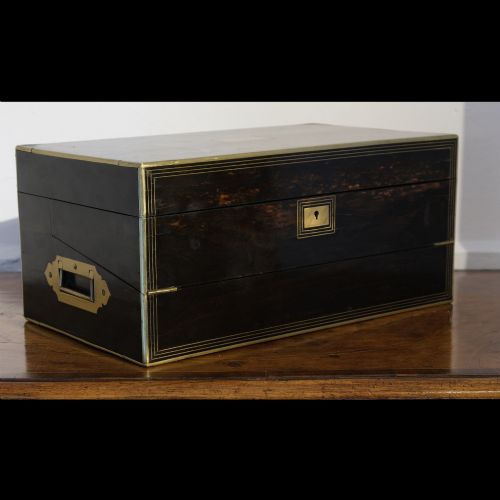
Joinery relies on solid timbers like oak, walnut, and mahogany, frequently veneered with burr walnut or flame mahogany to present figured surfaces. Boxes built for travel integrate brass corner mounts and flush carrying handles to withstand movement.
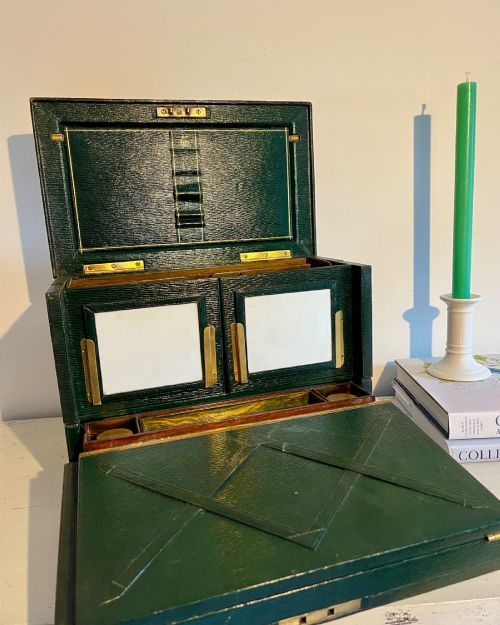
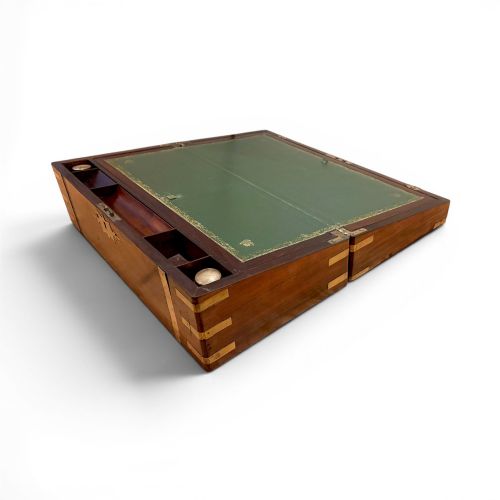
Interiors utilise secondary woods and incorporate fitted compartments, leather writing surfaces, and secret drawers operated by hidden mechanisms. Decorative elements involve brass inlay, mother-of-pearl, bone details, and satinwood stringing.
Listings feature eighteenth-century oak bible boxes alongside nineteenth-century walnut and mahogany campaign writing slopes.
Judging the execution
Quality rests upon the selection of timber figures, such as flame mahogany or burr walnut, matched across the exterior planes. The precision of brass inlay and the seamless fit of internal secret compartments distinguish finer examples.
Hardware execution, including working locks with original keys and robust brass hinges, separates standard utilitarian pieces from high-status objects commissioned for travel or desktop display.
Austin·Lund of London
The Antique Slope Desk Box Glossary
- Writing Slope
- A portable box with an angled lid that folds down to form a writing surface. Inside compartments store paper, inkwells, and pens.
- Campaign Box
- A portable desk or chest reinforced with brass corners and flush handles, built for military travel. These pieces prioritise structural durability and secure storage.
- Bible Box
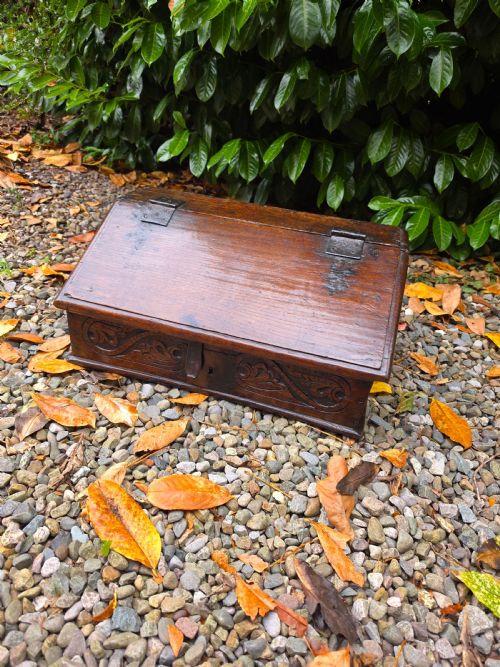
- An early wooden box, often seventeenth-century oak, featuring a sloping lid originally designed to hold sacred texts. Later examples served general document storage.
- Stationery Cabinet
- A vertical desktop box with doors or a hinged front, housing fitted slots and shelves for letters and envelopes. These emerge predominantly in the Victorian era.
- Secret Compartment
- A concealed drawer or hidden space within a desk box accessed by removing false panels or releasing spring mechanisms. Master craftsmen integrated these to secure valuables.
Antique Slope Desk Box: Frequently Asked Questions
What is an antique slope desk box?
An antique slope desk box is a portable timber container designed for writing letters and storing documents securely. The hinged lid angles downward to provide a firm writing surface.
Inside, these boxes contain fitted compartments for inkwells, pens, and paper. Many incorporate secret drawers and leather-lined writing surfaces.
How were campaign boxes used?
Campaign boxes served officers and travellers on the move, offering a portable desk that could withstand rough transport. Brass binding and recessed handles protected the corners from impact.
These pieces secure tightly with working locks, ensuring confidential correspondence remained intact during journeys.
How do I date an oak bible box?
Oak bible boxes from the seventeenth century display hand-cut joinery, pegged joints, and heavy board construction. The timber exhibits deep patination accumulated over centuries.
Later nineteenth-century oak boxes feature machine-cut components and lighter internal fittings, separating them from early seventeenth and eighteenth-century examples.
Where should I place a desk box at home?
Desk boxes sit well on sturdy tables, sideboards, or dedicated desks where the lid can be opened to view fitted interiors. Placing them out of direct sunlight protects delicate wood veneers and leather surfaces.
Keeping the box closed prevents dust accumulation within the internal compartments and ink wells.
How do I identify secret compartments?
Secret compartments in writing slopes usually conceal themselves behind removable panels, false drawer bottoms, or sliding dividers. Gentle pressure on specific wooden pins often releases the hidden spring.
Exploratory inspection of the internal layout reveals unusual gaps where hidden spaces reside.