



Antique Silver Tankard Lid
An antique silver tankard lid completes a drinking vessel, bringing history and craftsmanship to these historic metal and glass pieces.
Antique Silver Tankard Lid
When you search for an antique silver tankard lid, you are looking at components and complete vessels spanning the eighteenth and nineteenth centuries. These pieces include sterling silver examples and Old Sheffield Plate items designed for ale, beer, or cider.
The selections on this page range from Georgian sterling silver creations to Victorian silver plated jugs and glass vessels mounted with metal covers. You will find drinking vessels originating from London, Newcastle, and continental workshops.
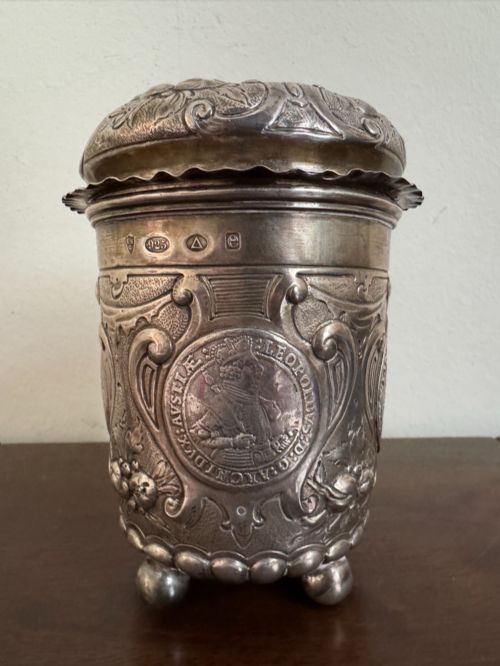
Forms vary from sturdy pint tankards to large beer jugs and coin beakers fitted with hinged covers. Each object reflects the drinking customs of past centuries, combining functional metalwork with decorative historical styles.
Materials and construction methods
Makers utilised sterling silver, Old Sheffield Plate, copper, and glass to construct these drinking vessels and their matching covers. Sterling silver pieces often show hallmarks indicating London or provincial assay offices.
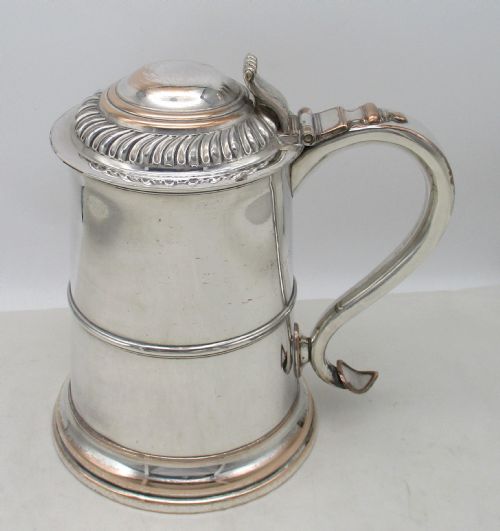
Old Sheffield Plate combined a layer of silver fused to a copper base, a technique visible along cut edges and wear points. Glass bodies were fitted with hinged metal lids, often incorporating secure thumbpieces and sturdy handles.
Listings feature sterling silver, Old Sheffield Plate, and glass spanning the Georgian and Victorian periods.
Distinctions in quality and execution
Quality rests in the weight of the metal, the crispness of the chasing, and the integrity of the hinge mechanism on the cover. Superior examples maintain balanced proportions between the vessel body and the fitted lid.
Engraved details, such as crests or botanical scenes, show the hand of a skilled artisan rather than routine production. The survival of clear hallmarks and original glass inserts elevates the standing of an individual piece.
John Payne·Thomas Whipham·Watts and Harton·Elkington·Henry William Curry·Goldsmiths and Silversmiths Co·Charles Price
The Antique Silver Tankard Lid Glossary
- Old Sheffield Plate
- A composite material made by fusing a thin sheet of silver to a copper ingot. This method preceded electroplating and produced durable tableware.
- Hallmark
- Official stamps punched into precious metals to indicate the standard of silver, the maker, and the year of assay. These marks provide a precise historical record.
- Thumbpiece
- The small lever attached to the hinged lid of a tankard. It allowed the drinker to open the cover with a single thumb while holding the handle.
- Baluster
- A curved, vase-like architectural form often seen in the profiles of eighteenth-century drinking vessels. This contour gives the body a weighted, stable base.
- Coin Beaker
- A drinking vessel inset with actual historical coins, such as thalers, fused directly into the metal wall or base during manufacture.
Antique Silver Tankard Lid: Frequently Asked Questions
What is an Old Sheffield Plate tankard?
Old Sheffield Plate tankards combine a copper core fused with a thin layer of sterling silver. This method created durable tavern and domestic vessels before the invention of electroplating.
The technique leaves subtle clues, such as thin lines of exposed copper near edges, which help collectors identify the period of manufacture.
How do I identify a Georgian silver tankard?
Georgian silver tankards display hallmarks that record the city of assay, the maker's mark, and a date letter. Consulting standard silver reference books decodes these stamps.
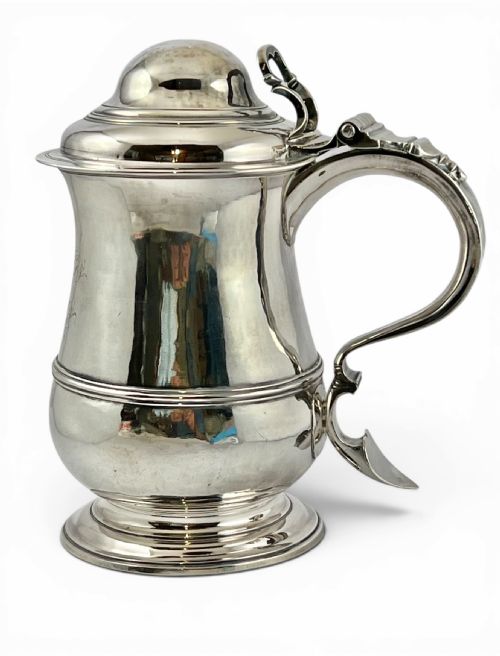
Stylistic cues such as baluster profiles and cast scroll handles also point toward the eighteenth century.
Were these tankards used for beer?
Historical tankards, beer jugs, and lidded beakers served ale, beer, and cider in homes and taverns. The fitted lid kept debris out of the drink.
Many examples feature glass bottoms, allowing the drinker to watch patrons or companions across the table.
What does a coin beaker involve?
Coin beakers incorporate real historical currency, such as foreign thalers, melted or set into the metal structure. Silversmiths produced these novelty items in European and British workshops.
The embedded coins provide a built-in date reference for the manufacture of the drinking vessel.