




Antique Silver Basket Liner
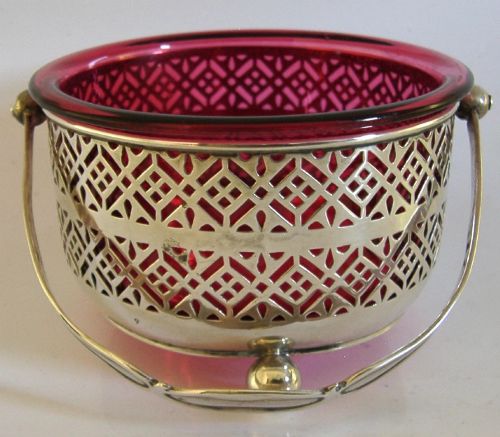
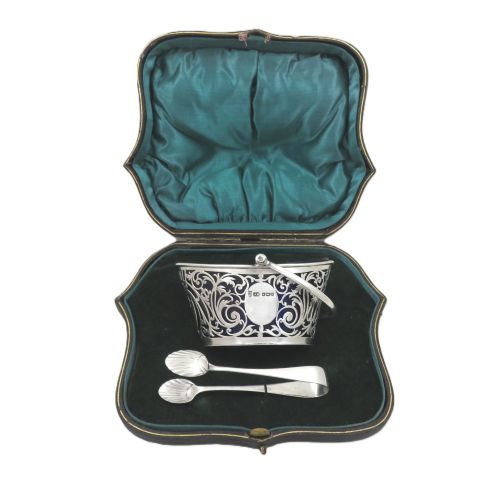
An antique silver basket liner sits inside an openwork frame to hold sugar, fruit or cream.
Antique Silver Basket Liner
When you search for an antique silver basket liner, you are looking at small vessels designed to protect openwork metal frames from acidic contents. The pieces seen here span the Georgian, Victorian and Edwardian periods, appearing alongside sugar baskets, cream pails and bowls.
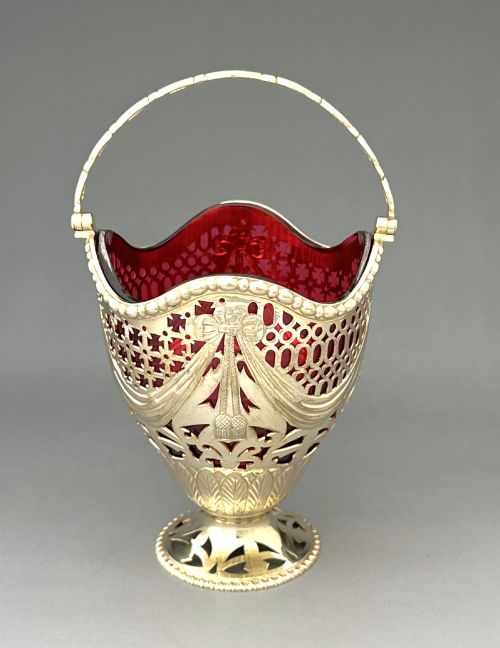
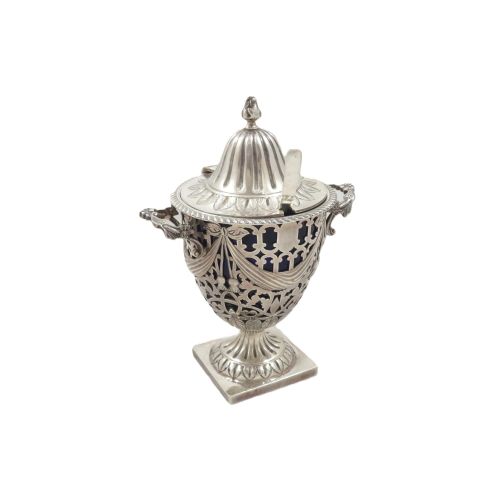
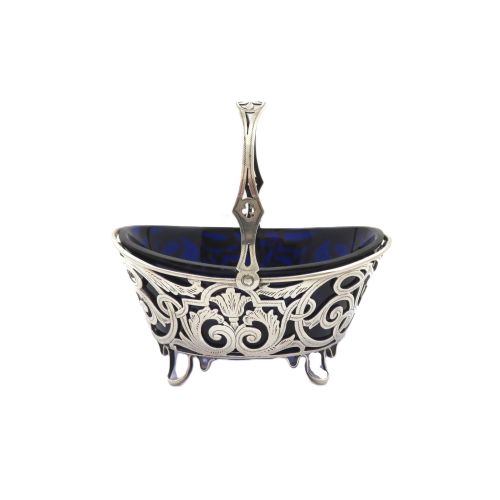
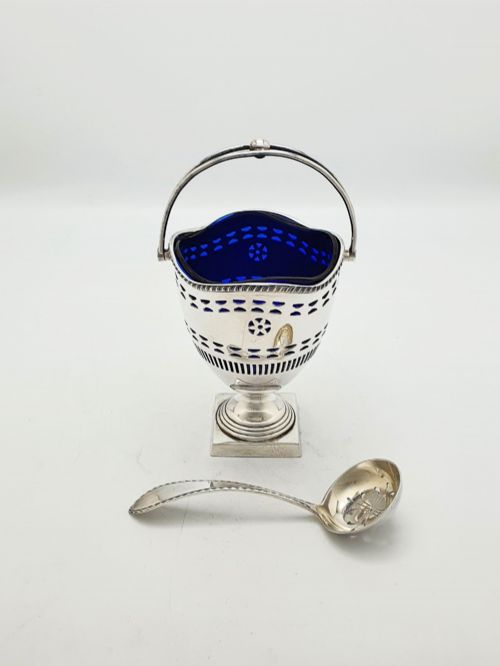
The version you are most likely to meet on this page is a fitted glass insert accompanying a pierced or wirework sterling silver basket. These range from swing-handled Edwardian examples to Georgian tablewares made for formal dining.
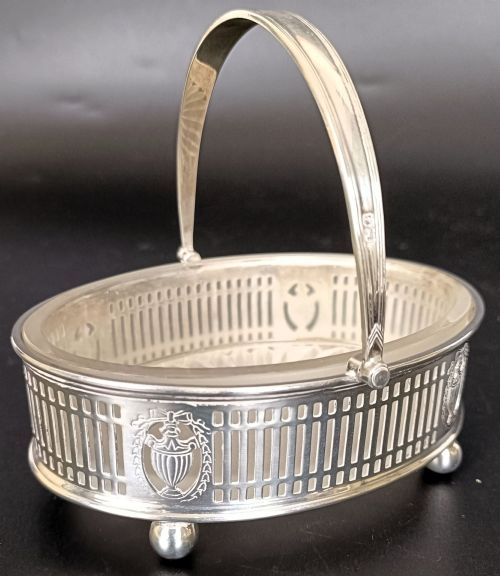
Makers paired these frames with blown glass inserts shaped to match oval, round or urn forms. They functioned as practical tableware components that prevented sticky contents from marking the decorative metalwork below.
How they were made
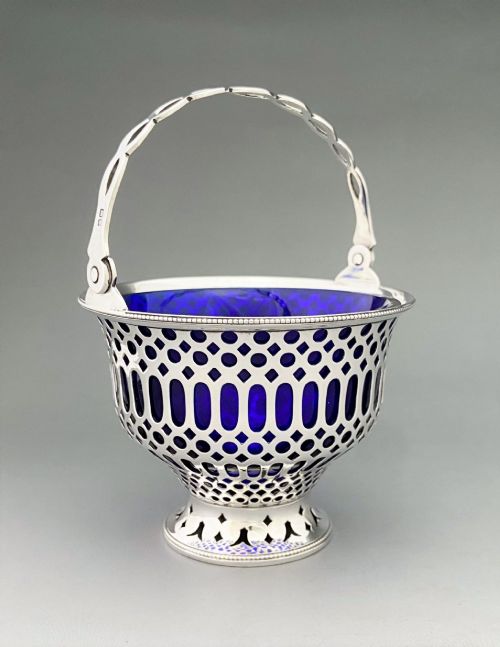
Silversmiths formed the outer baskets using sterling silver or silver plate, often employing piercing, reticulation or wirework techniques to create open patterns. Frames required careful soldering and casting, particularly when adding swing handles, cast floral mounts or pierced rims.
Glass liners were blown separately, sometimes utilising cobalt blue, cranberry, ruby, green opaline or frosted glass to provide a colourful contrast against the bright metalwork. These vessels needed exact measurements to sit flush within the supporting silver frame.
The selection spans the 18th Century, Georgian, Victorian, Edwardian, Art Nouveau and Neoclassical Revival styles.
What varies in quality
Quality rests on the crispness of the pierced metalwork and the weight of the sterling silver or silver plate used for the frame. Heavier gauges of metal hold their shape better and allow for sharper hand-cut details.
The distinction between ordinary production and finer work also involves the glass liner itself. Blown glass with rich colour and correct period form elevates the piece, especially when the insert fits the basket without excessive movement.
Aldridge & Green·W M F·George Fox·Elkington & Co·Joseph Angell II
The Antique Silver Basket Liner Glossary
- Pierced
- Pierced work involves cutting decorative patterns out of sheet metal to create light, open designs. This technique defined many sugar baskets and frames from the Georgian and Edwardian eras.
- Cranberry glass
- Cranberry glass is a deep red transparent material created by adding gold to the molten batch. It frequently appeared in Edwardian basket liners to provide a warm contrast against polished silver.
- Cream pail
- A cream pail is a small cylindrical or bucket-shaped vessel with a swing handle, used for holding cream at the table. These often featured glass inserts to protect the silver interior.
- Silver-gilt
- Silver-gilt describes silver objects that have been coated with a thin layer of gold on the surface. This finish protected the metal from tarnishing and added a rich yellow tone to the interior.
- Reticulated
- Reticulated describes a net-like or laced pattern formed by piercing or wirework. It allowed makers to create lightweight, ornamental baskets that displayed the coloured glass liner within.
Antique Silver Basket Liner: Frequently Asked Questions
What is a silver basket liner?
A silver basket liner is a removable glass vessel that sits inside an openwork silver frame. It holds moist foods like sugar or cream safely away from the metal.
Most examples date from the Georgian, Victorian and Edwardian eras. They turned decorative wirework and pierced baskets into functional tableware.
How do I know if the glass liner is original?
An original liner fits the internal dimensions of the silver basket without wobbling or sitting too high. The thickness and colour of the glass should match the period of the frame.
Look for consistent wear patterns on the base where the glass contacts the metal. Replacement liners often show modern manufacturing marks or mismatched tints.
How were these baskets used?
These baskets served during tea and dinner services to present sugar, cream or small fruits. The glass insert protected the silver from sticky or acidic contents.
Servants placed them on the dining table as part of formal tableware settings. The swing handle allowed guests to pass the basket easily.
How do I care for silver with glass liners?
Remove the glass liner before cleaning the silver frame to prevent moisture trapping between the surfaces. Wash the glass gently in warm soapy water.
Store the pieces in a dry environment to protect both the metal polish and the glass. Avoid harsh abrasives that could damage delicate pierced details.