
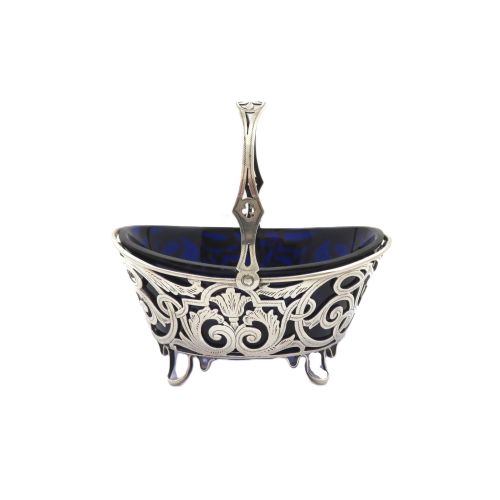
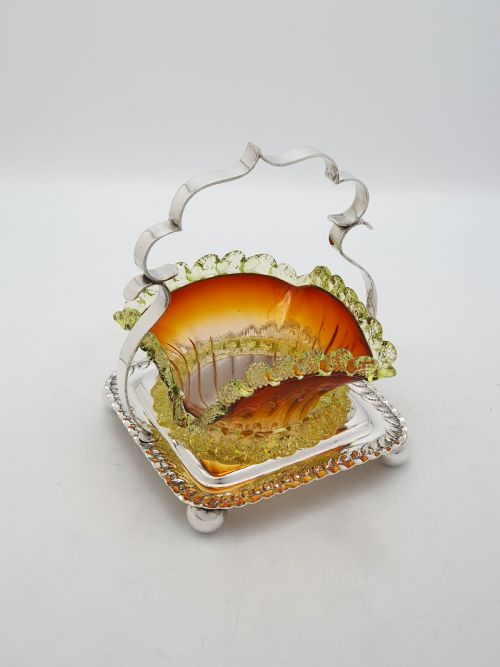


Victorian Silver Bonbonniere
A Victorian silver bonbonniere brings a touch of late nineteenth-century elegance to the table, offering a small, decorative vessel designed to hold sweets and confits.
Victorian Silver Bonbonniere
The versions you are most likely to meet on this page belong to the Victorian and Edwardian periods, stretching from the mid-nineteenth century through to the early 1900s. They encompass solid sterling silver, silver plate, and combinations of precious metal with glass or cut crystal.
Makers utilised distinct regional aesthetics, ranging from ornate Rococo Revival motifs to flowing Art Nouveau lines and pierced openwork designs. Such diversity means collectors encounter both simple domestic tableware and highly decorative display pieces.
Materials and construction
Silversmiths constructed these pieces primarily from solid sterling silver or silver plate, frequently employing piercing techniques to create openwork lattice patterns on baskets and bowls. Workshops also combined metalwork with blown and cut glass liners, including cobalt, amber, and pink opaque glass.
Designers incorporated decorative styles such as Rococo Revival casting and Art Nouveau swing handles into the metal mounts. Hallmarks stamped directly into the silver provide official records of assay offices, dates, and makers.
Assessing quality and craftsmanship
Quality in a Victorian silver bonbonniere rests upon the weight of the metal, the crispness of the piercing, and the integrity of any associated glass liner. Heavy gauge sterling silver with deeply cast or hand-pierced ornamentation sits at the top of the range, showing careful attention to detail in the handles and rims.
The refinement of the glass components also marks the division between standard production and superior work. Thick, brilliantly cut crystal or high-quality coloured glass that fits the silver mount precisely demonstrates better manufacture than loose or plain glass inserts.
William Comyns·W M F
The Victorian Silver Bonbonniere Glossary
- Bonbonniere
- A small ornamental box or dish intended for holding sweets and bonbons. These vessels were popular on dining tables and drawing-room side tables during the Victorian period.
- Piercing
- A metalworking technique involving cutting or sawing decorative patterns through sheet silver. This method created lightweight, ornamental lattice designs on baskets and bowls.
- Hallmark
- A series of official marks stamped onto silver items indicating the metal standard, assay office, and year of manufacture. These stamps allow historians to trace the origin of a piece.
- Swing Handle
- A movable arched handle attached to the sides of a basket or bowl by pivot pins. This feature allowed easy access to the contents of the vessel.
- Cut Crystal
- Glass shaped and patterned by abrasive wheels to produce faceted geometric designs. It adds weight and brilliance when paired with silver mounts.
Victorian Silver Bonbonniere: Frequently Asked Questions
What was a bonbonniere used for?
A bonbonniere served as a decorative container for holding small sugar-coated confections, almonds, and sweets served after dining.
Hostesses placed these small dishes on tables to offer refreshments to guests during formal gatherings.
How do I date a silver bonbonniere?
You date a silver piece primarily by examining the stamped hallmarks, which reveal the assay office and the exact year of manufacture.
Stylistic elements like Rococo Revival curves or Art Nouveau swing handles also point to specific decades within the Victorian and Edwardian eras.
Are glass liners original to the silver?
Original glass liners fit snugly into the silver basket or bowl without excessive movement in the mount.
Matching the colour and type of glass, such as cobalt or amber, to documented Victorian production helps confirm authenticity.
How should I clean silver bonbonniere dishes?
Clean solid silver with a soft cloth and a reputable silver polish formulated to remove tarnish gently without abrading the metal.
Avoid immersing glass-lined or plated pieces in harsh chemical dips that might damage delicate glass or thin silver plating.