



Sterling Silver Bonbon Basket
A sterling silver bonbon basket brings delicate metalwork and colour to a table, offering a small vessel designed for sweets.
Sterling Silver Bonbon Basket
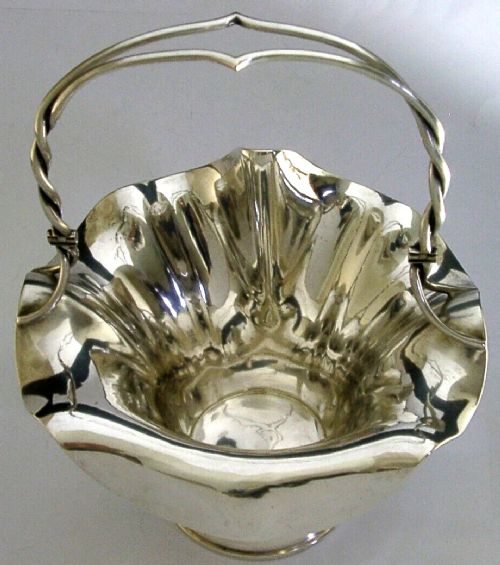
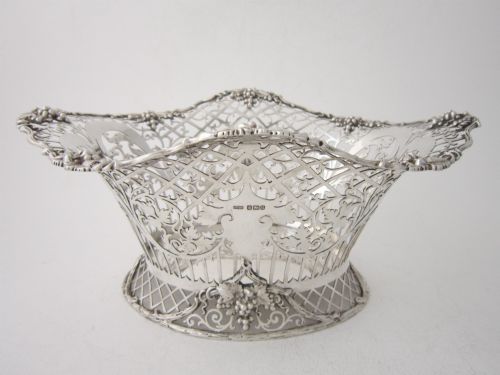
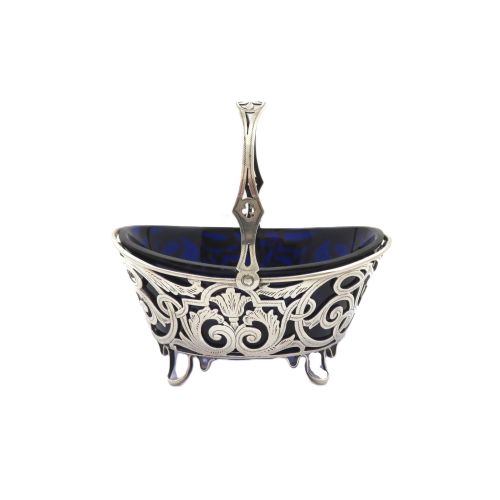
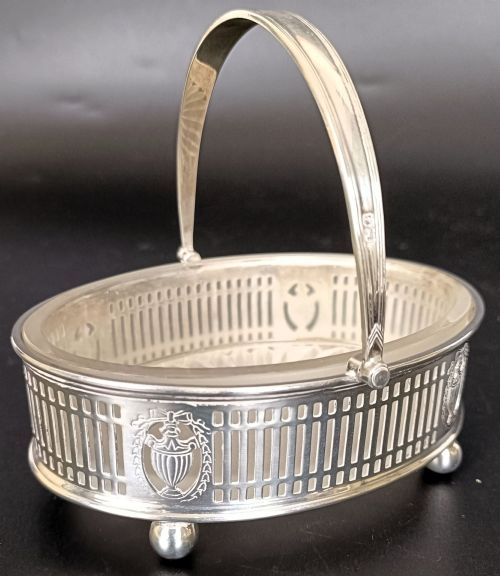
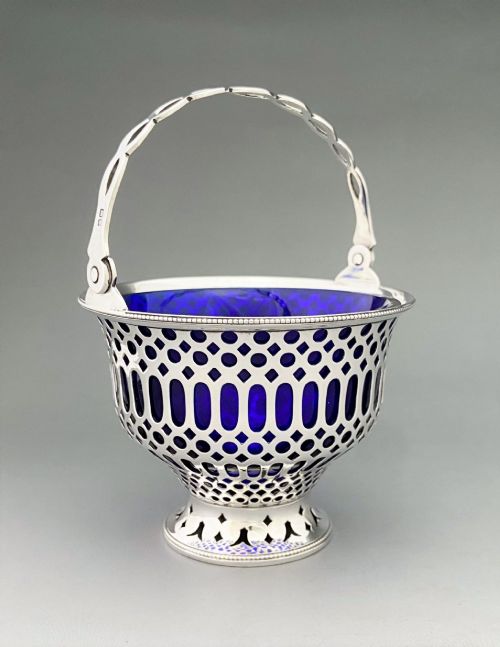
A sterling silver bonbon basket represents a compact tableware form created to hold confectionery, sugar, or small fruits on the dining table. These pieces span periods from the Georgian era through the Victorian and Edwardian years into the 1930s, reflecting changing tastes in domestic silver. You will encounter various formats here, including swing-handled vessels, footed bowls, and pierced dishes designed for sweetmeats.
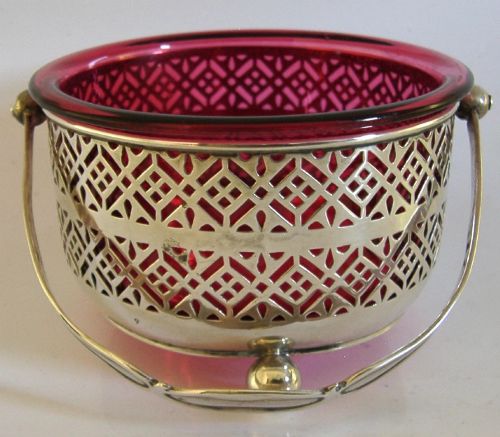
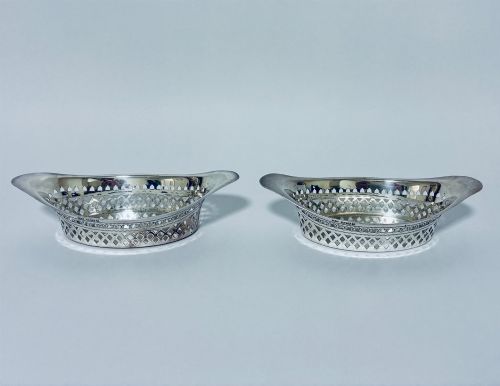
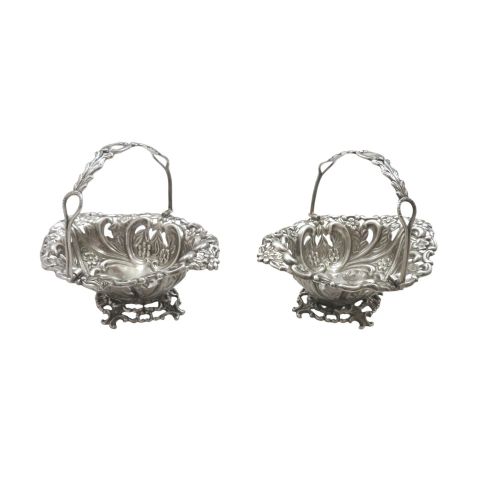
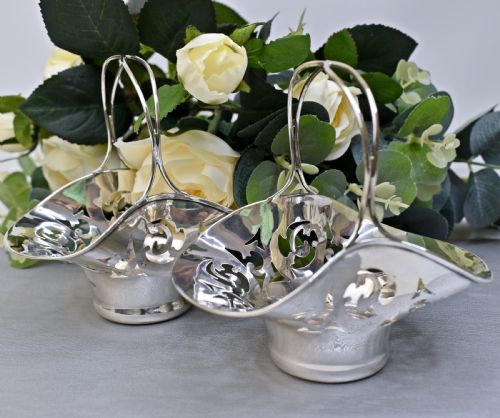
The objects listed range from simple nineteenth-century dishes to elaborate Edwardian baskets with intricate pierced detailing and substantial weight. Many incorporate coloured glass liners in ruby, cranberry, or cobalt hues, while others rely entirely on the brilliance of solid silver. Forms vary from oval serving dishes to miniature sweetmeat baskets and matching pairs of stands.
Materials and construction
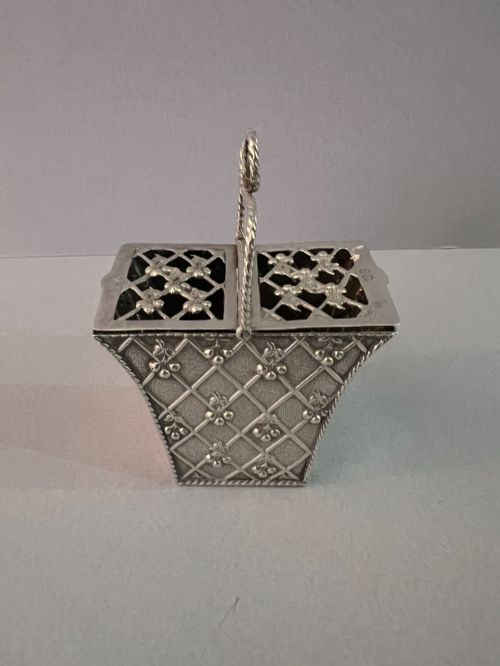
Silversmiths constructed these vessels primarily from solid sterling silver, often employing piercing and lattice techniques to create lightweight yet decorative openwork bodies. Embossed detailing and cast floral handles appear frequently across Victorian and Edwardian examples, adding texture and sculptural relief to the metal.
Many designs integrate contrasting materials, most notably coloured glass liners in cranberry, ruby, or cobalt shades that sit within the pierced silver framework. Tortoiseshell and silver-gilt finishes also appear, demonstrating the diverse methods makers utilised to enhance the visual appeal of the tableware.
Some miniature sweetmeat baskets measure small enough to cradle in the palm of a hand while still retaining fully functional swing handles.
Distinctions in quality
Quality in these baskets rests upon the crispness of the piercing, the weight of the silver used, and the complexity of the decorative motifs. Hand-chased embossing and cast handles demand high skill, separating simpler stamped vessels from more ambitious silversmithing work.
The inclusion of undamaged coloured glass liners or original tortoiseshell elements influences the desirability of a piece. Hallmarks providing clear maker marks and assay office details add historical completeness to the silver.
Fenton Brothers·James Deakin and Sons·William Bond·Martin Hall·Edward H Stockwell·George Fox
The Sterling Silver Bonbon Basket Glossary
- Bonbon dish
- A small vessel intended for holding sweets or confectioneries, often featuring an open or pierced bowl.
- Swing handle
- A movable arched handle attached to the rim of a basket, allowing it to drop to the side when not in use.
- Pierced work
- A decorative technique involving the cutting or piercing of patterns through the silver sheet to form lattice or geometric designs.
- Sweetmeat basket
- A small antique container specifically designed for serving sweet delicacies or dried fruits after a meal.
- Silver-gilt
- Sterling silver that has been coated with a thin layer of gold on its surface, giving a rich yellow sheen.
Sterling Silver Bonbon Basket: Frequently Asked Questions
What is a sterling silver bonbon basket used for?
These vessels were originally manufactured to serve small sweets, sugared almonds, or bonbons during formal dining and tea gatherings. They sat centrally on tables as both decorative objects and functional tableware.
Today, collectors use them to display small items or continue their traditional purpose on dining and side tables.
How do I identify a Georgian basket from a Victorian one?
Georgian examples, dating from the eighteenth and early nineteenth centuries, often display classical Neoclassical Revival lines and hand-pierced motifs associated with makers like William Bond. Victorian pieces frequently feature heavier cast floral handles and dense embossed ornamentation.
Checking the hallmarks provides the exact year and assay office for British silver.
Did all of these baskets originally have glass liners?
No, only certain designs incorporated glass liners, particularly those with wide pierced lattice walls that required a solid interior to hold smaller contents. Cranberry, ruby, and cobalt glass were common choices for these removable inserts.
Baskets without liners were intended to hold larger sweets, sugar lumps, or potpourri directly against the silver.
How should I clean antique sterling silver?
Cleaning requires a soft microfibre cloth and a reputable silver polish formulated for antiques to preserve the original patina and details of the embossing. Harsh abrasive cleaners can wear away thin areas of silver or damage delicate pierced work.
If the piece includes a glass liner or tortoiseshell, remove it before polishing the metal.