

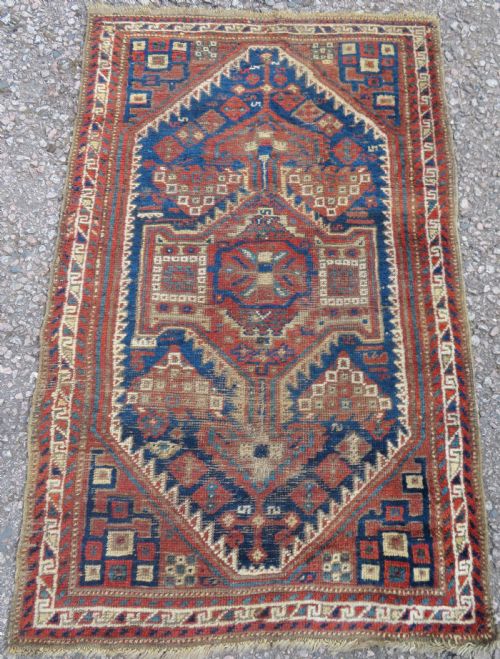
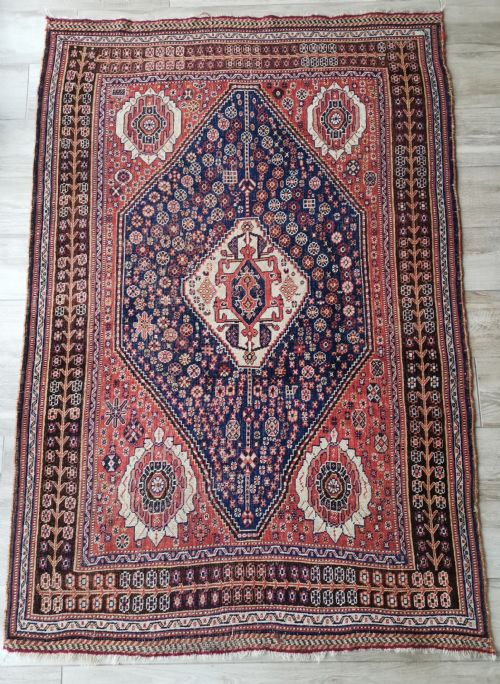
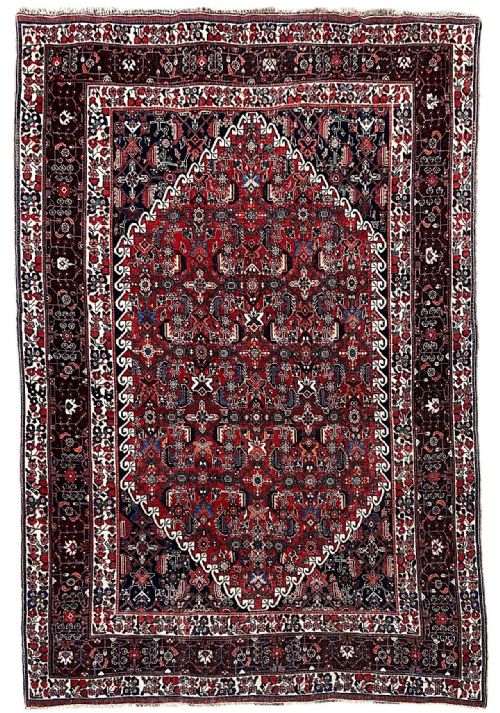
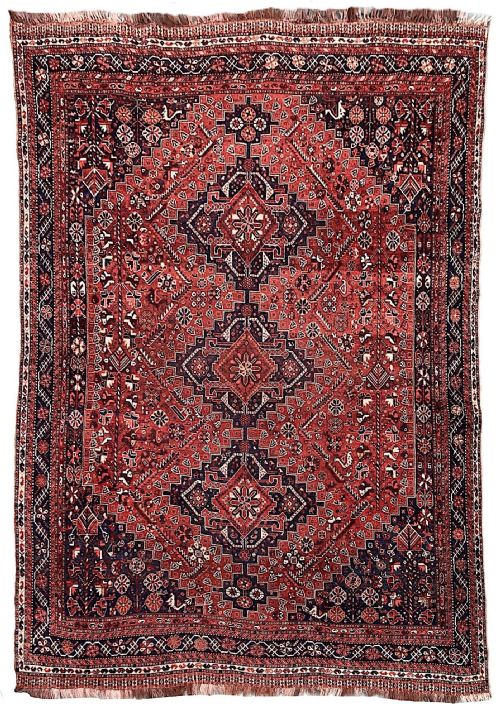


Antique Shiraz Rug
An antique shiraz rug brings the rich nomadic heritage of south-west Persia into a room through deeply patterned tribal weaving.
Antique Shiraz Rug
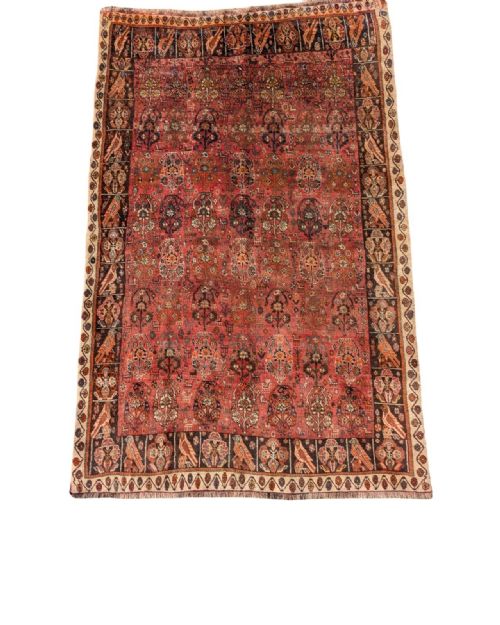
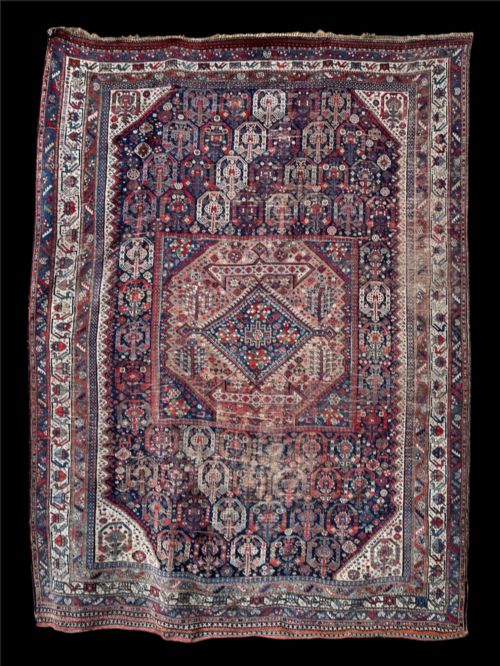
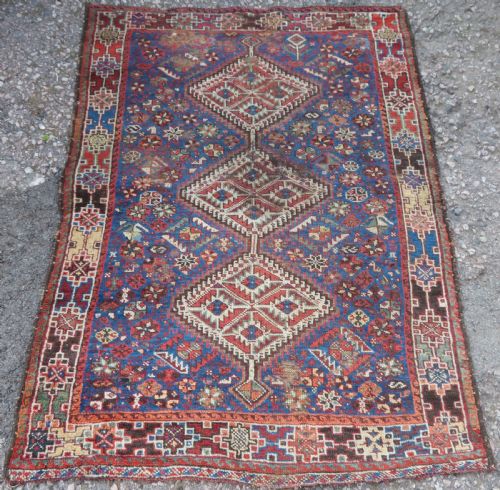
An antique shiraz rug originates from the south-west region of Persia, encompassing pieces created by nomadic and village confederacies such as the Qashqai and Khamseh. These floor coverings and smaller textiles display traditional tribal motifs, including geometric centre medallions, repeated patterns, and occasional stylised birds like peacocks.
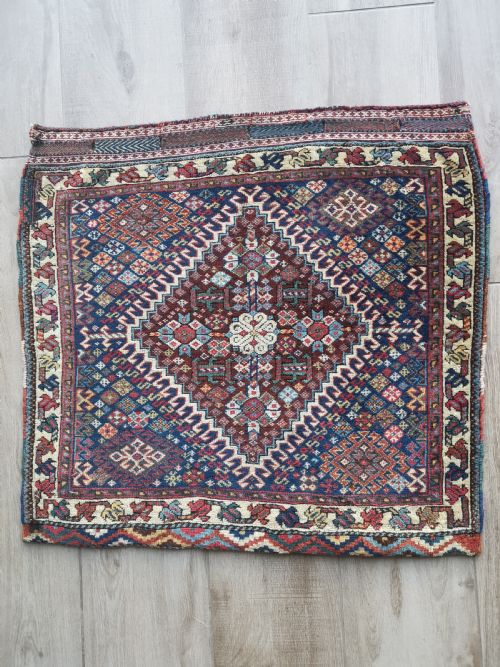
Buyers will encounter various formats on this page, ranging from standard area rugs and larger carpets to smaller bagfaces and saddlebags used originally for transport. The palette often draws upon saturated tones and natural dyes that reflect the visual vocabulary of southern Persian weaving traditions.
The objects span from the nineteenth century into the early decades of the twentieth century, capturing a period when tribal weavers still utilised traditional hand-weaving methods. Each piece carries the distinct structural traits of south-west Persian nomadic art, whether classified specifically under regional tribal names or broader regional designations.
Materials and construction
The pieces are constructed using wool for the pile and foundation elements, frequently supported by cotton in specific structural areas depending on the tribal origin. Hand-weaving techniques dictate the dense, durable structure required for nomadic daily life.
Weavers employed natural dyes to colour the wool, yielding rich hues that age gracefully over decades of exposure and use. The interplay of hand-spun wool and traditional dyestuffs creates the characteristic depth found across these regional carpets.
Antique Shiraz Rug Retail Price Guide 2026
Typical asking prices for shiraz rug among the pieces listed under this phrase on Sellingantiques today, from the lower quarter to the upper quarter. They describe what is for sale here now, not the wider market.
The inventory spans the nineteenth century through to the 1930s, featuring wool and cotton construction coloured with natural dyes.
Distinctions in craftsmanship
The standard of a weaving is largely determined by the density of the knotting and the precision of the geometric layout. Tighter foundations allow intricate tribal motifs to maintain their definition and structural integrity over time.
Colour saturation and the harmonious balance of natural dye variations dictate the visual impact of the piece. Superior examples display thoughtful palette transitions and clear, uncrowded medallion arrangements that reflect the weaver's deliberate artistic choices.
The Antique Shiraz Rug Glossary
- Medallion
- A central ornamental design motif placed in the field of the rug. These geometric focal points often anchor the surrounding tribal patterns.
- Bagface
- The decorated front panel of a utilitarian nomadic storage bag. These smaller rectangular pieces showcase concentrated bursts of traditional weaving skill.
- Khamseh
- A confederation of several distinct tribes in south-west Persia. Their output shares regional traits with Shiraz and Qashqai weaving.
- Pile
- The vertical tufts of wool that form the usable surface of the carpet. Full pile retention indicates minimal wear on the foundation structure.
Antique Shiraz Rug: Frequently Asked Questions
How do I care for an old rug?
Gentle vacuuming without a rotating power brush helps remove embedded dust without pulling at the wool pile. Professional cleaning tailored to antique textiles preserves the natural dyes and fibres.
Positioning the piece away from direct, continuous sunlight prevents uneven fading of the natural colour palette. Using a suitable underlay prevents slipping and reduces friction against hard flooring.
What motifs appear on them?
Geometric centre medallions dominate the field, often repeated across long runners and larger carpets. Stylised animal forms, including peacocks and traditional tribal symbols, frequently fill the remaining space.
Border guards composed of repeated geometric motifs frame the central field. These visual elements reflect the distinct cultural heritage of south-west Persian nomadic weavers.
How are different tribes identified?
Attribution relies on examining the specific structural traits, knotting habits, and wool characteristics visible on the reverse. Distinct colour combinations and repeat patterns offer clues to whether a piece originates from Qashqai or Khamseh weavers.
Regional overlaps mean many examples are classified broadly under Shiraz or south-west Persian tribal designations. Subtle variations in the border design and medallion geometry help narrow down the specific group.