
Antique Shaped Side Table
An antique shaped side table brings a fluid, curvaceous silhouette to a room, offering practical surface space with distinct historical character.
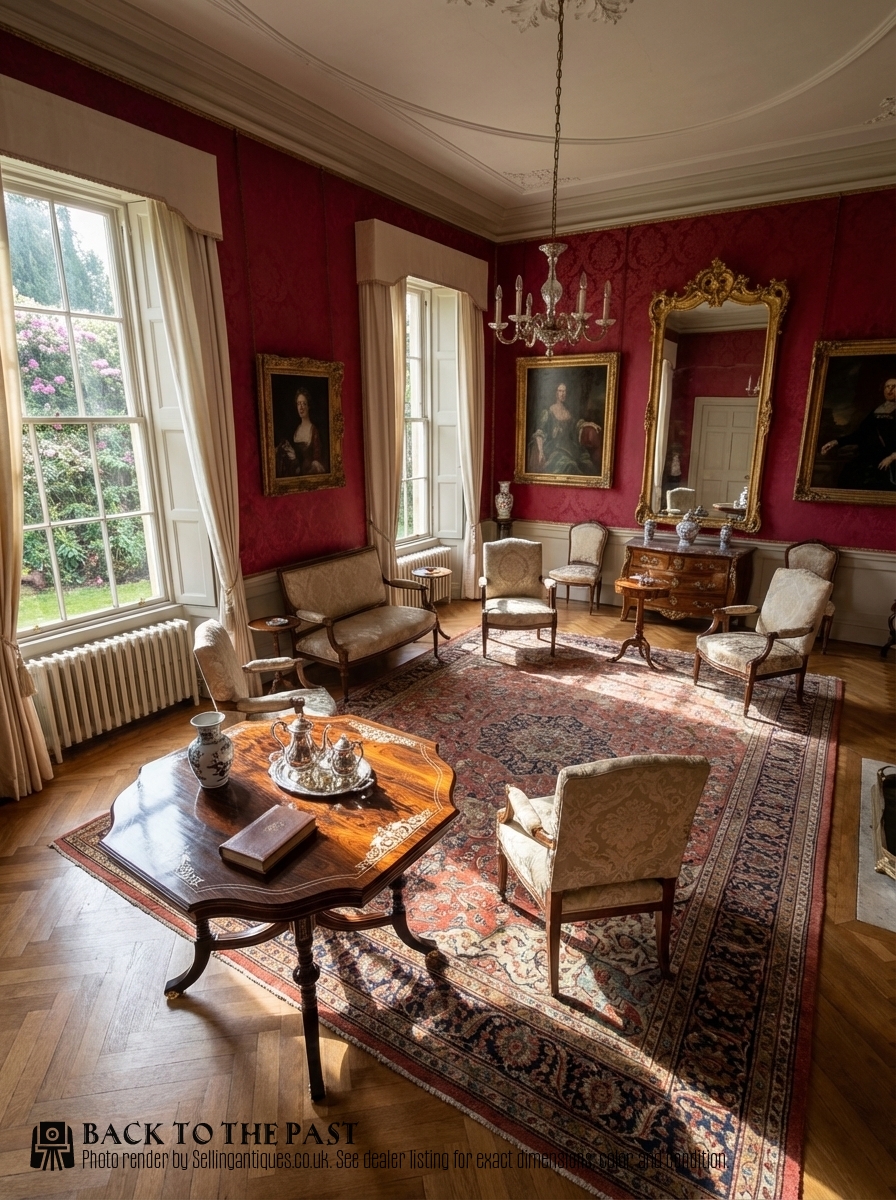
Antique Shaped Side Table
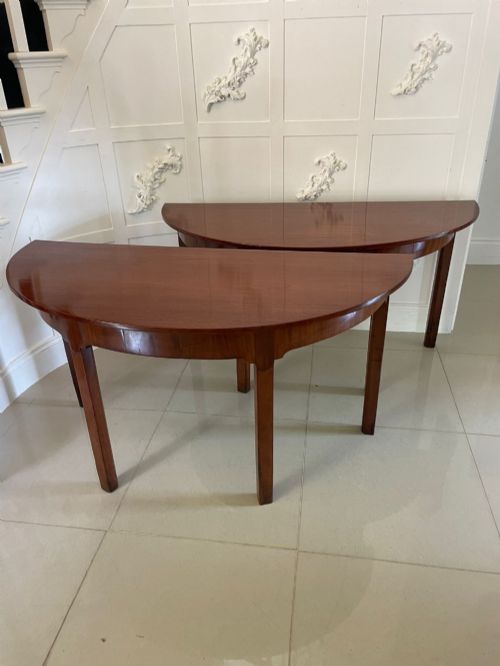
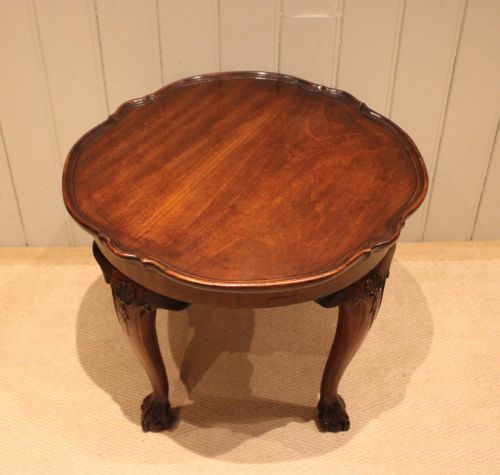
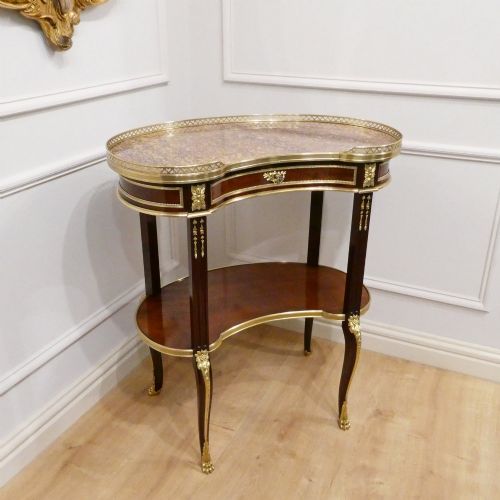
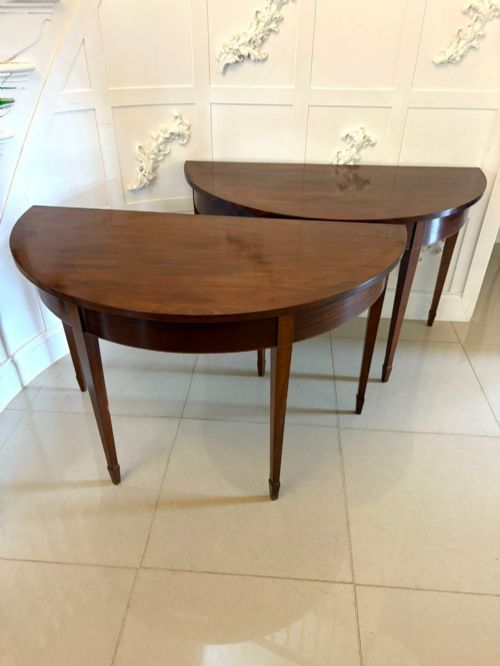
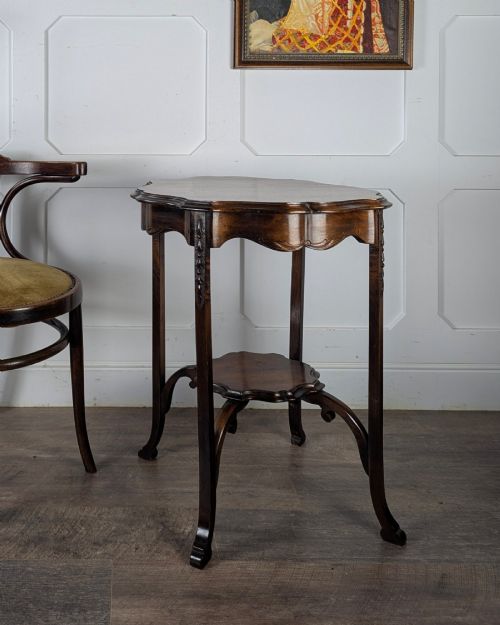
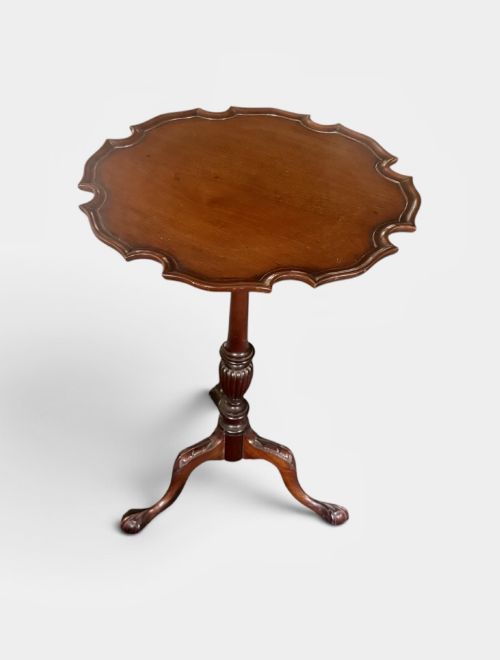
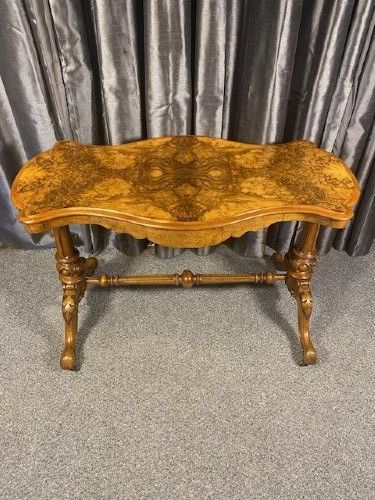
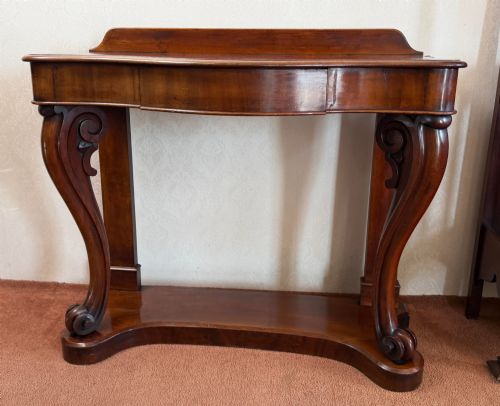
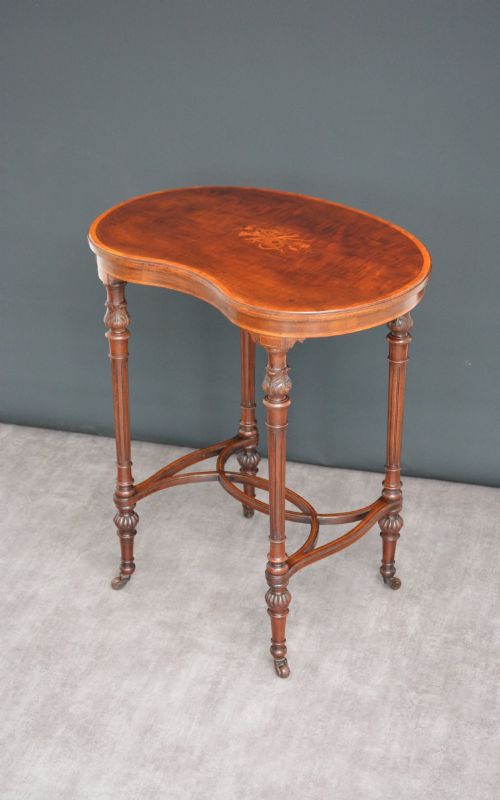
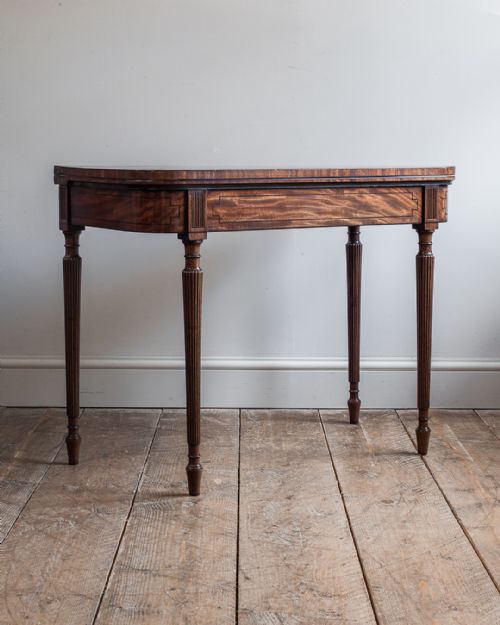
When searching for an antique shaped side table, buyers encounter a diverse group of occasional, console, and centre pieces designed with serpentine, demi-lune, kidney, or clover outlines rather than standard right angles. These forms date across the eighteenth, nineteenth, and early twentieth centuries, spanning Georgian, Victorian, Edwardian, and Art Deco eras.
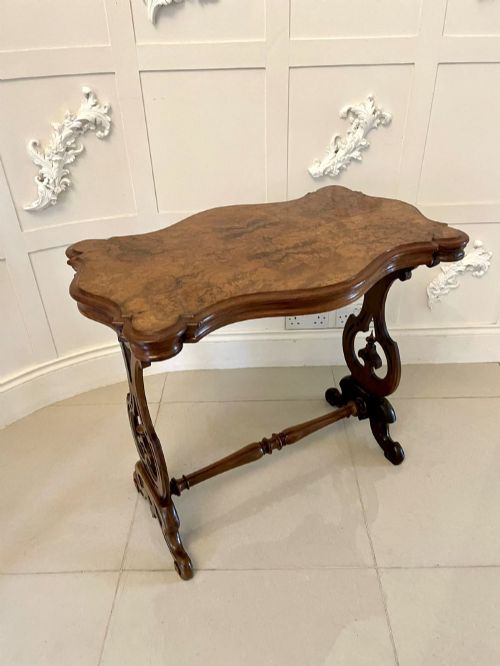
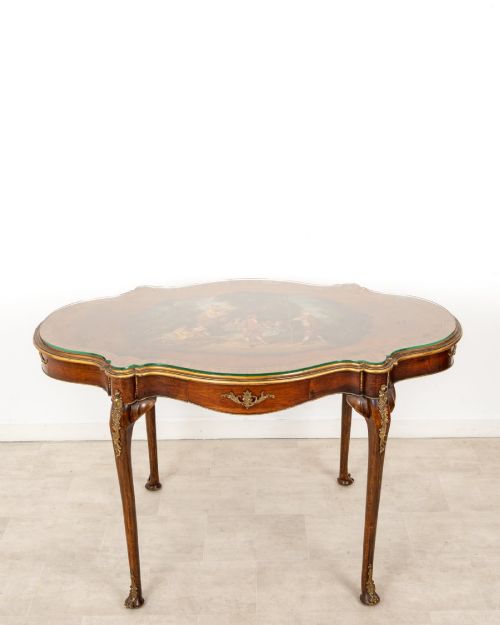
The most common examples on this page are Edwardian and Victorian mahogany or burr walnut tables, often detailed with satinwood inlay or resting on slender legs. Alongside these English household staples appear French revival pieces and console formats intended to stand flat against a wall.
Makers and workshops across Britain and continental Europe utilised various regional silhouettes, from Dutch marquetry surfaces to Chinese hardwood pot stands. The category accommodates everything from small bedside supports to large display and card tables shaped to soften the geometry of a traditional interior.
Materials and construction
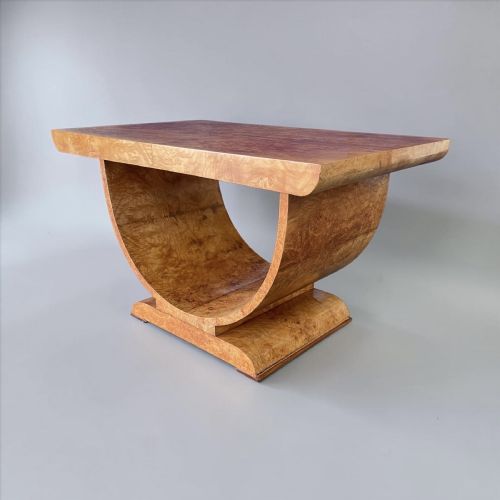
Cabinetmakers constructed these tables using solid timber frames of mahogany, walnut, oak, or rosewood, frequently applying burr walnut, burr maple, or satinwood veneers to create heavily figured surfaces. To achieve curved profiles such as the serpentine or kidney shape, craftsmen employed specialised bending techniques and precise sawing before mounting the tops onto sturdy pedestals or multi-legged frames.
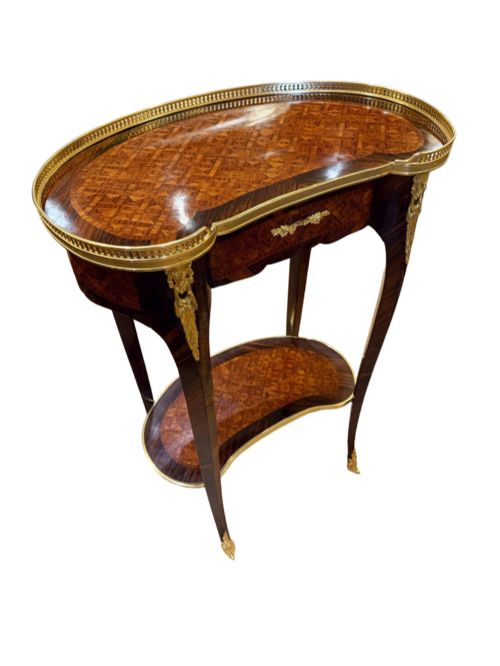
Decoration relied heavily on intricate parquetry and marquetry inlay utilising contrasting woods like boxwood, alongside carved details, brass mounts, and occasional marble tops. French pieces incorporated gilt bronze and vernis martin finishes, while structural joints depended on traditional cabinetmaking joinery to sustain the tension inherent in curved timber designs.
Listings span the eighteenth century to the Art Deco era, encompassing Georgian, Victorian, Edwardian, and Louis-revival styles executed in mahogany, walnut, and satinwood.
Distinguishing quality in construction and finish
The distinction between standard and superior pieces rests on the selection of timber and the precision of the joinery along complex curves. Top-tier examples display highly figured veneers that flow seamlessly across the shaped top, whereas lesser pieces rely on plain timber or show mismatched grain patterns.
Hand-cut inlay, crispness of carved wooden elements, and substantial brass hardware separate workshop masterpieces from mass-produced late-period items. Furthermore, the stability of the frame and the retention of original finish without excessive modern intervention indicate superior original craftsmanship.
Maison Millet·Tehan·Epstein
The Antique Shaped Side Table Glossary
- Serpentine
- A furniture front or edge shaped with a central convex curve flanked by two concave curves. This contour requires immense skill from the cabinetmaker to execute cleanly in solid wood or veneer.
- Demi-lune
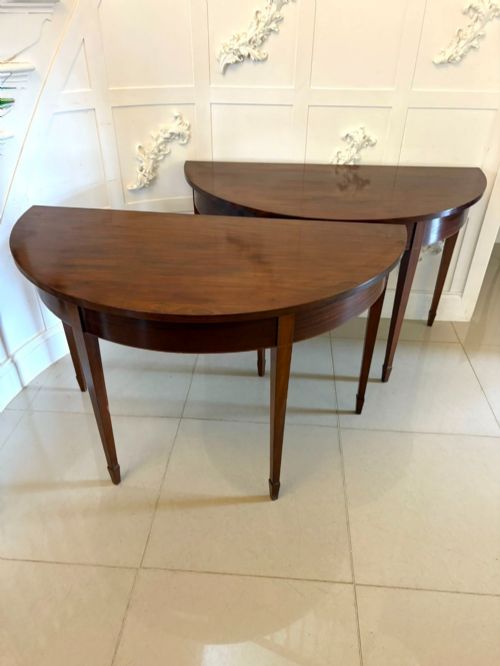
- A half-moon shape, typically found on console and card tables designed to sit flush against a wall. When paired, two demi-lune tables often lock together to form a circular dining table.
- Kidney shaped
- A curved, asymmetrical silhouette resembling a kidney bean, popular for writing and occasional tables during the Victorian and Edwardian periods. It allows the user to sit closer to the centre of the table.
- Marquetry
- The art of applying pieces of veneer to a structure to form decorative patterns and pictures. Craftsmen use varied timber species to create contrasting tones without relying on paint.
- Ormolu
- Gilt bronze mounts applied to furniture, particularly common on French revival pieces. High-quality ormolu exhibits sharp chisel work and deep, even gilding.
Antique Shaped Side Table: Frequently Asked Questions
Where should I place a shaped side table?
These tables suit entryways, hallways, and living rooms where a straight-edged piece would block natural movement. Their curved profiles soften the corners of a room and allow them to function as lamp stands, display surfaces, or small desks.
Console and demi-lune variants sit neatly against walls, while centre and occasional tables operate independently within open floor space. Placing one beside a sofa or beneath a mirror highlights the distinct silhouette.
How do I identify the period of a table?
Dating relies on combining the timber species, the style of the legs, and the nature of any inlay work. Eighteenth-century pieces often feature heavy mahogany with subtle carving, whereas Victorian examples frequently showcase burr walnut and elaborate turned supports.
Edwardian items tend to feature lighter satinwood inlay on mahogany or walnut frames, reflecting the tastes of the early twentieth century. Examining the construction underneath often reveals tool marks and timber ageing that confirm the era of manufacture.
What is the difference between a console and a side table?
A console table is traditionally designed to be fixed to a wall or supported by front legs with the rear attaching to the structure of the room. Side tables stand freely on their own four legs or a central pedestal and can be moved around the room as needed.
In practice, many antique tables described under this search phrase share similar decorative treatments and proportions. The choice depends on whether the piece needs to anchor against a wall or float within the space.
How do I care for antique veneered surfaces?
Protect delicate veneers and marquetry by avoiding direct sunlight and maintaining stable indoor humidity levels. Sudden changes in temperature can cause the underlying wood to expand and the veneer to lift.
Dust regularly with a soft, dry cloth and apply a quality beeswax sparingly to nourish the timber. Avoid liquid cleaners or silicone polishes, which can degrade the aged finish over time.