






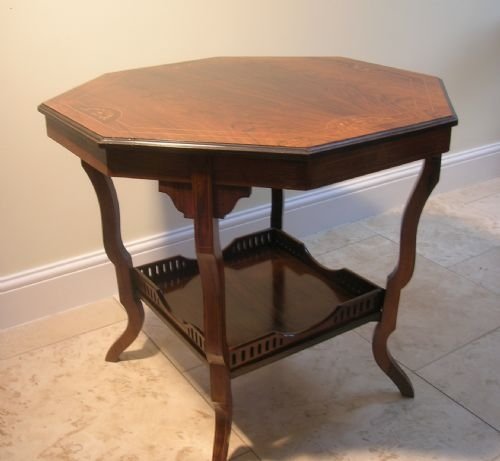
Edwardian Rosewood Centre Table
An Edwardian rosewood centre table brings figured timber and fine inlay into a room, offering both presence and utility.
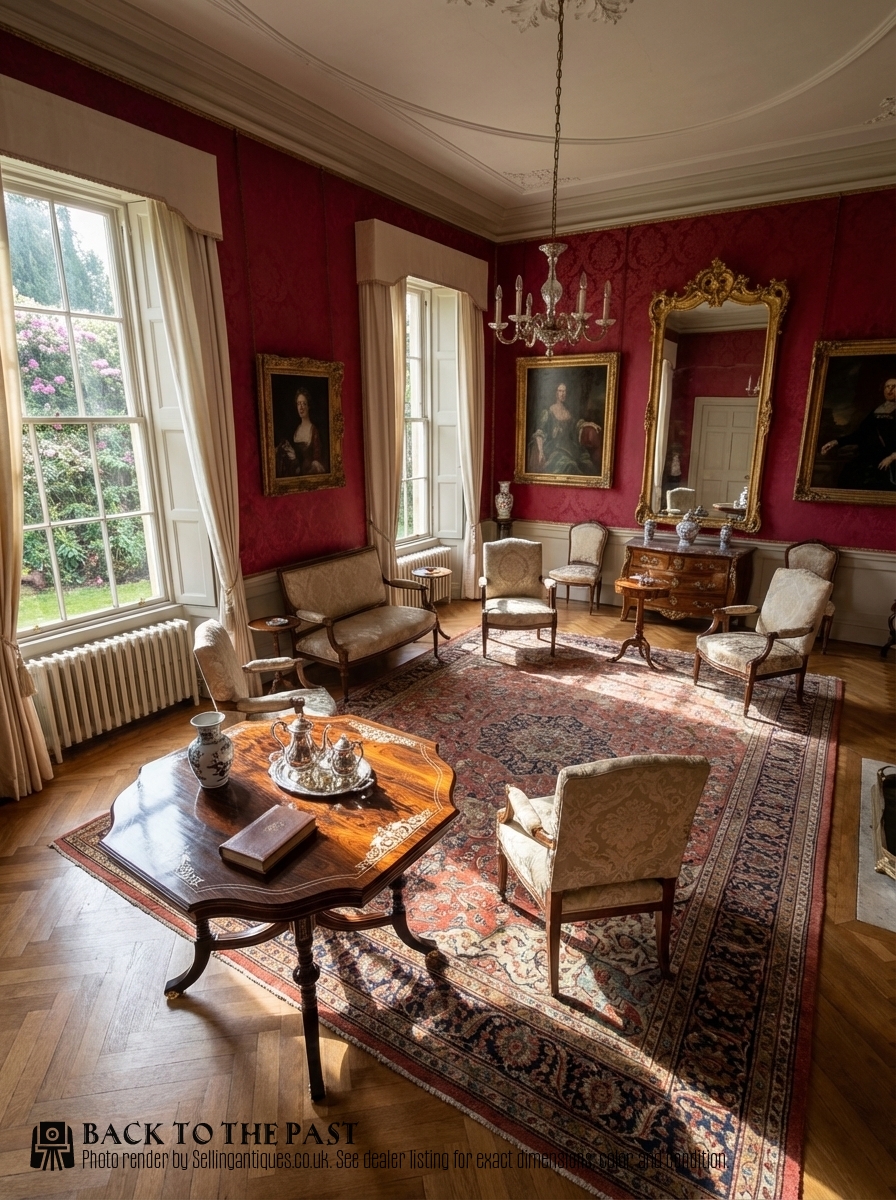
Edwardian Rosewood Centre Table
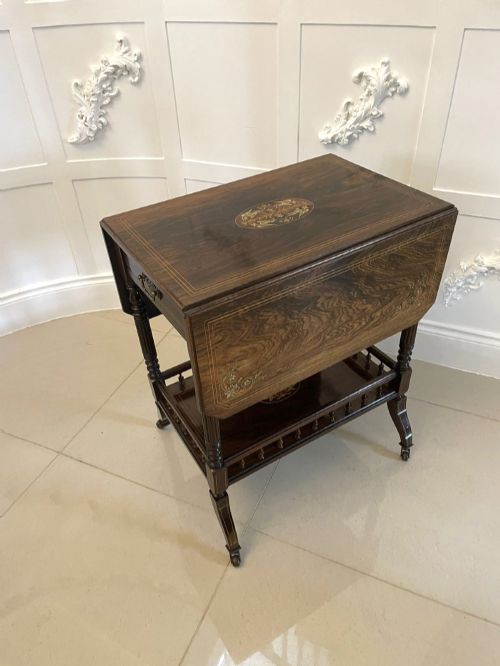
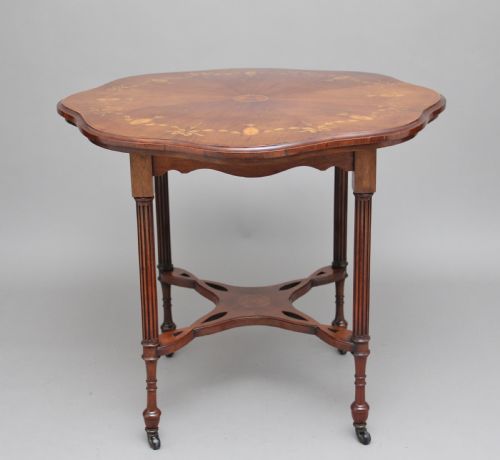
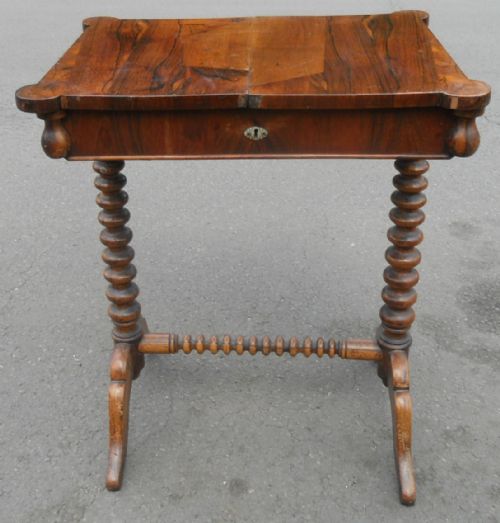
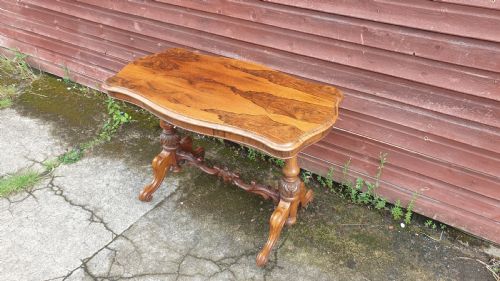
When you search for an edwardian rosewood centre table, you find freestanding tables designed to sit in the middle of a room rather than against a wall. The Edwardian examples and nineteenth-century pieces seen here often feature polished rosewood enriched with satinwood and boxwood inlay.
Forms vary from circular and octagonal tops to drop-leaf and occasional designs. While earlier Victorian and Regency periods also contribute rosewood centre tables and drum tables to the range, the Edwardian examples dominate with their marquetry and lighter proportions.
How they were made
Cabinetmakers built these tables using dense rosewood as the primary timber, frequently applying contrasting veneers of satinwood and boxwood to create intricate floral and geometric motifs. Wood inlay and marquetry demand precise hand-cutting, embedding delicate strips of lighter wood into dark grounds.
Brass fittings appear on castors or mounts, while secondary timbers like mahogany support the internal framework of drop-leaf mechanisms and pedestals. Turning and carving shape the pedestals and legs, balancing the heavy grain of the rosewood with clean structural lines.
Drop leaves fold down instantly when the room needs to host a sudden crowd.
What varies in quality
The sophistication of the marquetry and the crispness of the wood inlay separate standard production from finer work. Tables finished with detailed satinwood banding and thoughtful proportions show a higher degree of workshop skill.
Selection of the rosewood grain itself determines visual depth, where rich, naturally figured timber elevates the piece far beyond plain stock surfaces.
The Edwardian Rosewood Centre Table Glossary
- Rosewood
- A heavy, dark timber with a pronounced grain and oily lustre, prized for fine cabinetmaking. It takes a high polish and often shows distinctive black or purple streaks.
- Marquetry
- The art of applying pieces of veneer to a structure to form decorative patterns and pictures. Craftsmen cut contrasting woods together to ensure tight, seamless joints.
- Drop leaf
- A table with hinged flaps on the sides that can be raised to extend the surface or lowered when space is tight. It requires sturdy rule joints and drop brackets for support.
- Drum table
- A circular library table with a deep top resembling a drum, typically fitted with drawers around the perimeter. These rest on a central pillar with spreading legs.
- Satinwood
- A pale, lustrous timber native to India and Ceylon, used extensively for contrasting stringing and inlay on darker woods.
Edwardian Rosewood Centre Table: Frequently Asked Questions
Where should a centre table go?
A centre table stands freely in the middle of a room rather than pushed against a wall, designed to be viewed from all sides.
In period interiors, they anchored reception rooms and libraries, providing a surface for lamps, books or floral arrangements.
How do I care for rosewood?
Rosewood benefits from regular dusting with a dry, soft cloth and protection from direct sunlight and dry heat.
Avoiding harsh commercial polishes preserves the natural depth and original lustre of the timber.
What is Sheraton Revival style?
Sheraton Revival refers to late nineteenth and early twentieth-century furniture inspired by the neoclassical designs of eighteenth-century designer Thomas Sheraton.
These pieces typically incorporate delicate satinwood inlay, tapered legs and classical symmetry.
Can I use an occasional table for dining?
Occasional tables and side tables offer smaller surface areas intended for drinks, books or display rather than formal dining.
Their lighter proportions and drop leaves suit multi-functional sitting rooms better than heavy dining use.