
Antique Serving Stand
An antique serving stand is a practical piece designed for hospitality, offering tiered or tray surfaces to hold food and drinks with ease.
What an antique serving stand is
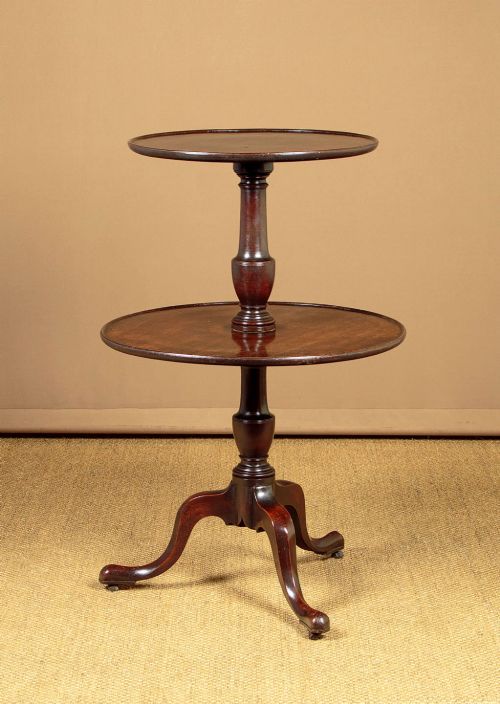
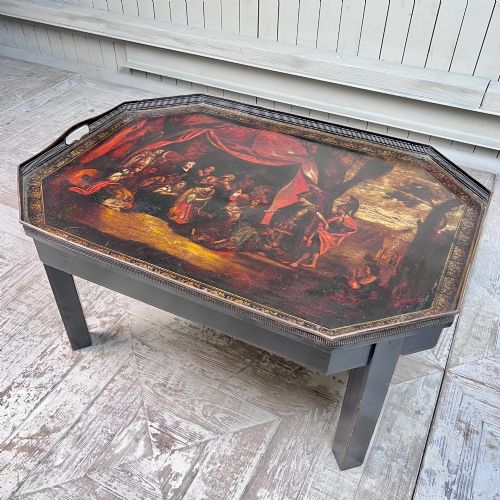
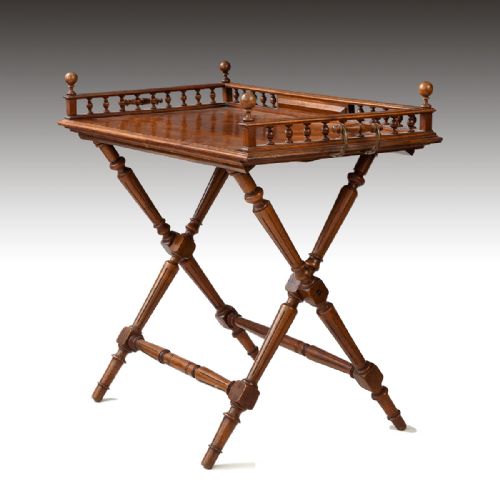
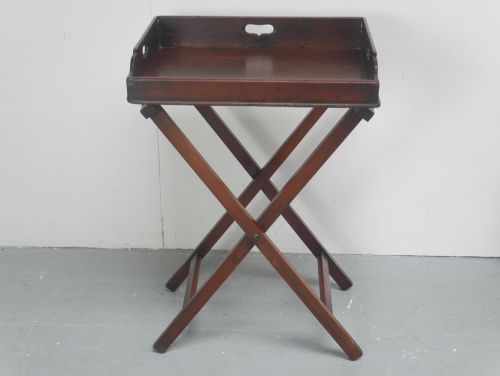
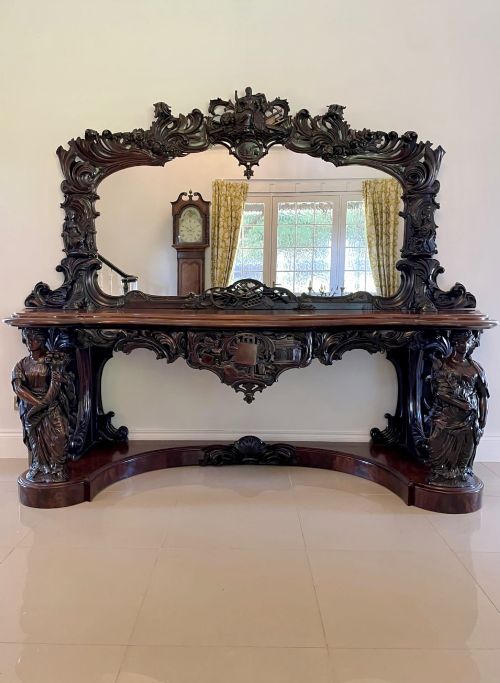
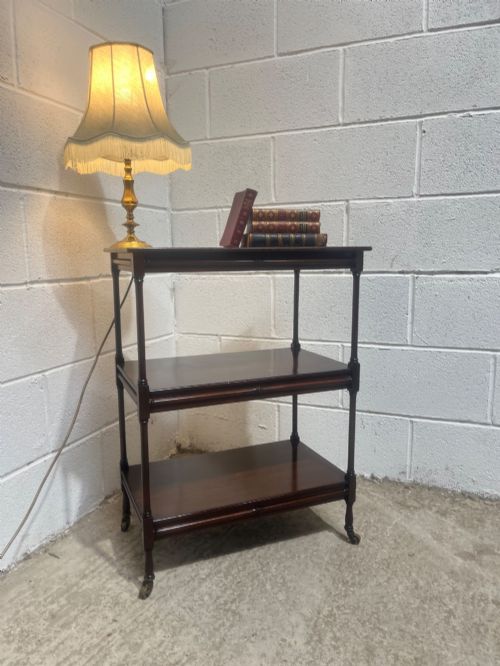
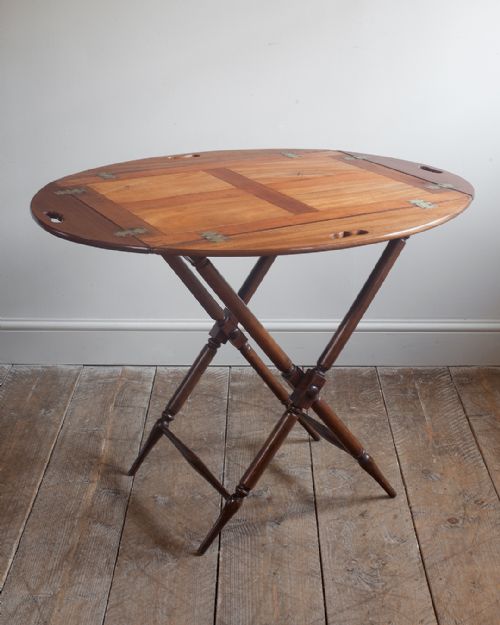
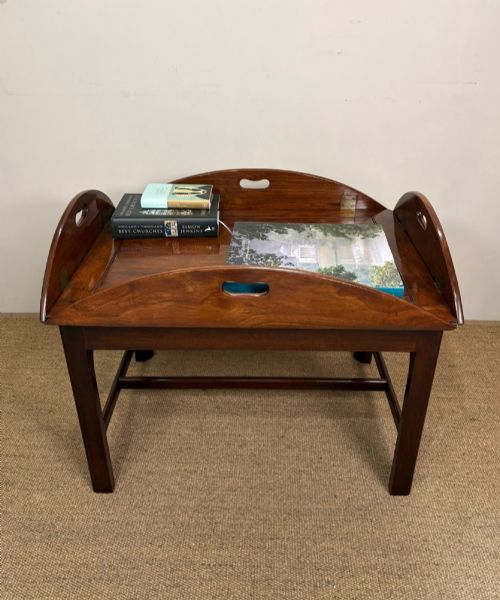
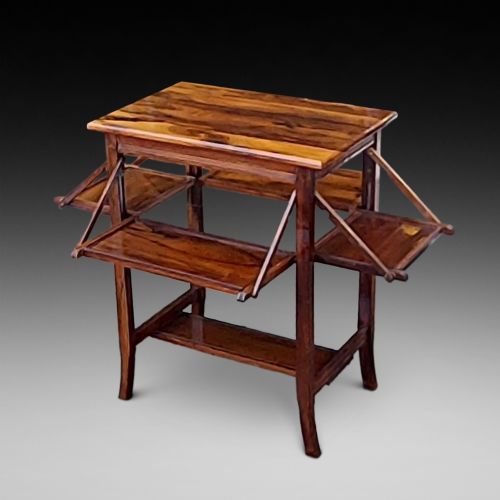
When you search for an antique serving stand, you encounter a varied group of historical furnishings primarily built to assist with dining, afternoon tea and entertaining. These pieces include multi-tiered dumb waiters, folding butler tray tables and freestanding console serving tables originating from the eighteenth century through to the early twentieth century.
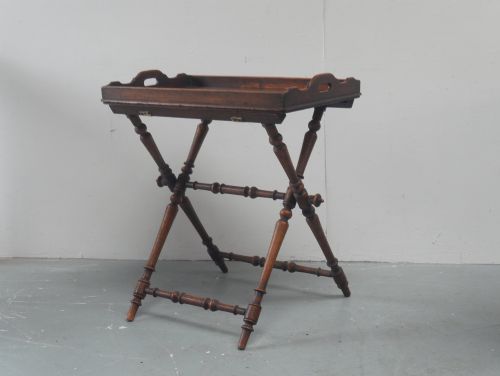
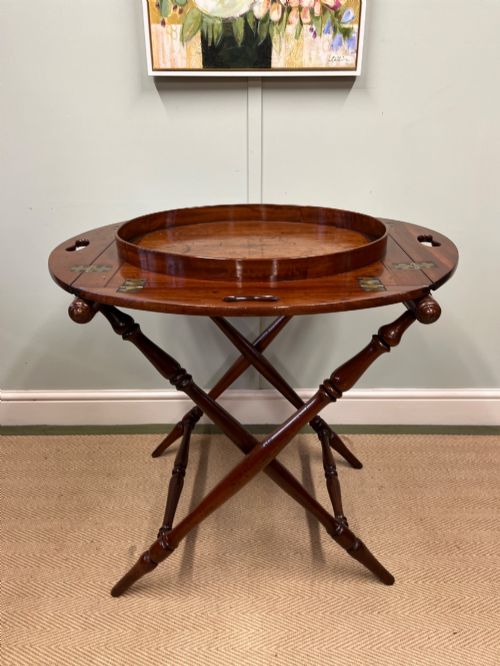
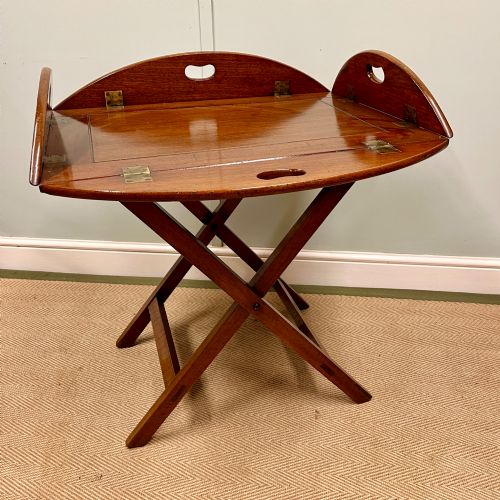
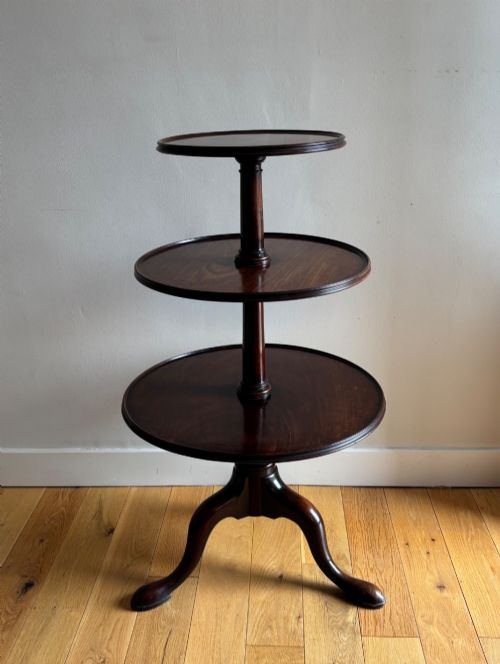
The version you are most likely to meet on this page is the mahogany dumb waiter or the folding Edwardian butler tray stand. Eighteenth-century and Georgian examples frequently feature graduating circular tiers supported by turned columns and tripod legs, while later Edwardian and Victorian iterations often utilise folding stands paired with removable wooden or engraved brass trays.
Makers designed these items for domestic convenience in dining rooms, drawing rooms and sitting rooms. They allowed servants to present courses or guests to help themselves to drinks without crowding the main dining table.
How they were made
Cabinetmakers relied heavily on timber, shaping solid mahogany and walnut into structural frames, turned pedestals and raised tray borders. Where grander formal presentation was required, workshops employed marble tops or incorporated carved geometric and architectural motifs into the woodwork.
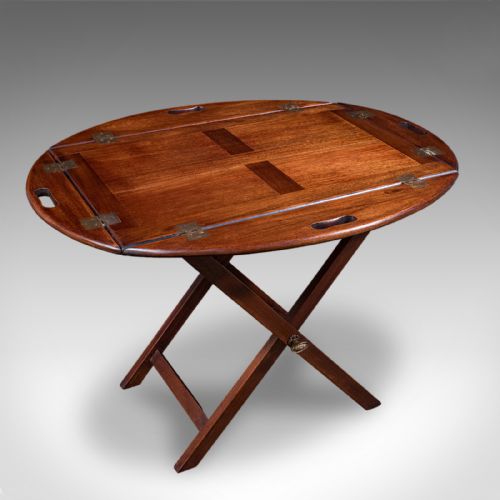
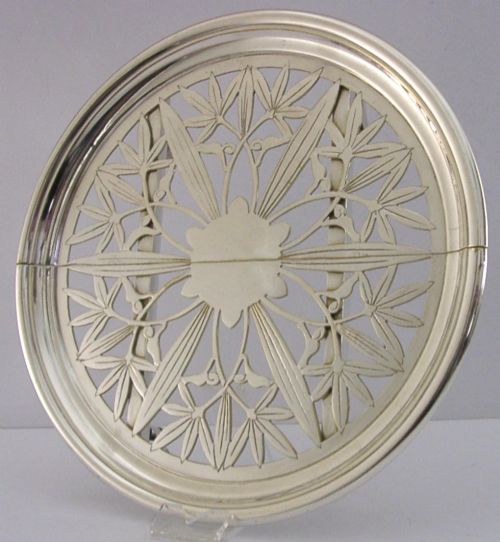
Metal components played a structural and decorative role, with brass castors, hinges and fittings allowing multi-tiered dumb waiters and folding stands to function smoothly. Later or colonial pieces incorporated engraved brass trays paired with folding wooden bases, whilst silver plating appeared on warming stands designed for formal dining.
Retail Price Guide 2026
Typical UK retail prices for serving stand, calculated from the Sellingantiques database of over a million retail prices indexed since 2003. This retail price guide relies exclusively on Sellingantiques data; no external sources or auction records are used, so the figures do not describe the wider market.
Some nineteenth-century tables travelled far, pairing English folding frames with intricately engraved brass trays imported from Benares.
What varies in quality
Quality rests on the selection of timber and the crispness of the joinery and turning. Superior examples display carefully chosen grain patterns in the solid mahogany or walnut, alongside robust pillar-and-claw bases that support heavy stacked tiers without wobble.
Proportion and form dictate the distinction between standard utilitarian items and finer commissions. Pieces featuring scarce shapes, such as octagonal tiers or serpentine fronts, demonstrate higher craftsmanship from skilled cabinetmakers compared to simpler folding stands.
The Antique Serving Stand Glossary
- Dumb waiter
- A tiered freestanding stand used in dining rooms to hold dishes, bottles or glasses without the need for a servant. These typically feature two or three graduating circular wooden trays mounted on a central pillar.
- Butler tray table
- A portable serving tray that rests upon a folding X-frame stand. The tray often includes hinged drop-flaps or cut-out carrying handles for practical use during afternoon tea.
- Drop-flap
- A hinged section of a tray or table top that can be lowered or raised as needed. This mechanism allowed servants to expand surface area quickly during busy service.
- Benares tray
- An intricately engraved brass tray originating from India and imported during the nineteenth and early twentieth centuries. These were frequently paired with folding wooden stands to serve as decorative lamp or tea tables.
Frequently Asked Questions
What is a dumb waiter?
A dumb waiter is a multi-tiered freestanding stand designed to hold dishes and bottles during meals. Eighteenth and nineteenth-century dining rooms utilised them to reduce reliance on servants.
They typically feature two or three circular wooden tiers stacked vertically on a central pillar with tripod legs.
How were butler tray tables used?
Butler tray tables served as portable surfaces for carrying tea, food or drinks between rooms. The removable tray sat securely on a collapsible wooden folding stand.
This design allowed households to clear away service items easily when entertaining ended.
How do I date an antique serving stand?
Dating relies on timber choices, construction methods and stylistic markers associated with specific periods. Georgian pieces often show heavy solid mahogany with turned tripod columns, while Edwardian examples frequently feature lighter oak, walnut or folding brass tray configurations.
Hardware such as brass hinges and castors also helps establish the era of manufacture.
Can I use these stands in a modern home?
These stands integrate well into contemporary interiors as side tables, drinks displays or plant stands. Their compact footprints and tiered designs provide useful surface space in living rooms and dining areas.
Folding versions offer practical flexibility for modern entertaining.