

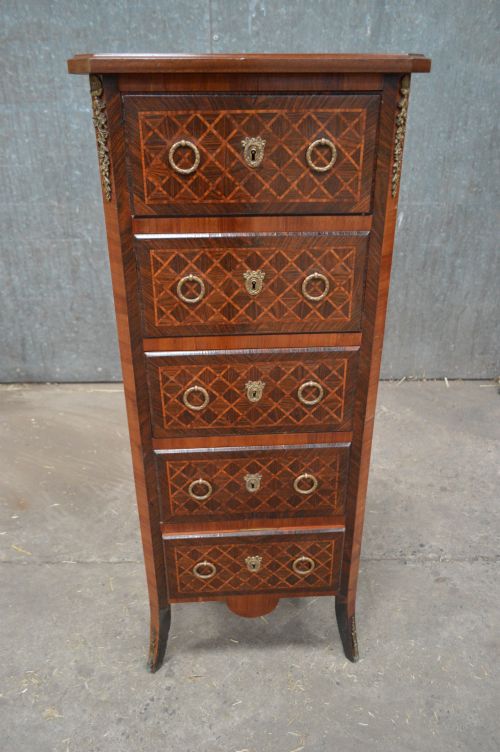
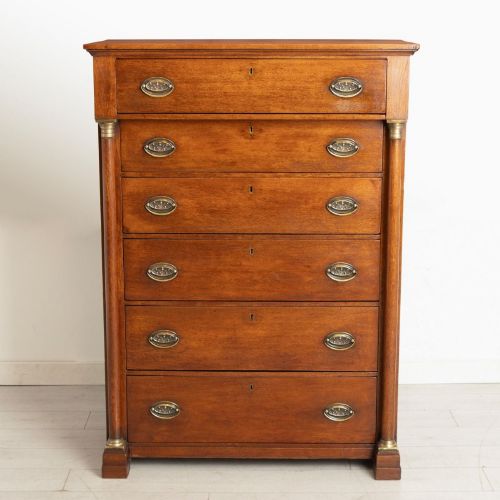
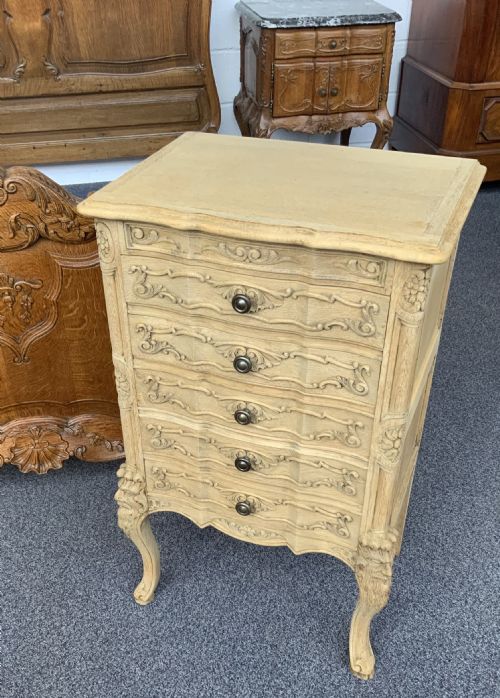
Antique Semainier Tallboy
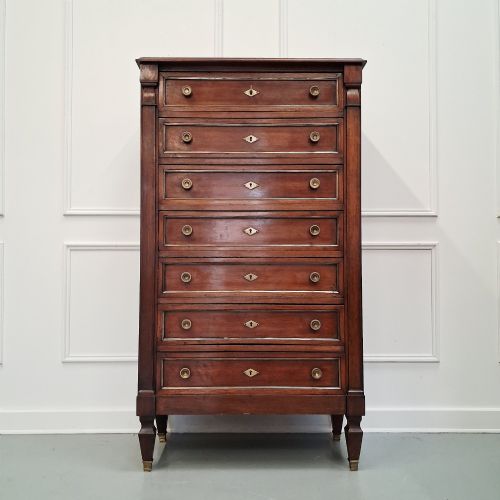
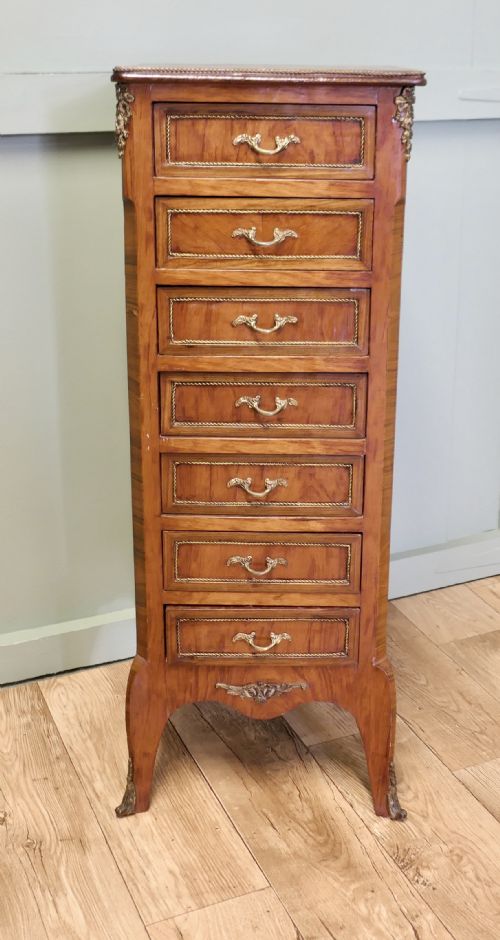
An antique semainier tallboy provides dedicated vertical storage, offering seven drawers for the days of the week in a remarkably compact footprint.
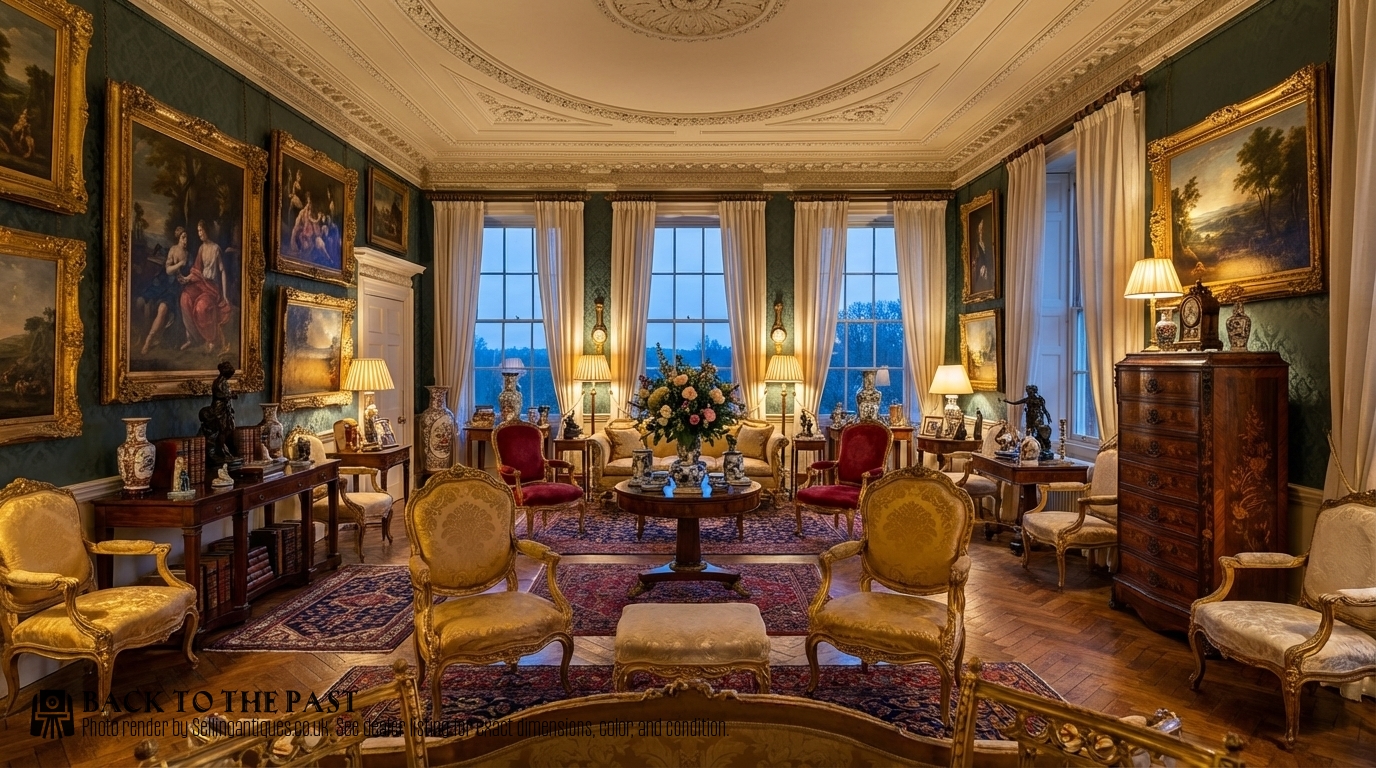
Antique Semainier Tallboy
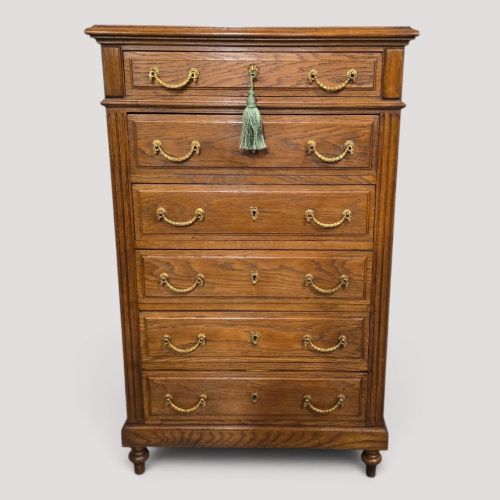
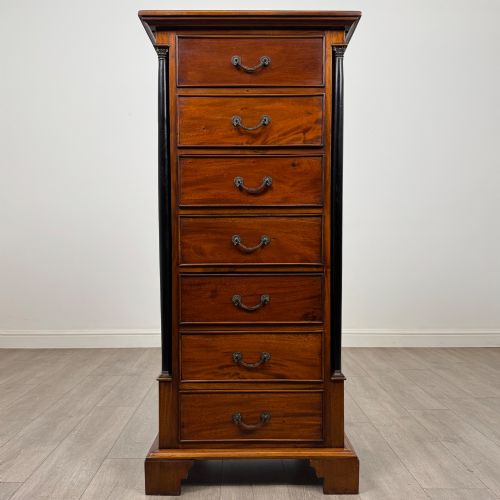
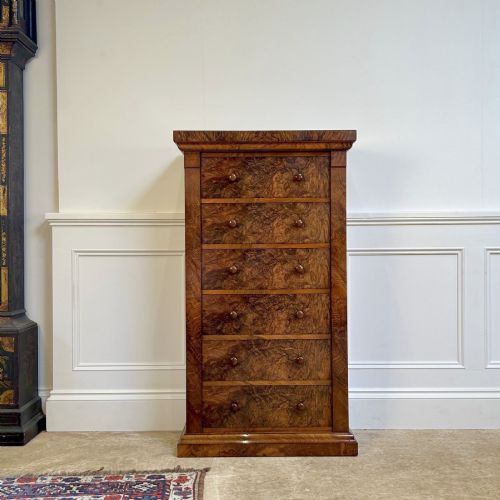
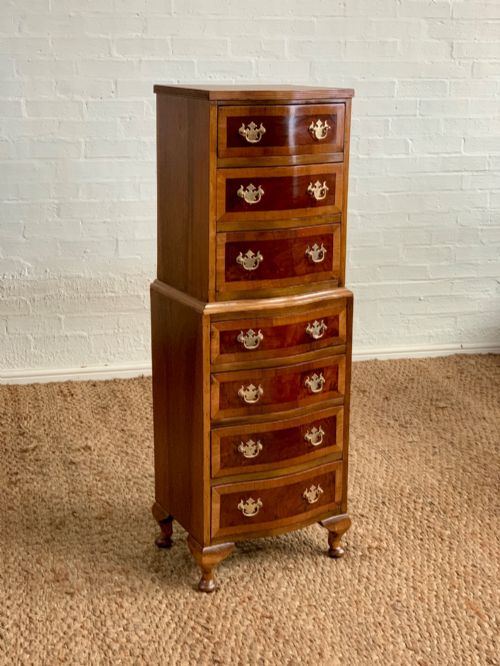
An antique semainier tallboy stands as a tall, narrow storage piece designed primarily to maximise vertical space in compact rooms. The form encompasses French semainiers alongside English Wellington chests and tall narrow chests of drawers spanning the nineteenth and early twentieth centuries.
Buyers encounter walnut, mahogany, and oak constructions frequently on this page, often styled in the French manner with marble tops or executed in Edwardian and Victorian British cabinet making traditions. These pieces frequently feature secure locking mechanisms or drop-front writing surfaces alongside the traditional stack of graduated drawers.
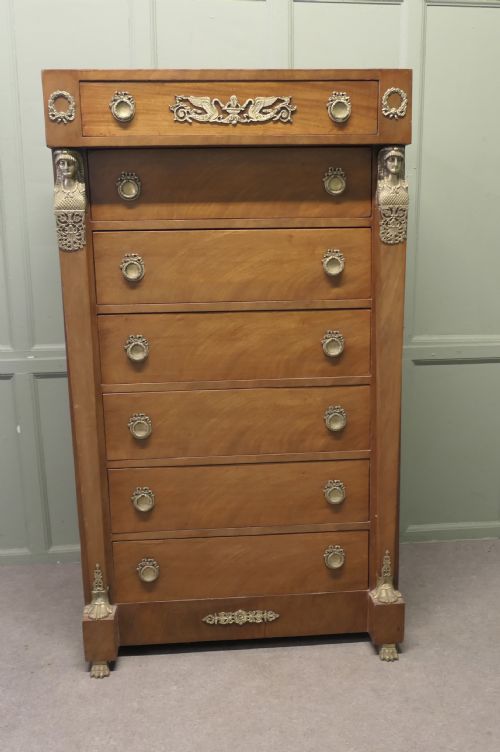
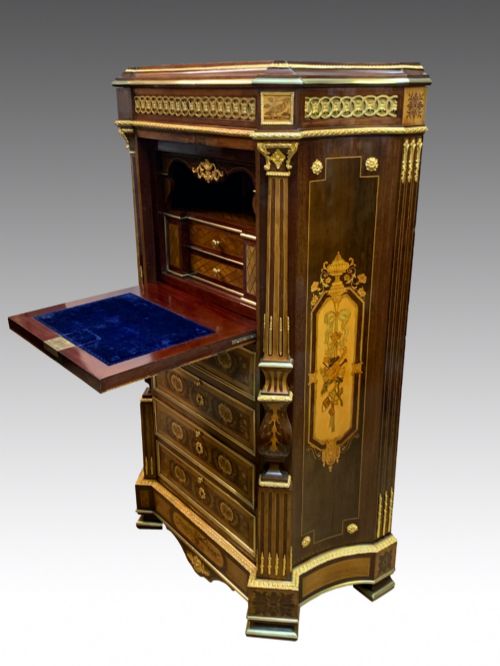
Originating largely from French provincial and Parisian workshops as well as British cabinet makers, the survivors range from restrained Georgian style proportions to ornate marquetry and ormolu-mounted Empire pieces.
Materials and construction methods
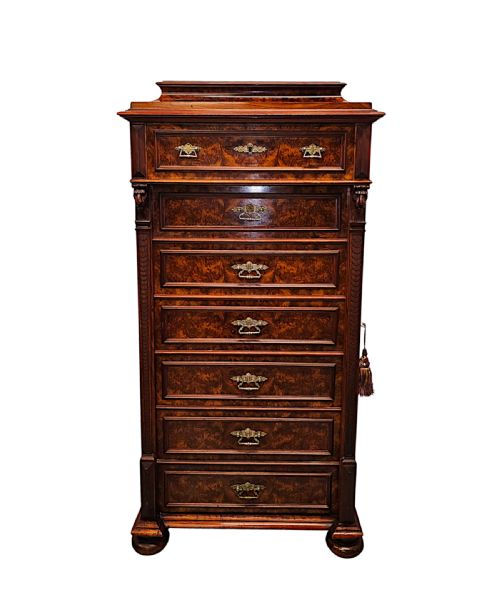
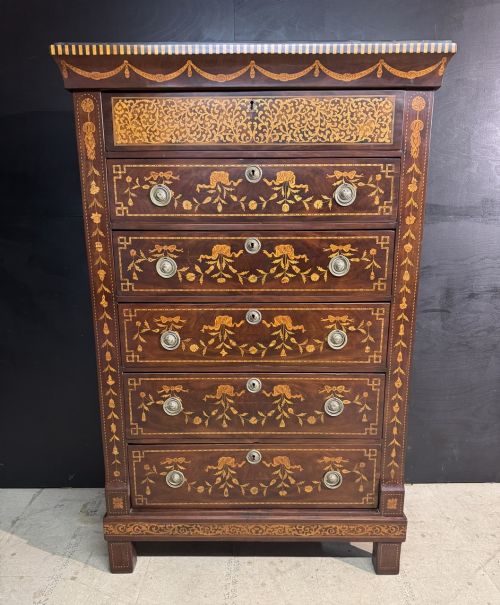
Cabinet makers utilised dense hardwoods such as mahogany, walnut, and oak for the primary carcase, frequently applying figured veneers like burr walnut or exotic marquetry patterns across the drawer fronts. Timber selection prioritised stability to prevent warping in tall, narrow structures.
Joinery involved precise dovetailing for the drawer boxes and robust frame construction to support the significant weight of seven stacked drawers. Many examples incorporate brass or gilt bronze mounts, marble tops, and specialised locking stiles that secure all drawers simultaneously.
The furniture forms include bedside cabinets, secretaire desks, and pillar chests alongside standard chests of drawers.
Factors that distinguish quality
Quality rests heavily on the crispness of the timber veneer work, the thickness of the original marble slab where fitted, and the precision of the dovetailed drawer construction. Superior examples retain original brass or ormolu mounts and functional locking mechanisms with matching keys.
The finesse of hand-carved details, the book-matching of burr walnut or mahogany grains, and the structural integrity of the tall, narrow frame separate standard utilitarian pieces from exceptional cabinet work.
Gillows·Maison Krieger·Maple and Co·Betty Joel
The Antique Semainier Tallboy Glossary
- Semainier
- A traditional tall French chest typically featuring seven drawers, traditionally one for each day of the week. The form prioritises vertical storage over floor space.
- Wellington chest
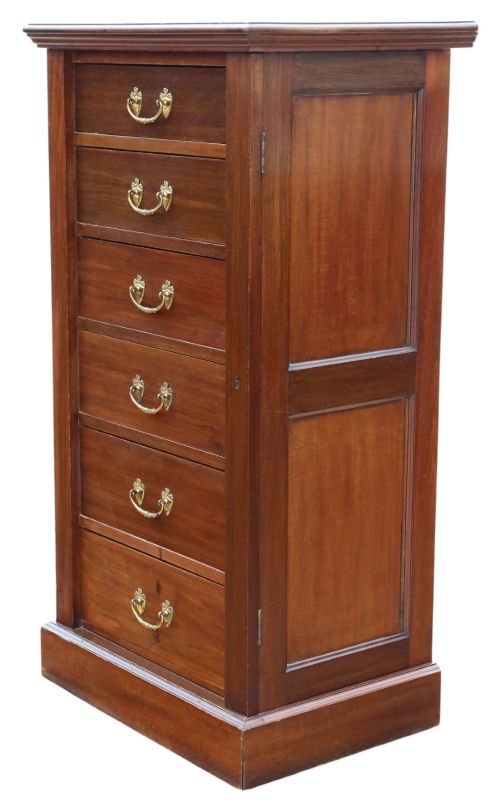
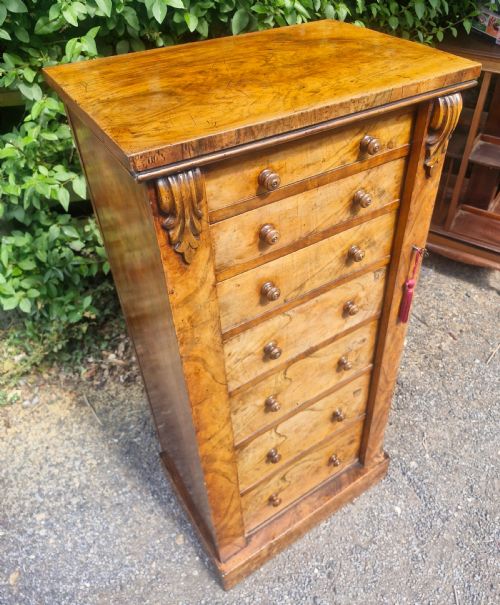
- A sturdy British pillar chest of drawers, usually in mahogany or walnut, featuring a hinged locking stile on the right side secured by a small key. This mechanism locks all drawers simultaneously.
- Marquetry
- Decorative patterns formed by inserting pieces of contrasting wood veneer into a background panel. Master cabinet makers used this technique to create floral or geometric designs on drawer fronts.
- Ormolu
- Gilt bronze mounts applied to furniture edges and corners, characteristic of French Empire and revival pieces. It provides metallic contrast against dark woods like mahogany.
- Parquetry
- Geometric wood inlay work arranged in repeating patterns such as cubes or chevrons. This technique decorates the surfaces of many continental European pieces.
Antique Semainier Tallboy: Frequently Asked Questions
What is a semainier tallboy?
A semainier tallboy is a slender chest of drawers, traditionally built with seven tiers to hold weekly garments.
The tall and narrow proportions make these pieces useful for bedrooms with limited floor space.
How do I use a Wellington chest?
A Wellington chest operates by unlocking the side locking bar, which swings aside to release all the drawers at once.
This mechanism was originally designed to secure valuables and documents safely within the tall stack.
Where were these chests made?
These pieces originate primarily from British and French workshops active during the nineteenth and early twentieth centuries.
Continental examples often feature marble tops and marquetry, while British versions favour solid mahogany or walnut.
How do I distinguish French and British styles?
French pieces frequently incorporate marble tops, gilt bronze mounts, and intricate marquetry or parquetry surfaces.
British examples often rely on clean timber grains, brass handles, and functional side-locking stiles.