


Antique Sauce Ladle
An antique sauce ladle brings proper weight and line to the table, turning gravy or cream service into a tactile ritual.
Antique Sauce Ladle
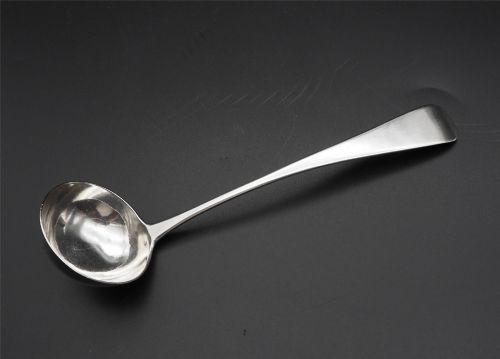
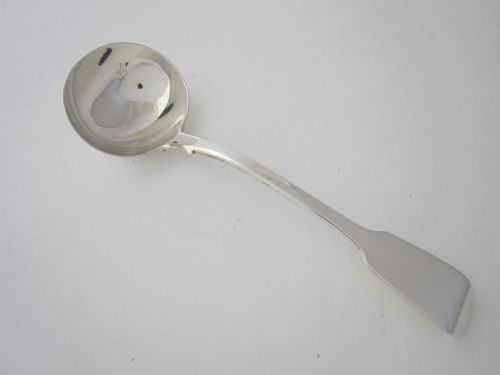
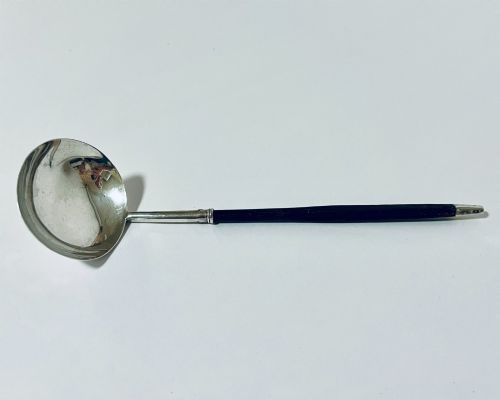
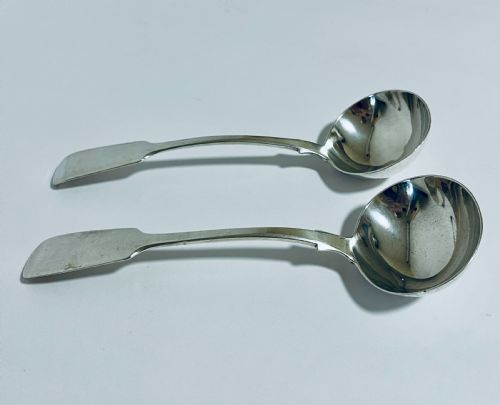
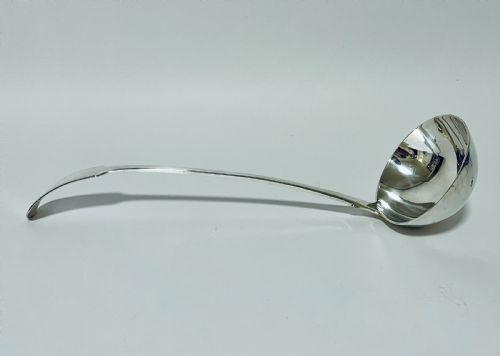
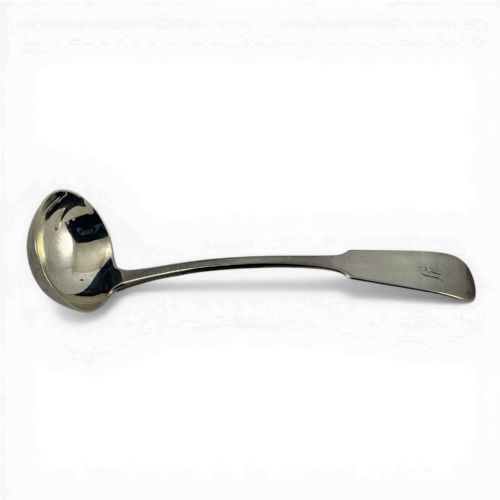
An antique sauce ladle is a small serving spoon designed specifically for condiments, gravies, and creams, distinguished by a bowl scaled for pouring rather than eating. These pieces emerge most frequently from the Georgian and Victorian periods, with sterling silver forming the bulk of the selection alongside occasional porcelain and pewter examples.
Buyers encounter regional patterns such as Scottish provincial work from towns like Elgin and Banff, alongside Dublin and London hallmarks from the eighteenth and nineteenth centuries. Forms range from simple fiddle patterns to ornate scrollwork and specialised straining designs for mint sauce.
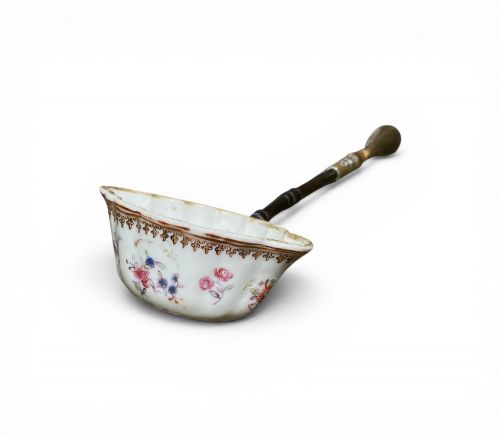
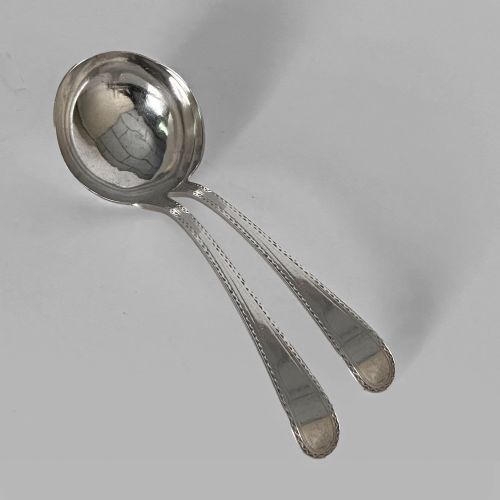
Makers span individual provincial silversmiths to major international houses, offering both single spoons and matched pairs suited to traditional dining arrangements. The variety encompasses everything from heavy Continental silver to delicate Chinese porcelain painted in the famille rose palette.
Materials and construction
Sterling silver dominates production, shaped by hammering and casting to create resilient bowls and handles that balance properly in the hand. Silversmiths employed techniques like rattail attachments and reinforced junctions to withstand daily use at the table.
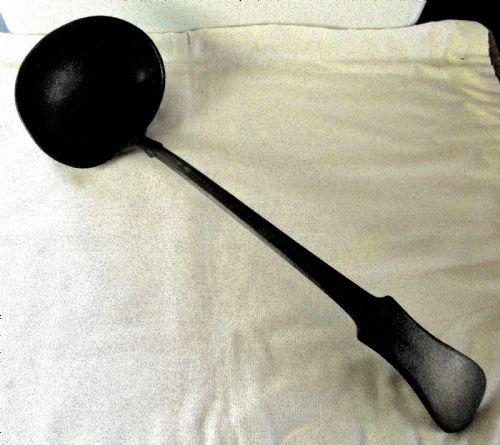
Alternative materials include pewter, wood, horn, and ironstone, each requiring distinct forming methods from casting in metal moulds to turning on a lathe. Porcelain pieces from the Qianlong period demonstrate wheel-throwing and hand-painted enamel decoration fired at high temperatures.
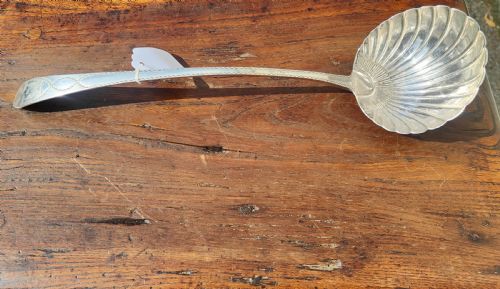
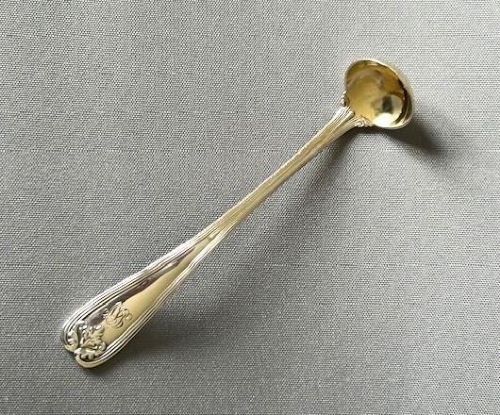
Surface ornamentation relies on hand-engraving, repoussé scrollwork, and cast terminal patterns such as fiddle thread and shell. Makers often applied partial gilding to the interior of silver bowls to protect the metal from acidic condiments.
Antique Sauce Ladle Retail Price Guide 2026
Typical asking prices for sauce ladle among the pieces listed under this phrase on Sellingantiques today, from the lower quarter to the upper quarter. They describe what is for sale here now, not the wider market.
Listings feature sterling silver, porcelain, pewter, horn, and wood across Georgian, Victorian, and Edwardian periods.
Assessing craftsmanship and execution
Quality rests in the gauge of the metal and the crispness of the handle decoration, where deeper stamping and hand-chasing distinguish superior work from mass production. A well-balanced handle meets a bowl shaped for clean pouring without drips.
Maker marks and clear town or date hallmarks add authority, showing the provenance of established workshops and provincial silversmiths. The integrity of the junction between bowl and stem dictates long-term durability in daily service.
Georg Jensen·Tiffany·Dixon And Son·Mappin And Webb·Hester Bateman·William Ferguson·Chawner And Co
The Antique Sauce Ladle Glossary
- Fiddle Pattern
- A nineteenth-century flatware style featuring a shoulder above the stem resembling the body of a violin. This design became standard in British and Irish dining silver.
- Provincial Silver
- Items manufactured and hallmarked outside major assay towns like London, often bearing unique maker marks from regional Scottish or Irish silversmiths. These pieces reflect local aesthetic traditions rather than metropolitan uniformity.
- Repoussé
- A metalworking technique where the design is hammered into relief from the reverse side. It creates tactile surface decoration popular on Victorian condiment ladles.
- Straining Ladle
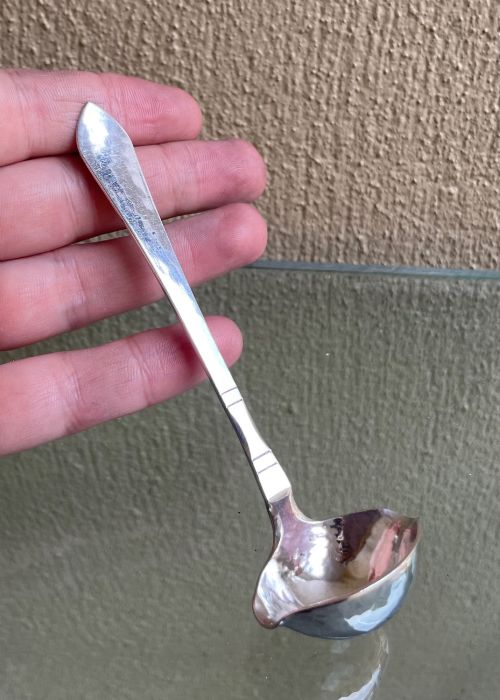
- A specialised serving spoon with a built-in partition or perforated bowl designed to separate solid herbs from liquid gravies or mint sauce. This form appears with detachable inserts in twentieth-century pieces.
- Famille Rose
- A palette of opaque enamel colours dominated by pink, used on eighteenth-century Chinese export porcelain. Ladles decorated in this style were shipped to European markets.
Antique Sauce Ladle: Frequently Asked Questions
How do I date a silver ladle?
British silver carries hallmark stamps indicating the assay office, the maker, and a date letter corresponding to the year of production. Comparing these marks against historical registers reveals the exact year of manufacture.
Stylistic cues like bowl shape and handle ornamentation further narrow the period when hallmarks are rubbed or absent.
Can I use antique silver ladles for daily dining?
Solid silver pieces are durable enough for regular use provided they are washed by hand in mild soap. Avoid dishwashers and harsh abrasives that wear away antique hallmarks and surface detail.
Acidic foods like mint sauce should be rinsed promptly after use to prevent tarnishing.
Why do some ladles have holes in the bowl?
Perforated bowls identify straining ladles intended for mint sauce or broth service where solid ingredients must remain behind. This functional adaptation ensures diners ladle only the liquid.
Some twentieth-century examples feature a clever detachable strainer insert held within the solid bowl.