
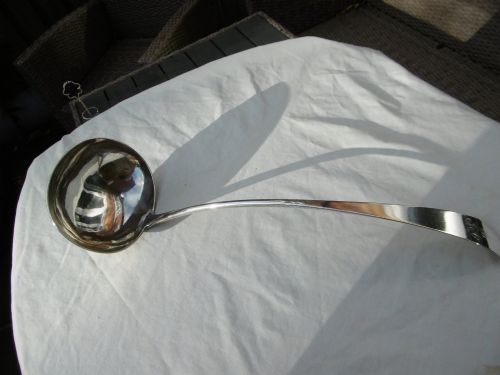
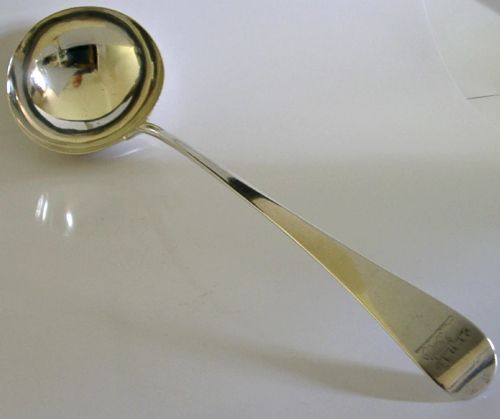
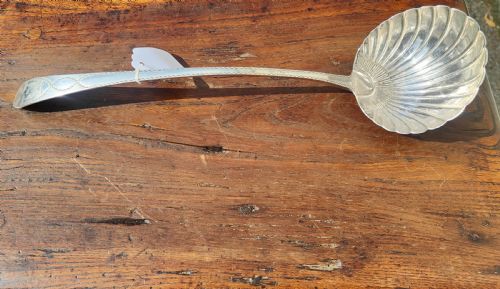
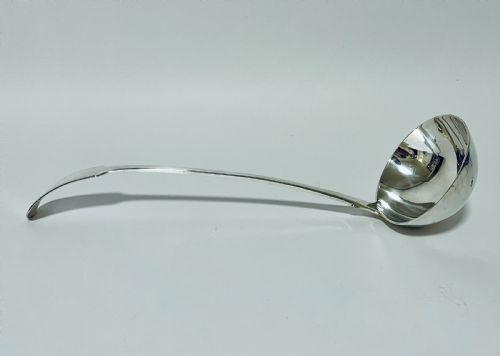
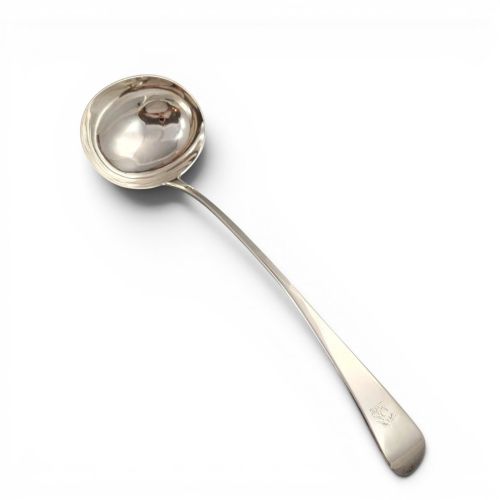
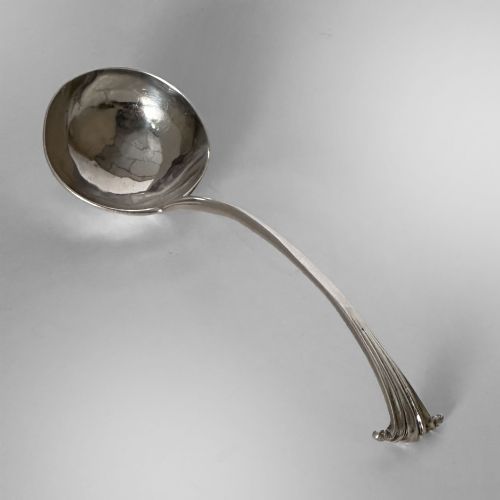


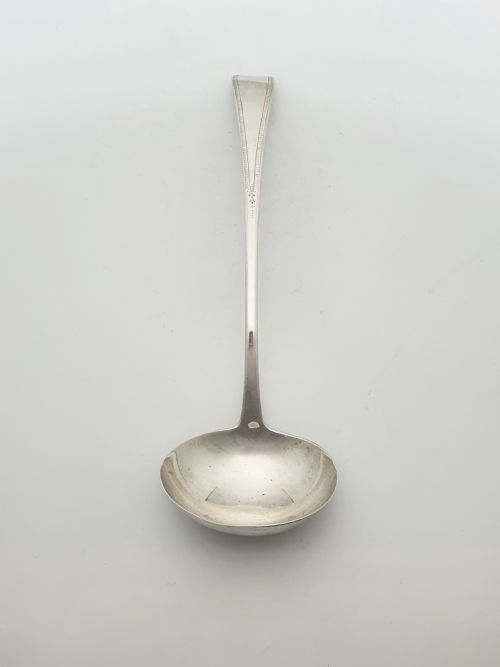


Sterling Silver Punch Ladle
These sterling silver punch ladle examples are grand serving tools designed for bowls, bringing historic weight and polish to formal dining tables.
Sterling Silver Punch Ladle
When you search for a sterling silver punch ladle, you encounter large serving implements created to dispense drinks from central bowls during communal gatherings. The items on this page span the eighteenth century, the Georgian era, the Regency period, the Victorian era, the Edwardian period, and the nineteen-twenties.
The forms divide broadly into expansive soup ladles designed for deep tureens and smaller toddy ladles meant for smaller portions. You will find pieces originating from London, Edinburgh, Glasgow, York, Ireland, and France, reflecting diverse regional silversmithing centres.
Pattern styles visible across the selection include Old English, Colonial Revival, Arts and Crafts, and threaded borders, alongside crested family pieces. These objects served elite dining rooms and domestic gatherings alike throughout successive British and European reigns.
How they were made
Silversmiths constructed these pieces primarily from sterling silver and silver, hammering and shaping the metal into deep bowls and long handles. Many handles incorporate organic elements such as turned wood, polished horn, or baleen whalebone to insulate the user's hand from hot liquids.
Makers utilised techniques like engraving and die-stamping to apply crests, initials, and decorative borders such as the threaded edge or Queen's pattern. Hallmarks stamped directly into the metal recorded the assay office, the maker's mark, and the year of production.
Materials span sterling silver, silver, wood, horn, and whalebone, reflecting functional demands for heat insulation on long-handled serving implements.
What varies in quality
The weight of the silver provides the primary measure of substance, ranging from lighter toddy pieces to heavy soup ladles exceeding four hundred grams for pairs. Thicker bowls and rigid stems withstand frequent service without bending or flexing under the weight of liquid.
The crispness of engraved family crests and the precision of hallmarking stamps indicate the standard of workshop execution. Furthermore, the integration of organic materials like horn or whalebone with the metal stem requires skillful joinery that survives intact over centuries.
Milne and Campbell·Hester Bateman·John McDonald·Michael Smith·Mary Chawner·Christofle
The Sterling Silver Punch Ladle Glossary
- Toddy ladle
- A small drinking implement typically featuring a twisted whalebone or turned wooden handle, used for serving warm spirits from a bowl.
- Soup ladle
- A large serving tool with an expansive bowl and a long handle, designed to transfer liquid from a tureen to individual plates.
- Hallmark
- A set of official marks stamped onto precious metals to guarantee the purity, the place of assay, and the year of manufacture.
- Crest
- An armorial engraving depicting a family symbol or motto, personalized onto the handle or terminal of the silver.
- Old English pattern
- A traditional flatware design characterised by a rounded handle end turning downwards, popular throughout the Georgian period.
Sterling Silver Punch Ladle: Frequently Asked Questions
What is a sterling silver punch ladle used for?
These implements served to transfer steaming punch or mixed spirits from large ceramic or glass bowls into individual cups during social gatherings.
Their generous bowl capacities and extended handles allowed hosts to reach deep into vessels without disturbing the fruit or ice floating inside.
How do I tell an 18th century ladle from a Victorian one?
Eighteenth century examples often display simpler hand-hammered bowls and crisp London or provincial hallmarks, frequently paired with turned wooden or twisted whalebone handles.
Victorian pieces tend to adopt heavier, more ornate decorative motifs like the Queen's pattern and frequently utilise solid silver stems throughout.
Why do some ladles have whalebone handles?
Silversmiths utilised whalebone and horn because these materials do not conduct heat as rapidly as solid metal, protecting the server's hand.
Such organic components were boiled and twisted into spiral shapes while pliable, setting into rigid, durable grips.
How should I clean antique silver serving utensils?
Gentle washing in warm water with mild soap removes oils and residues from regular use without wearing down delicate hand-engraved crests.
Avoid abrasive pastes and harsh dips that strip away the dark oxidation inside intricate crevices, which provides valuable contrast to the design.