


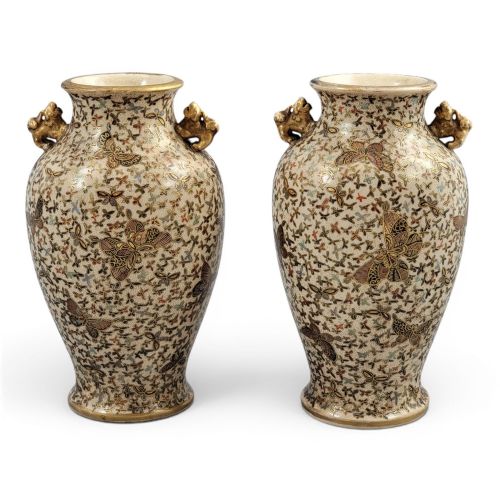


Antique Satsuma Pair
An antique satsuma pair delivers matched Japanese ceramic vessels adorned with intricate enamel and gold leaf, offering symmetrical display pieces for refined interiors.
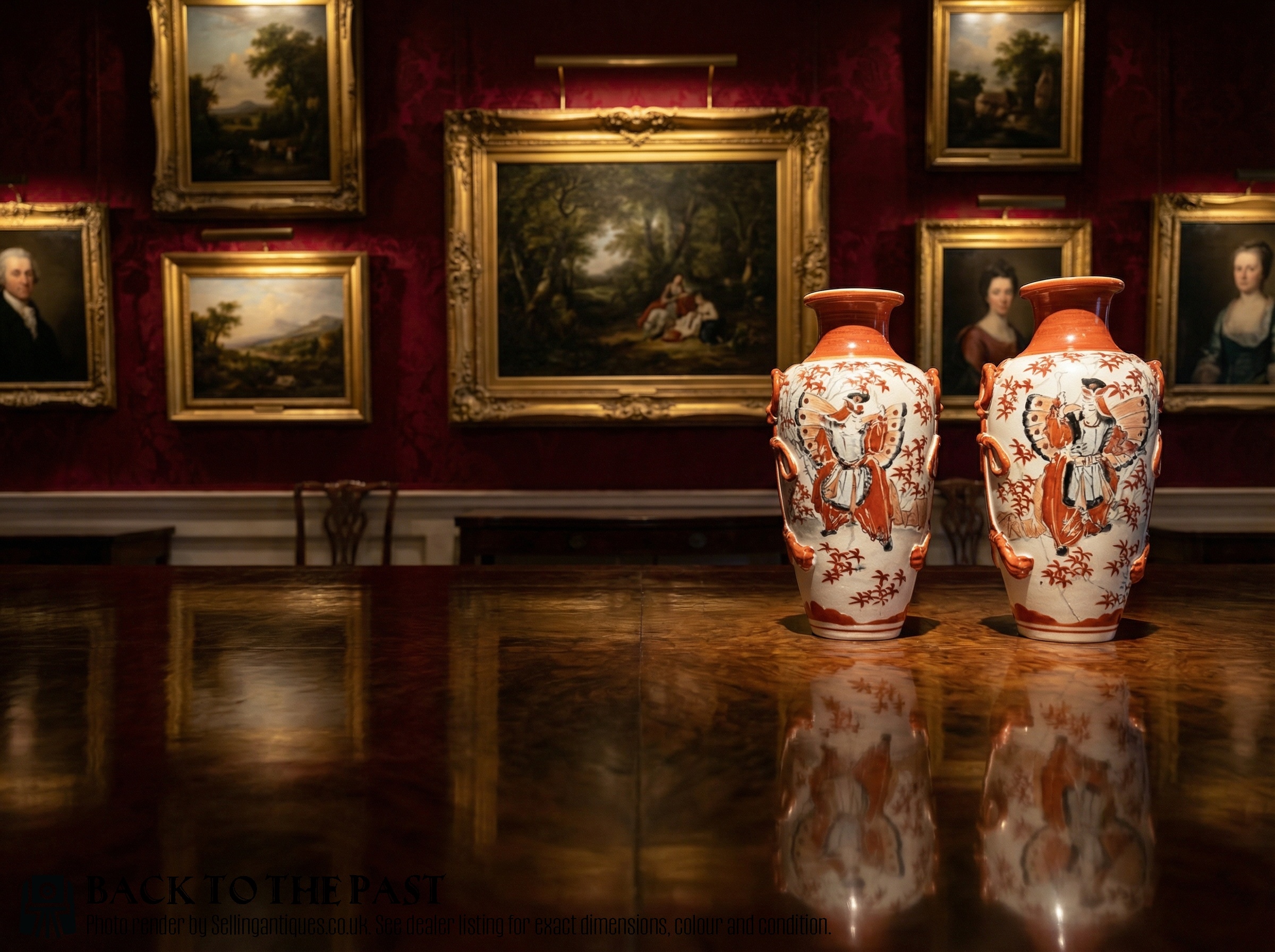
Antique Satsuma Pair
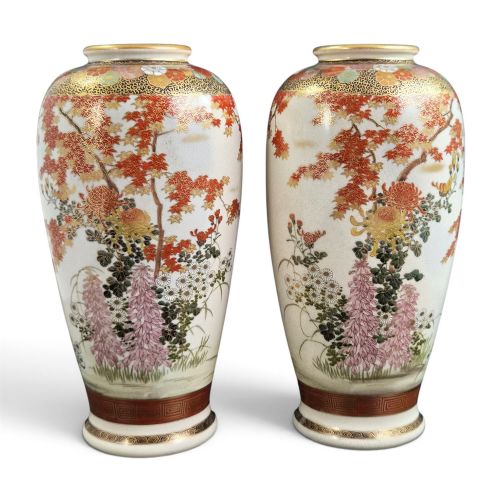
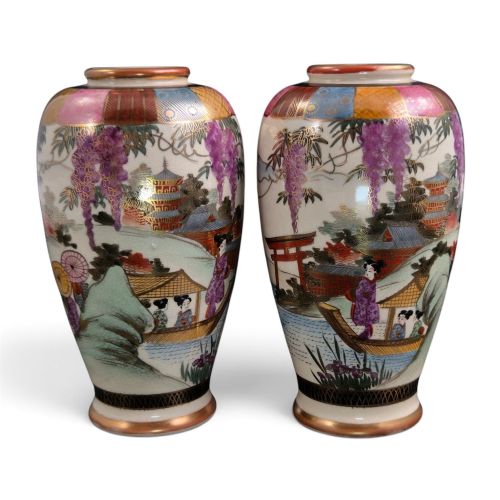
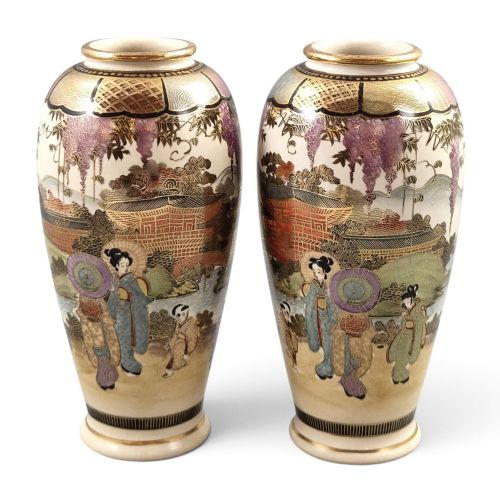
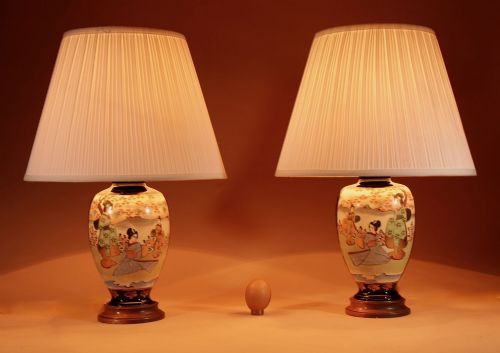
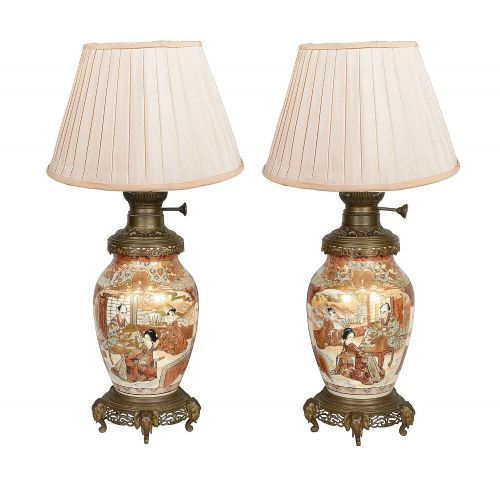
When searching for an antique satsuma pair, collectors encounter matched ceramic vessels spanning the Meiji, Taisho, and Showa periods. The inventory centres predominantly on vases, alongside table lamps, lidded jars, and decorative dishes.
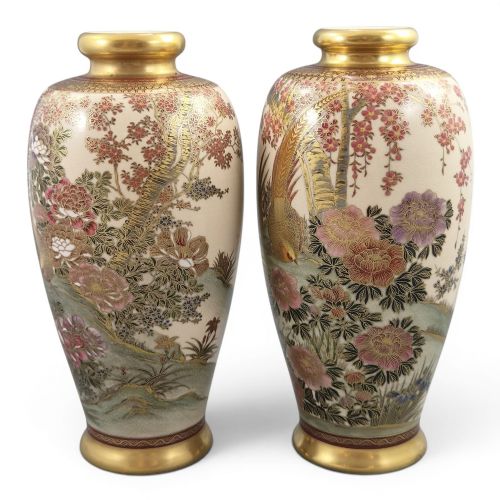
Most surviving pairs date from the late nineteenth century through to the early twentieth century, reflecting traditional Japanese artistry exported for Western markets. These objects typically display detailed narrative scenes, landscapes, flora, or figures set against characteristic crackle-glaze earthenware.
Materials and construction
Potters constructed these vessels using earthenware or ceramic bodies, finished with a distinctive cream-coloured crackle glaze that formed the canvas for subsequent decoration. Artisans then applied polychrome enamel pigments by hand to build up complex pictorial surfaces.
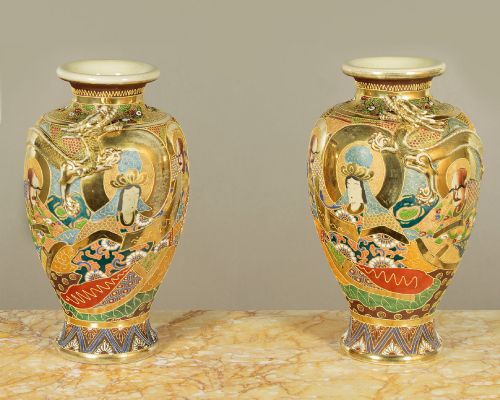
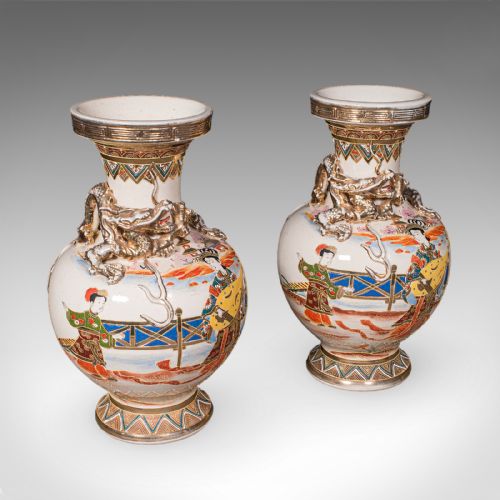
Makers integrated rich gilt and gold leaf highlights to accentuate borders, garments, and natural motifs. Certain workshops employed raised moriage techniques to add tactile dimension to robes, foliage, and dragons.
The inventory records diverse forms including baluster vases, lidded jars, floor vases, and converted table lamps.
Quality differences in pairs
Quality rests upon the precision and complexity of the hand-painted details, ranging from simple floral borders to dense panels depicting arhats, landscapes, and thousand butterfly motifs. Finer examples exhibit disciplined brushwork, controlled use of heavy gilding, and well-balanced proportions across both matched pieces.
The reputation of the producing workshop or signature also divides the range, with distinguished Kyoto makers and exhibition-grade pieces commanding greater regard. Condition of the delicate enamel work and the integrity of the underlying ceramic body further separate standard decorative pairs from exceptional specimens.
Maruni Kobe·Shozan·Manpei·Kinkōzan·Kinzan·Hododa·Makuzu Kozan II·Shuzan·Yasuda·Hakusan·Tagawa·Tashiro·Taizan·Ishiyama
The Antique Satsuma Pair Glossary
- Satsuma
- A type of Japanese pottery featuring a soft, ivory-coloured earthenware body covered in a fine network of crackled glaze. It originated in Satsuma Province and became immensely popular for export during the Meiji period.
- Moriage
- A ceramic decoration technique where slip is piped onto the surface in dots or lines to create raised, textured patterns before glazing and firing. This method adds a tangible, three-dimensional quality to robes and floral elements.
- Meiji
- The historical Japanese period spanning from 1868 to 1912, marked by the opening of trade with the West. Works from this era are celebrated for their meticulous detail and ambitious scale.
- Mon
- A Japanese heraldic badge or crest used to identify families or clans. These symbols frequently appear on high-quality Satsuma ceramics to denote patronage or origin.
- Baluster
- A vase shape characterised by a rounded body that tapers toward the base and swells outward before rising to a narrow neck. This form provides a stable and classical silhouette for painted panels.
Antique Satsuma Pair: Frequently Asked Questions
How were satsuma vases used?
Satsuma vases served primarily as decorative display items in late nineteenth and early twentieth-century homes, both in Japan and internationally. Their elaborate narrative scenes and rich gilding made them focal points for drawing rooms.
Some surviving pairs have later been converted into table lamps, adapting traditional vessels for functional domestic lighting.
How do I care for antique satsuma?
Maintain these ceramic pieces by dusting them gently with a soft, dry cloth to protect the delicate enamel and gold leaf. Keep them away from direct sunlight and moisture to preserve the integrity of the crackle glaze.
Avoid using liquid cleaners or chemical agents, as these can permanently damage the hand-painted polychrome surfaces.
How do I date satsuma ceramics?
Dating relies on stylistic indicators, studio signatures, and the characteristics of the earthenware body and glaze. Pieces produced during the Meiji period often feature denser gilding and intricate figural work, while later Taisho and Showa examples show shifts in palette and form.
Maker marks stamped or painted on the base help narrow the production window to specific active decades of a workshop.