




Antique Sailor Folk Art
Antique sailor folk art objects are handmade pieces of maritime history shaped by men at sea and coastal communities, offering a direct tactile connection to the ocean.
Antique Sailor Folk Art
Antique sailor folk art comprises handcrafted items created by mariners during long voyages or by coastal artisans utilising readily available nautical materials. These pieces capture the maritime world through the eyes of those who lived and worked upon the sea.
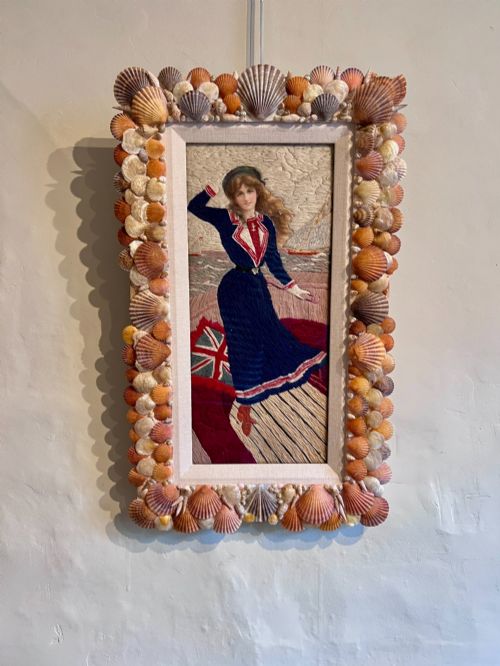
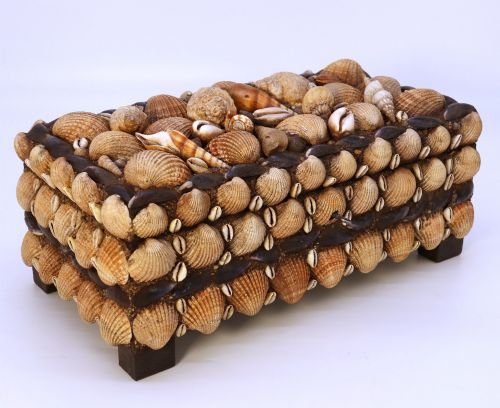
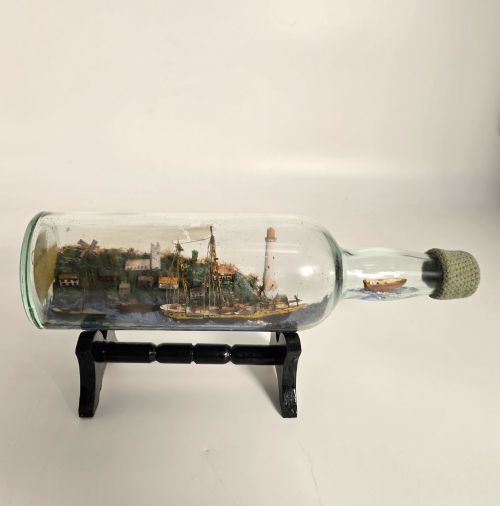
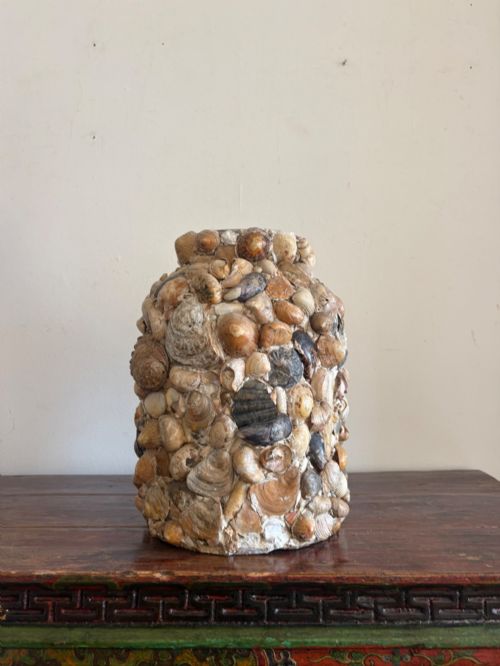
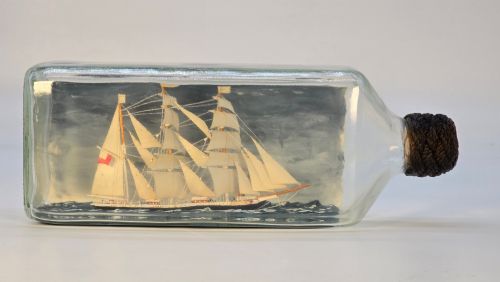
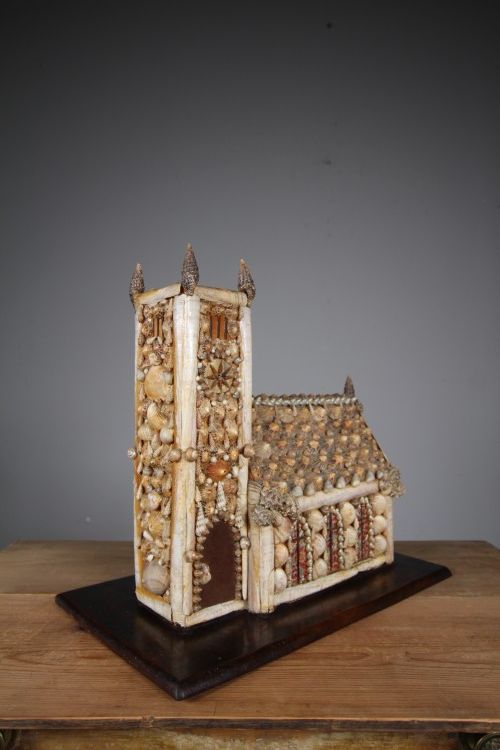
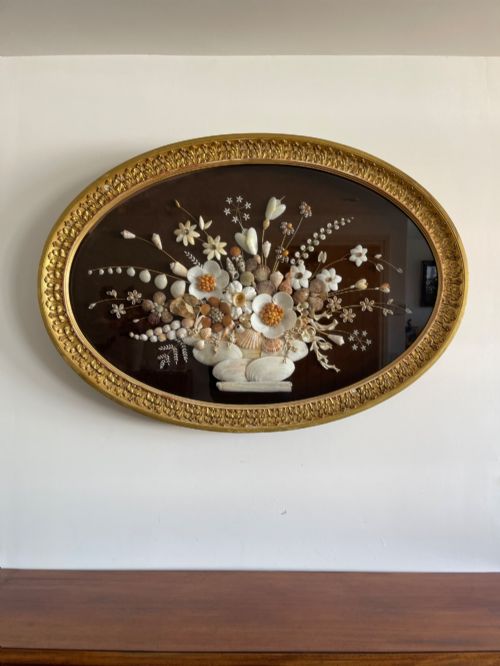
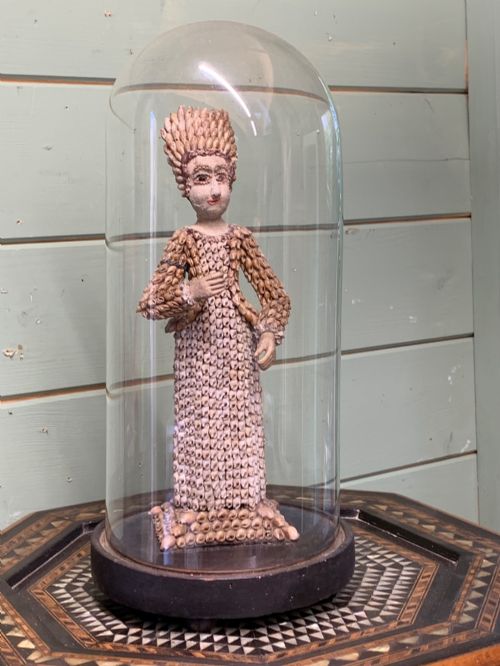
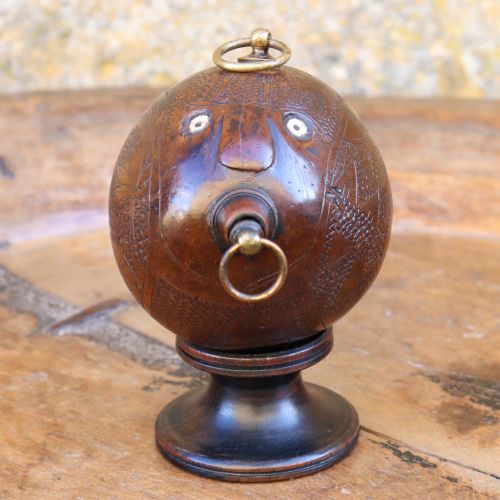
The selection ranges from intricate woolwork embroideries, known as woolies, and detailed ship dioramas housed within glass bottles to carved walking sticks, shellwork boxes, and decorated coconut flasks. These forms represent the primary ways makers expressed their craft.
Originating predominantly from the nineteenth and early twentieth centuries, these works span periods including the Georgian and Victorian eras, alongside the interwar years. Each object serves as a physical record of maritime culture and individual maker ingenuity.
How They Were Made
Makers utilised organic materials gathered during travels or sourced near the coast, including wood, whalebone, shark vertebrae, coconut shell, and copious quantities of seashells. Fabrics and wool were frequently employed for textile wall art and detailed embroideries.
Construction techniques relied on patient hand carving, meticulous needlework, and careful assembly within constrained spaces such as glass bottles. Paint and glass were added to enhance decorative models and dioramas with colour and depth.
Antique Sailor Folk Art Retail Price Guide 2026
Typical asking prices for sailor folk art among the pieces listed under this phrase on Sellingantiques today, from the lower quarter to the upper quarter. They describe what is for sale here now, not the wider market.
Listings feature nineteenth-century and Victorian pieces alongside items from the 1920s and 1930s.
What Varies in Quality
Quality rests in the precision of the hand carving and the intricacy of the assembly, whether in the rigging of a model ship or the arrangement of delicate shellwork. Finer examples display superior anatomical proportions in figures and greater structural stability in complex dioramas.
The preservation of original surface finishes and natural patinas across wood, bone, and textile elements influences the integrity of each piece. Greater visual clarity in pictorial woolies and complete, undamaged shell structures elevate the standing of the work.
The Antique Sailor Folk Art Glossary
- Woolie
- A traditional embroidery stitched by sailors using wool yarn to depict sailing ships and naval scenes. These textiles often feature textured stitching to give the water and sails a three-dimensional appearance.
- Diorama
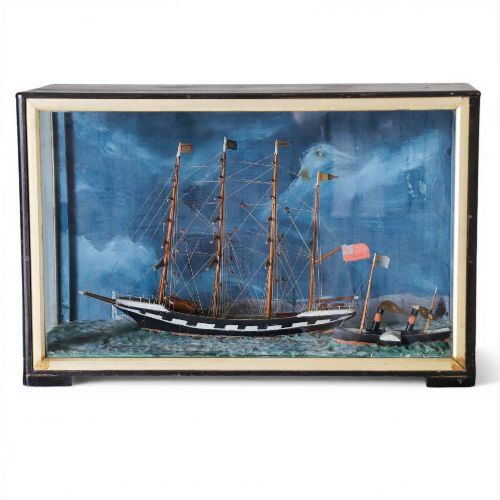
- A three-dimensional scene enclosed within a box, frame, or bottle, frequently depicting a sailing ship at sea. Makers constructed these miniature worlds using painted backgrounds, carved wooden hulls, and thread rigging.
- Scrimshaw
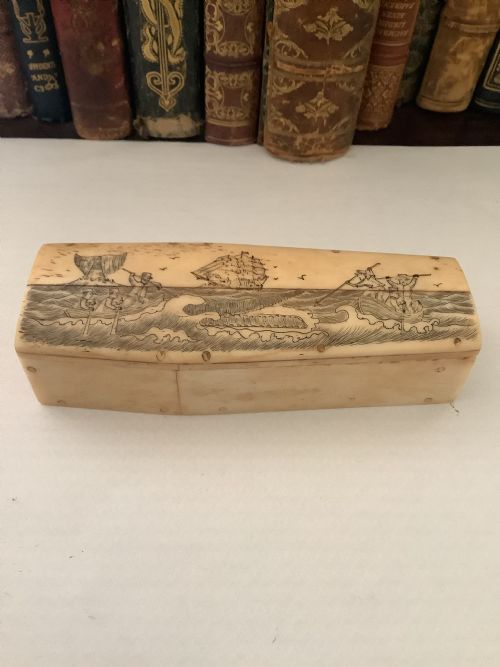
- The art of carving or engraving whalebone and teeth, practised extensively by whalers during long voyages. Designs commonly included portraits, nautical emblems, and decorative patterns highlighted with dark pigment.
- Fid
- A conical wooden or bone tool used by sailors to splice ropes and untie tight knots. Antique examples were often carved with decorative motifs by the men who used them daily.
- Bug Bear
- A carved coconut shell flask or drinking vessel fashioned to resemble a face or decorative pattern. Sailors utilised the natural texture and hard shell of the coconut for these utilitarian yet artistic objects.
Antique Sailor Folk Art: Frequently Asked Questions
How were ships built inside bottles?
Makers constructed the miniature sailing ships with collapsible masts and rigging held down by threads or hinges. They inserted the finished hull through the narrow neck of the bottle and pulled the strings to raise the masts once inside.
The interior was often lined with putty, paint, or sand to simulate the sea, and the final assembly was sealed to protect the delicate interior from moisture and dust.
How do I date a woolie embroidery?
Dating a woolie involves examining the style of the sailing vessel depicted, the framing materials, and the type of wool yarn used. Nineteenth-century examples frequently show specific naval ship types and use hand-spun or early synthetic dyed wools.
Victorian and Edwardian pieces often exhibit tighter, more uniform stitching techniques and distinct framing methods that reflect the period of their manufacture.
How should I display shellwork and dioramas?
Shellwork boxes and dioramas require stable indoor environments away from direct sunlight and excessive humidity to prevent fading and material degradation. Glass-fronted display cases help protect delicate shell grottoes and bottled ships from dust and accidental contact.
Maintaining consistent room temperatures ensures that organic components like wood, bone, and fabric remain stable over time without drying out or warping.