


Maritime Glass Art
Maritime glass art brings the sea indoors, capturing sailing ships and steam vessels within glass bottles and Victorian display cases for collectors of nautical history.
Maritime Glass Art
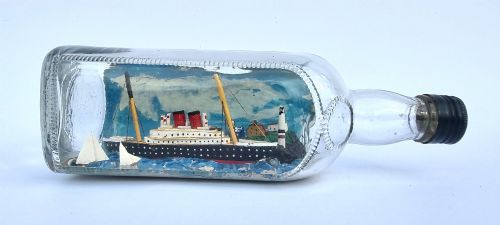
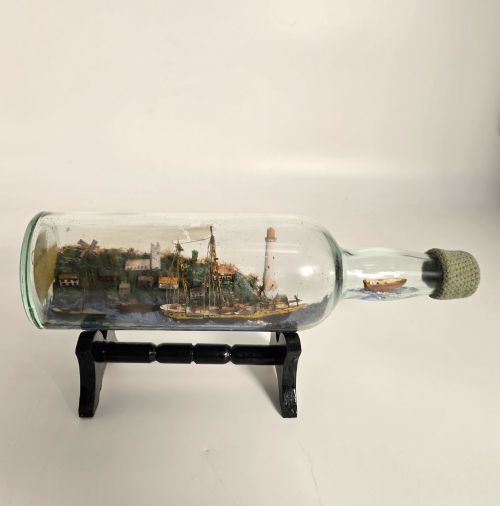
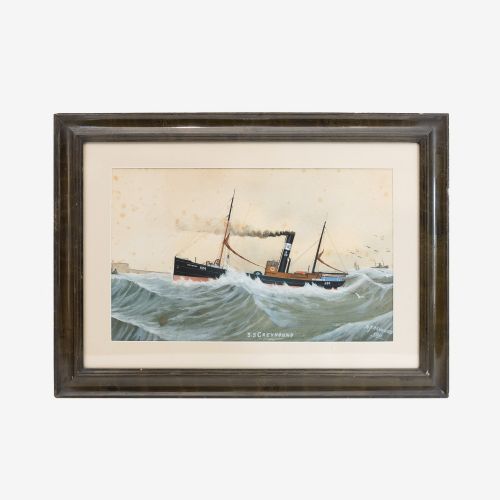
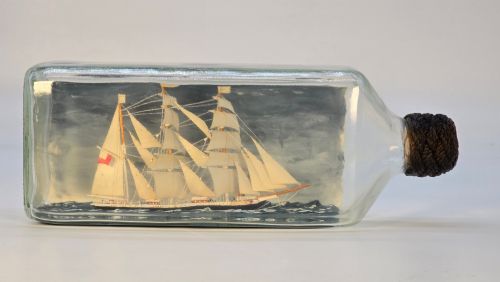
When you search for maritime glass art, you are looking at intricate folk art objects that preserve the craftsmanship of sailors and local artisans from the nineteenth and early twentieth centuries. These pieces typically take the form of ship dioramas housed securely inside glass bottles or framed behind glass window displays.
You are most likely to meet English folk art ships in bottles dating from the 1920s and 1930s, alongside nineteenth-century Victorian cased dioramas of sailing vessels. The selection bridges naive maritime folk art with precise nautical models built by hand.
The forms range from single-masted sailing ships and steam vessels on wooden plinths to competitive racing scenes and prisoner-of-war whimseys. Each piece reflects the enduring fascination with marine life and naval architecture expressed through glass enclosure.
How they were made
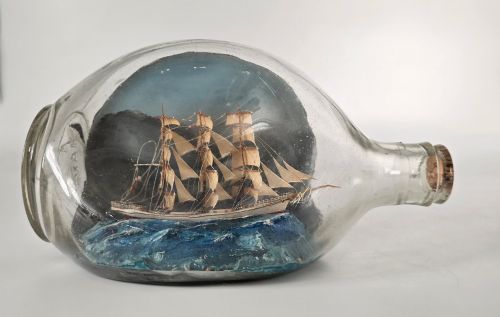
The creation of these works relies on combining glass containers with organic and man-made materials such as wood, paint, thread, cork, putty, paper, and plaster. Makers constructed folding masts and rigging to pass through narrow bottle necks before pulling them upright with internal threads.
Craftsmen built wooden ship hulls and painted background seascapes on paper or plaster to create depth within confined spaces. Cork and putty often sealed the vessels, while external wooden plinths and glazed cases provided stable presentation.
Listings span from the early nineteenth century to the 1930s, utilising glass, wood, paint, thread, cork, putty, paper, and plaster.
What varies in quality
The distinction between ordinary and exceptional pieces lies in the crispness of the detailing and the complexity of the internal rigging. Finer examples display multiple masts, accurately rendered sails using thread and paper, and painted backdrops that create a convincing sense of movement at sea.
The quality of the housing matters as much as the vessel within, with clean, undistorted glass and well-joined wooden stands elevating a piece. Early examples show greater resourcefulness in manipulating materials through narrow apertures, whereas later works benefit from refined decorative framing.
The Maritime Glass Art Glossary
- Maritime Diorama
- A three-dimensional scene depicting ships at sea, typically enclosed within a glass case or bottle to protect the delicate elements. These displays often incorporate painted backgrounds and physical models to create perspective.
- Ship in a Bottle
- A traditional folk art object where a fully rigged model ship is assembled entirely inside a glass bottle. Makers engineered the masts to fold down during insertion.
- Folk Art
- Creative work produced by self-taught individuals using traditional methods and accessible materials. Maritime folk art specifically reflects the culture and craftsmanship of coastal communities.
Maritime Glass Art: Frequently Asked Questions
How did they put ships inside bottles?
Makers constructed the hulls and designed the masts with hinges and threads so they could fold flat. Once pushed through the narrow neck of the bottle, the rigging was pulled upright.
Additional details like painted paper seascapes and small figures were positioned using long wires and tweezers before sealing the bottle with a cork.
Are these pieces English in origin?
Many of the recorded pieces originate from English workshops and makers during the nineteenth and early twentieth centuries. Folk art traditions varied across coastal regions, producing distinct local styles.
Makers utilised materials readily available to them, including local timber, glass, and household paints.
What periods do these pieces date from?
The available items span from the early nineteenth century through the 1930s, encompassing Victorian and Edwardian eras. Victorian pieces frequently feature cased window displays and racing scenes.
Later pieces from the 1920s and 1930s often include named steam ships and folk art dioramas on wooden plinths.
How do I display maritime glass art?
These objects require stable placement on flat surfaces away from direct sunlight and heavy vibrations that could disturb internal rigging. Wooden plinths and secure bases support the weight of the glass and enclosed models.
Environmental stability helps preserve organic materials like thread, paper, and painted surfaces inside the glass.