


Sailing Ship in Glass
These charming sailing ship in glass pieces combine maritime folk art with intricate craft, offering a tactile piece of naval history for any desk or shelf.
Sailing Ship in Glass
When searching for a sailing ship in glass, you are looking at maritime folk art and model ships housed within bottles, cases, or engraved upon glassware. The examples found here span from the Georgian period through the Victorian era and into the early twentieth century.
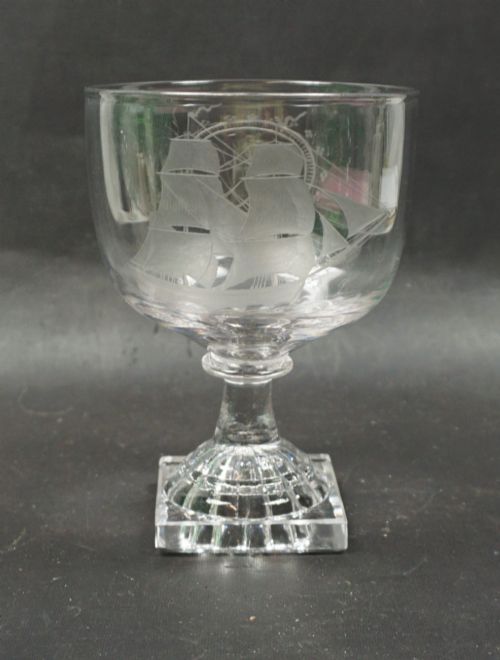
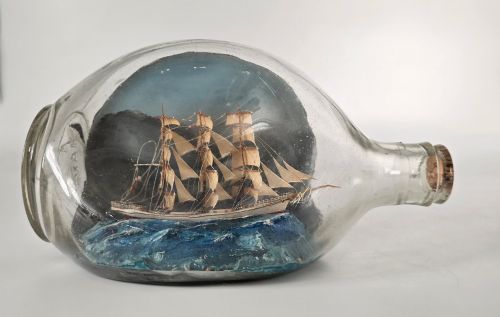
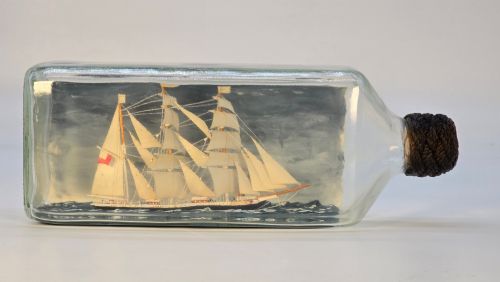
You are most likely to meet cased dioramas, models contained inside glass bottles on wooden plinths, and glassware such as square lemon squeezer based rummers engraved with naval vessels. These objects capture the enduring fascination with sailing ketch, clipper, and schooner designs.
The origins stretch across English and Welsh folk traditions, showcasing both intimate bottled models and larger cased ship windows or racing vessel displays. Each piece reflects the ingenuity of makers who worked within strict glass boundaries.
Materials and construction
The construction of these pieces relies on simple organic and inorganic materials including wood, thread, cork, paint, rope, and plaster, all assembled to fit through narrow bottle necks or enclosed within glass cases. Makers utilised hinged masts and rigging threads that could be pulled upright once the miniature vessel rested inside its glass vessel.
Engraved glassware utilises lead or lime glass formed into square lemon squeezer based rummers, decorated with diamond-point or wheel engraving to depict ships and bridges. Cased dioramas build up painted backgrounds and plaster sea swells to give a sense of depth to wooden hulls.
Bottles chosen by makers often show authentic bubbles and ripples in the glass, proving they were ordinary beverage containers before their nautical transformation.
Distinctions in quality
The quality of a sailing ship in glass rests upon the proportion and fidelity of the rigging, the delicacy of the hull carving, and the clarity of the surrounding glass container. Earlier Georgian and Victorian examples often demonstrate finer detail in the threadwork and painted backdrops compared to later folk art interpretations.
The integration between the model and its mount dictates the overall visual success, whether secured upon a turned wooden plinth or sealed permanently inside a rummer bowl. Superior pieces maintain crisp paintwork on the miniature hulls and neat knots in the running rigging.
The Sailing Ship in Glass Glossary
- Diorama
- A three-dimensional scene enclosed in a glass-fronted case or bottle. These displays use painted backgrounds and layered materials to create perspective.
- Rummer
- A heavy drinking glass with a short stem and a large bowl, popular in the Georgian period. Many were engraved to commemorate ships or bridges.
- Lemon squeezer base
- A heavy, square-molded pedestal foot found on eighteenth and nineteenth-century glassware. It provides stability for heavy drinking vessels.
- Ketch
- A two-masted sailing boat with a mainmast and a smaller mizzenmast stepped forward of the rudder. Model makers frequently replicated this rig in miniature.
- Folk art
- Objects created by self-taught makers using accessible materials within a local tradition. These pieces prioritize expressive character over strict industrial precision.
Sailing Ship in Glass: Frequently Asked Questions
How did they put ships in bottles?
Makers constructed the miniature wooden ships with hinged masts and rigging threads that lay flat along the hull. Once inserted through the narrow neck of the bottle, the builder pulled the strings to raise the masts into place.
Glue applied to the base of the hull secured the vessel to the bottom of the bottle upon contact. Makers then used long wires and hooks to arrange the sea swells and final details.
How should I clean my glass diorama?
Cased dioramas and bottled ships require gentle dusting with a soft, dry brush to protect fragile internal threads and paper elements. Avoid using liquid cleaners or submerging any part of the object.
Keeping the piece away from direct sunlight prevents the painted backgrounds and wooden components from fading over time. Sealed glass bottles generally protect the interior from dust accumulation.
What period do most pieces date from?
The selection includes items ranging from the late eighteenth century up to the early twentieth century. Georgian rummer glasses and early nineteenth-century bottles represent the earlier end of the timeline.
Victorian cased dioramas and 1930s folk art bottles form the majority of the remaining examples. Each era brings distinct styles of rigging and glass manufacture.