


Vintage Maritime Diorama
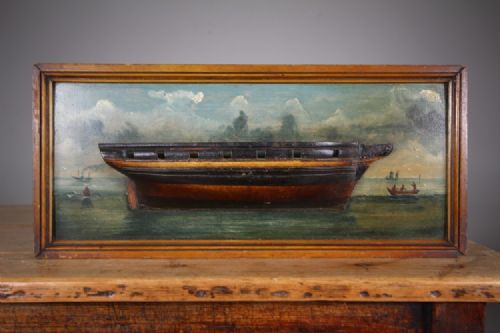
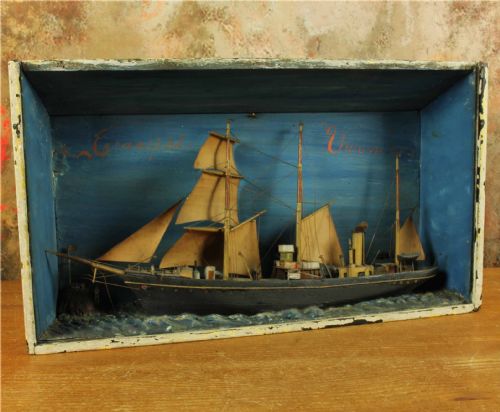
These vintage maritime diorama pieces capture sailing vessels and steam ships frozen in mid-ocean, offering a tactile piece of seafaring history for any wall or shelf.
Vintage Maritime Diorama
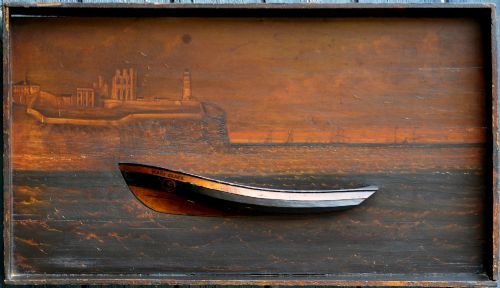
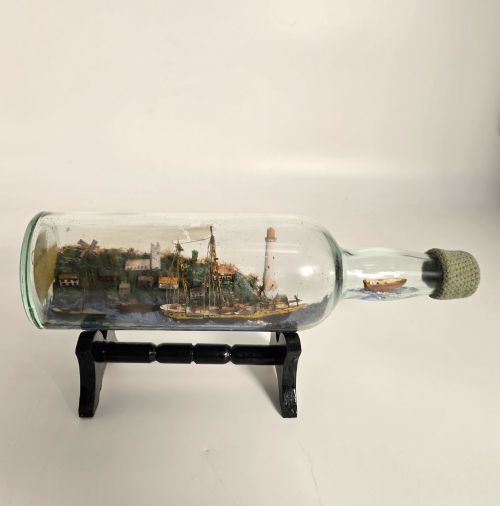
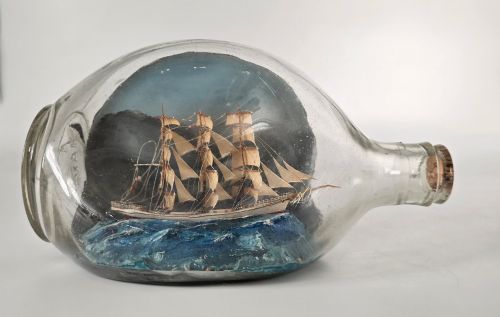
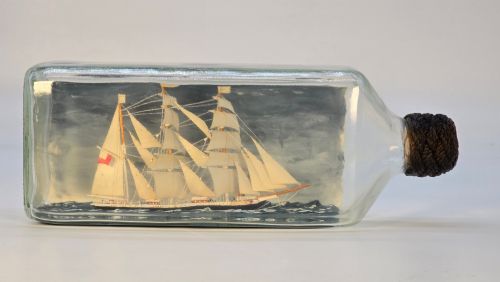
When you search for a vintage maritime diorama, you encounter three-dimensional depictions of sailing ships and steam vessels set within glass cases, shadow boxes, or glass bottles. These pieces range from nineteenth-century Victorian clipper models to early twentieth-century folk art examples.
The most common formats on this page are cased wall art and detailed ship models enclosed in glass bottles or wooden shadow boxes. These objects originate primarily from English and French makers working in the nineteenth and early twentieth centuries.
Subjects include named vessels such as the Glynllifon and the Hippolyta, alongside racing sailing vessels and generic folk art barques. Each piece reflects the maritime heritage and hand-built traditions of the period.
What varies in quality
The skill of the maker dictates the proportion and rigging accuracy of the vessel within its restricted space. Finer examples show meticulous detail in the miniature sails, painted seascapes, and fitted wooden cases.
Provenance and documentation elevate certain pieces, particularly named ships with inscribed titles or attributable regional origins. The preservation of the original glass, paint, and framing components also distinguishes superior works.
Makers occasionally used real sea shells alongside painted plaster to recreate miniature coastal cliffs inside early twentieth-century shadow boxes.
The Vintage Maritime Diorama Glossary
- Diorama
- A three-dimensional scene depicting historical, maritime, or fictional subjects within a compressed perspective. These displays often utilise painted backgrounds behind physical model elements.
- Shadow box
- A deep, glass-fronted wooden frame designed to protect and display three-dimensional objects on a wall. They provide the enclosed environment necessary for maritime scenes.
- Scratch-built
- A model constructed entirely from raw materials rather than from a pre-packaged kit. Makers built these ships using individual pieces of wood, thread, and canvas.
- Clipper
- A very fast nineteenth-century merchant sailing ship with three masts and a curved bow. These vessels frequently inspired detailed model representations.
Vintage Maritime Diorama: Frequently Asked Questions
How do I display a cased diorama?
Place cased dioramas on sturdy shelves or tables away from direct sunlight to protect the fragile painted surfaces and textiles inside. Wall-mounted shadow boxes require secure fixings into solid masonry or wall studs due to the combined weight of wood and glass.
Keep the environment stable in terms of temperature and humidity to prevent the wood from warping and the historic adhesives from degrading over time.
Are these pieces English or French?
The selection includes works attributed to English and French makers, reflecting distinct regional styles in folk art and marine craftsmanship. English pieces often feature scratch-built folk art models and shell work.
French examples frequently utilise finely constructed wooden boxes and detailed painted backgrounds from regional workshops like Vienne.
How do I date a maritime diorama?
Examine the materials, construction methods, and any inscribed titles or dates on the case or base. Nineteenth-century examples often feature heavy Victorian timber framing and hand-painted canvas seas.
Early twentieth-century pieces may incorporate bottled configurations or simpler folk art constructions dating from the 1900s to the 1930s.
What is the difference between a bottle model and a shadow box?
A bottle model houses a collapsible or specially inserted ship within a glass bottle, requiring considerable ingenuity to construct through a narrow neck. A shadow box provides an open-faced or glass-covered rectangular wooden tray mounted on the wall.
Both serve to protect intricate rigging and painted waves from dust, but they offer entirely different visual perspectives of the vessel.