


Ship in a Bottle
A ship in a bottle is a curious maritime folk art miniature that captures the imagination, and these historic examples bring genuine nautical charm into your home.
Ship in a Bottle
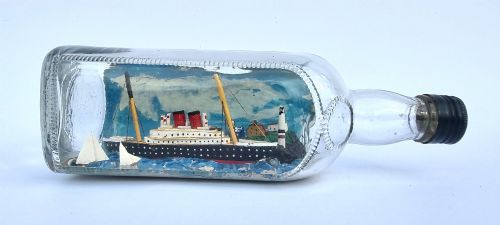
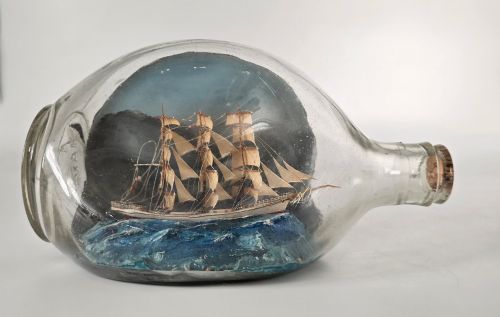
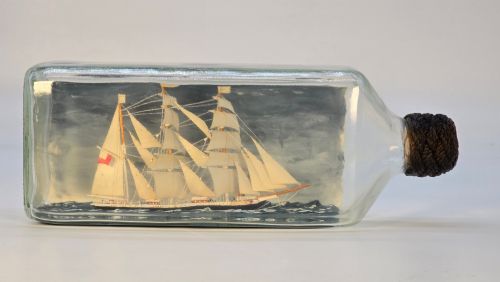
A ship in a bottle presents a detailed model sailing vessel or steam ship housed entirely within a glass vessel. These fascinating objects emerge from maritime traditions, often created by sailors during long voyages or by shore-based folk artists.
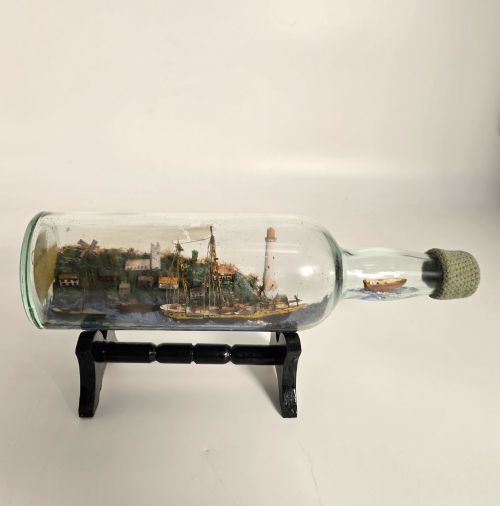
Most pieces you encounter on this page date from the nineteenth century through to the nineteen thirties, encompassing English folk art and tramp art traditions. You will find single sailing ships, twin vessels, harbour dioramas, and specific named boats mounted on wooden plinths or stands.
Makers constructed these miniature models with collapsible masts and rigging so they could pass through the narrow neck of a glass bottle before being pulled upright using attached threads. The vessel is then secured inside upon a bed of putty or painted material representing the sea.
Materials and construction
The primary components combine hand-blown glass bottles with carved wood for the ship hulls, masts, and display plinths. Artists utilised thread, rope, and paint to rig the miniature vessels and depict the ocean waves.
Internal elements are often anchored using putty and cork, while some associated wine coasters and decanters showcase carved mahogany. Lead crystal and engraved glass feature in related tablewares from the Victorian and Edwardian eras.
Materials recorded across the inventory include hand-blown glass, wood, paint, thread, cork, rope, and lead crystal.
Assessing quality and detail
The sophistication of the internal rigging and the complexity of the miniature vessel separate standard examples from exceptional pieces. Multi-masted ships, passenger liners, or detailed harbour dioramas demonstrate superior craftsmanship by the maker.
The clarity and hand-blown nature of the glass vessel also influence the overall character, alongside the presence of a purpose-built wooden stand or plinth to display the diorama.
James Mein of Kelso
The Ship in a Bottle Glossary
- Maritime Folk Art
- Objects created by self-taught makers relating to the sea, ships, and coastal life. These pieces reflect traditional skills passed down through generations of sailors and coastal communities.
- Diorama
- A three-dimensional miniature scene enclosed within a container. In this context, it refers to the ship and its modelled sea displayed inside the glass bottle.
- Tramp Art
- A style of decorative woodwork where items are constructed from scrap materials, notched or chip-carved with pocket knives. This method frequently appears in nineteenth-century folk art frames and stands.
- Coaster
- A small tray or stand placed beneath a bottle or decanter to protect furniture surfaces. Georgian and Victorian examples are often carved from dense timbers like mahogany.
- Decanter
- A glass vessel used for holding and serving wine or spirits. The evidence includes nineteenth-century crystal and engraved royal commemorative pieces.
Ship in a Bottle: Frequently Asked Questions
How did they get the ship inside the bottle?
Makers built the miniature ships with hinged or collapsible masts and intricate thread rigging. Once pushed through the narrow neck of the glass bottle, the builder pulled strings from the outside to raise the masts into position.
After the rigging was secured and glued internally, the control threads were trimmed close to the deck. The hull was typically anchored onto a bed of putty or painted wooden waves to keep the model steady.
What periods do these pieces come from?
The pieces available range primarily from the nineteenth century through to the nineteen twenties and thirties. You will find Victorian and Edwardian examples alongside specific dates such as nineteen twenty and nineteen thirty.
Earlier nineteenth-century works and eighteenth-century pieces appear occasionally in archive records. Most dated items reflect the interwar popularity of maritime folk art collectibles.
Are all ships in a bottle made by sailors?
While many pieces originated at sea by sailors passing time on long voyages, land-based folk artists and hobbyists also produced them. Folk art workshops and individuals created detailed dioramas ashore using available glass bottles and carved wood.
Both maritime and domestic makers contributed to the tradition, employing similar techniques of collapsible rigging and bottled displays.
How should I display a ship in a bottle?
These delicate glass objects suit stable surfaces away from direct sunlight and heavy vibrations. Many pieces come mounted on dedicated wooden plinths or stands that support the rounded bottle safely.
Keeping the piece on a mantelpiece, shelf, or desk allows you to view the fine rigging and painted interior details clearly. Avoid placing them near edges where accidental knocks could roll the glass container.
What is the difference between a ship and a diorama?
A standard ship in a bottle focuses primarily on the single vessel floating upon simulated waves. A diorama includes additional elements around the ship, such as harbour buildings, lighthouses, multiple vessels, or shoreline details.
Both styles use the same bottled construction method, but dioramas create a broader narrative scene of maritime life.