




Vintage Maritime Model Ship
A vintage maritime model ship brings the intricate craftsmanship of traditional seafaring history directly into a room.
Vintage Maritime Model Ship
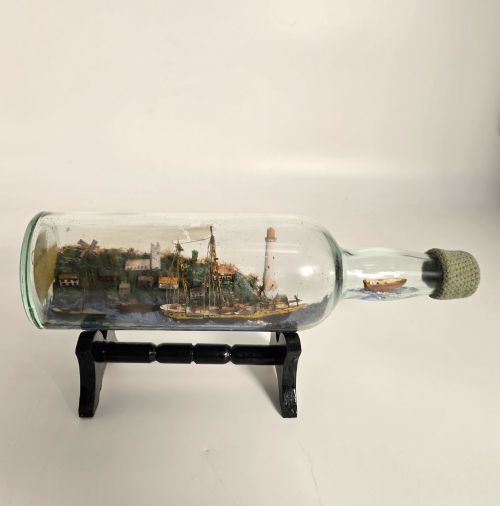
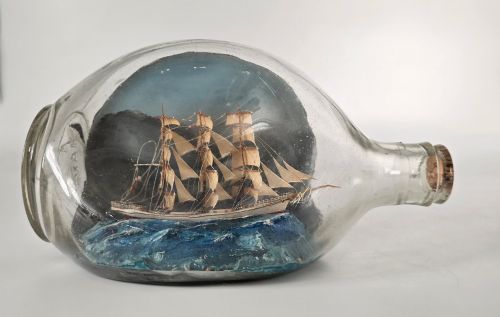
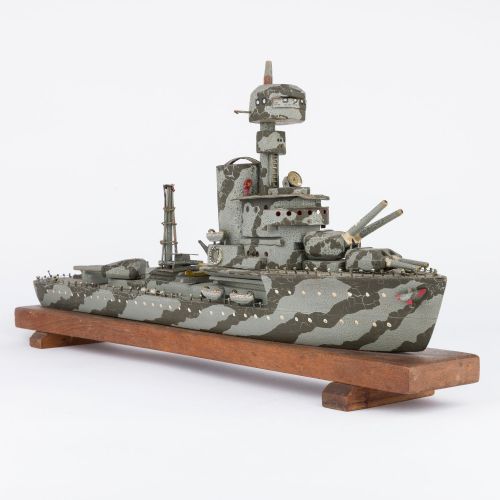
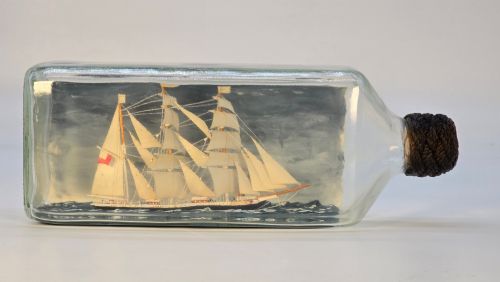
A vintage maritime model ship encompasses detailed wooden replicas, boxed dioramas, and vessels enclosed within glass bottles. These objects capture naval vessels, clippers, racing yachts, and steamships originating from the nineteenth century through the early decades of the twentieth century.
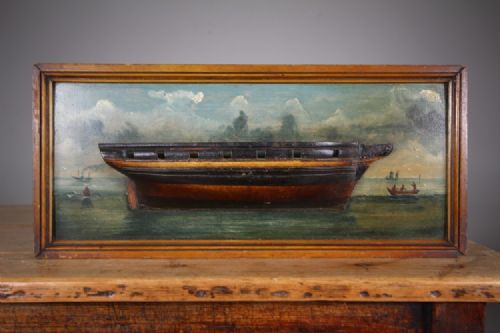
Makers ranged from professional shipyards constructing builders' half hulls to skilled folk artists crafting scratch-built vessels by hand. The most frequently encountered examples on this page include folk art ship in a bottle creations and cased marine dioramas.
Styles span Victorian maritime pieces, Edwardian works, and nautical folk art originating from English, French, and Welsh makers. Collectors find everything from large pond yachts to intricate three-mast sailing ships mounted on wooden plinths.
Materials and construction
Makers utilised carved wood, paint, and metal alongside canvas and thread for rigging, building hulls and miniature decks with meticulous detail. Glass bottles and shadow box cases protected delicate internal rigging and plaster seas from dust and damage.
Many scratch-built models and dioramas relied on simple hand tools, turning everyday materials into convincing representations of water using painted plaster and glass. Ship builders also produced half hull models shaped to demonstrate vessel proportions for commercial use.
Listings feature wood, glass, metal, canvas, thread, brass, and plaster across Victorian, Edwardian, and WWI era periods.
Assessing quality
Quality rests upon the precision of the scale work, the complexity of the rigging, and the preservation of original materials like paint and canvas. Scratch-built models demonstrating accurate architectural details command greater attention than simpler decorative objects.
The integration of the environment inside cased dioramas or bottles dictates the overall success of the piece. Well-balanced proportions on pond yachts and detailed miniature work on named vessels set the superior examples apart from standard items.
The Vintage Maritime Model Ship Glossary
- Diorama
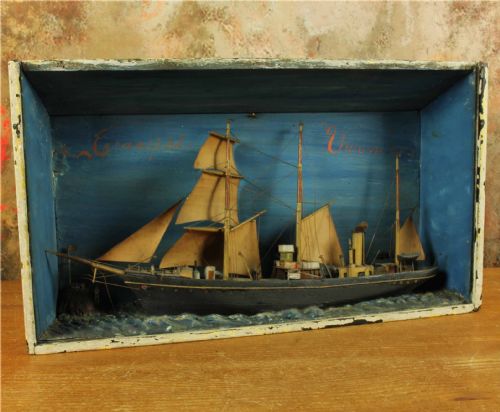
- A three-dimensional scene depicting a ship at sea, often enclosed within a wooden shadow box or glass case. These displays frequently incorporate painted plaster to represent waves.
- Half hull model
- A scale model showing only one side of a ship hull, traditionally used by shipbuilders to evaluate vessel lines and proportions.
- Pond yacht
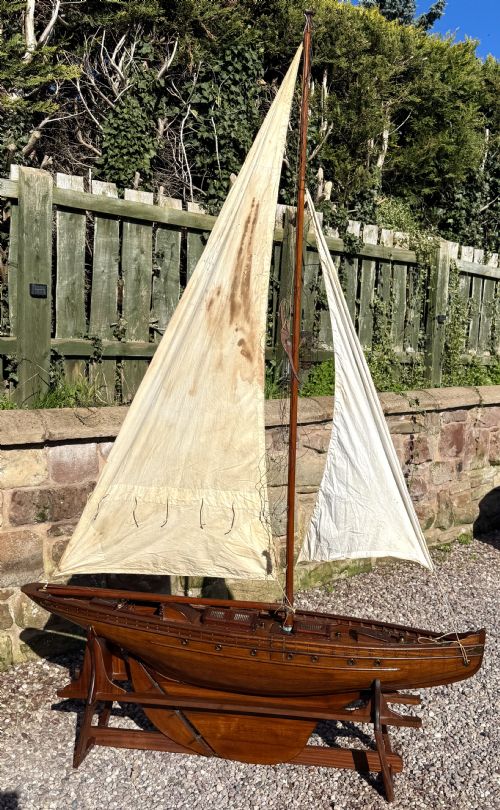
- A large sailing model boat designed for operation on open water, constructed with a wooden hull and cloth sails.
- Scratch built
- A model constructed entirely from raw materials without the aid of a commercial kit, relying on the maker's individual skill.
- Ship in a bottle
- A miniature sailing vessel assembled inside a glass bottle with folding masts designed to be raised upright via attached threads.
Vintage Maritime Model Ship: Frequently Asked Questions
How were ship dioramas displayed?
Makers enclosed marine dioramas within wooden shadow boxes or glass-fronted cases to protect the fragile rigging, painted canvas sails, and plaster sea waves from damage. These glazed enclosures allowed viewers to observe the vessels from the front while keeping dust away from delicate threadwork.
Some examples rested on wooden plinths or marble bases, while others featured wall-hanging cabinetry. The casing protected the internal components from environmental changes over the decades.
How do I identify the period of a model ship?
Dating relies on the vessel type depicted, construction materials, and stylistic clues within the cabinetry or labelling. Victorian and Edwardian pieces often display specific riggings, hull forms, and housing materials characteristic of those eras.
Parks, builders' marks, or handwritten inscriptions on the base or bottle provide further historical context. Comparing the vessel design to known historical ships helps narrow down the decade of creation.
Where should I place a model ship at home?
These models require stable surfaces away from direct sunlight, excessive heat sources, and high humidity to protect wooden components and painted finishes. Displaying cased dioramas on sturdy sideboards or shelves keeps them safe from accidental knocks.
Large pond yachts need dedicated floor space or strong wall brackets to support their substantial height and weight. Proper placement ensures the delicate rigging and hull details remain undisturbed in daily life.