



Maritime Shadow Box
These maritime shadow box pieces bring tactile folk art history into a room with their layered model ships and painted seascapes.
Maritime Shadow Box
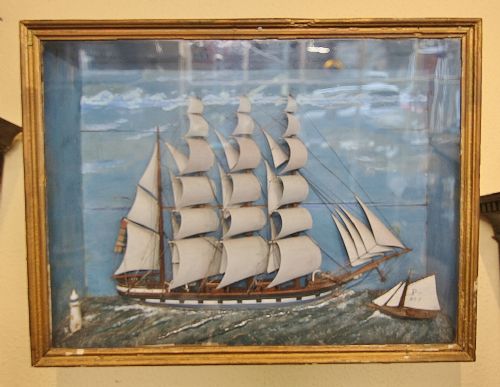
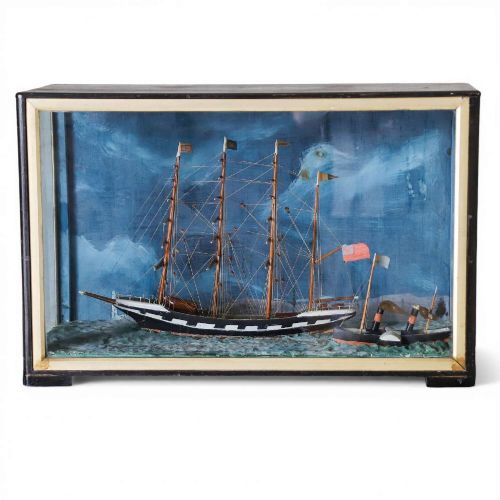
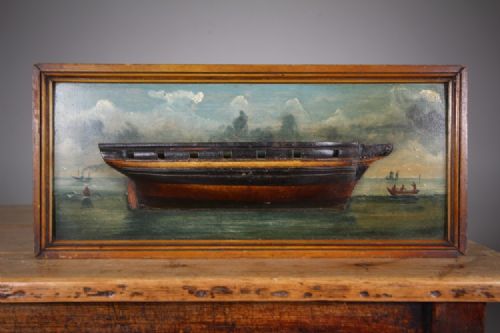
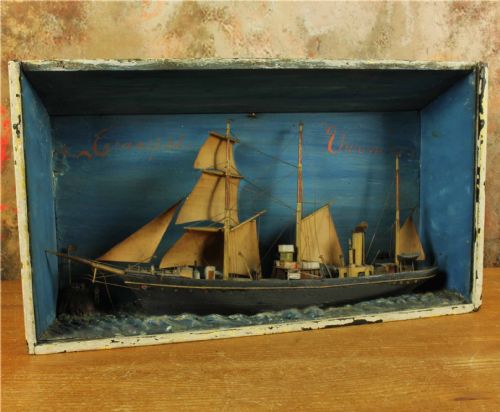
A maritime shadow box presents a three-dimensional ship model set against a painted canvas backdrop enclosed within a wooden frame and front glass. These objects emerge from nineteenth-century and early twentieth-century traditions, spanning Victorian maritime folk art and British folk art.
The versions met most frequently on this page take the form of nineteenth-century maritime dioramas and scratch-built ship models. Makers built these pieces using pine and timber frames to protect intricate canvas and plaster elements from dust and damage.
How they were made
Makers constructed the primary structures from timber and pine, building deep wooden boxes designed to hold framed glass fronts. Inside these protective enclosures, they positioned scratch-built ship models alongside painted canvas backgrounds to create depth.
Maritime Shadow Box Retail Price Guide 2026
Typical asking prices for maritime shadow box among the pieces listed under this phrase on Sellingantiques today, from the lower quarter to the upper quarter. They describe what is for sale here now, not the wider market.
Some nineteenth-century makers incorporated delicate straw work into their ship dioramas to simulate shimmering seafoam.
What varies in quality
Quality in a maritime shadow box rests upon the intricacy of the scratch-built ship model and the depth of the perspective within the timber frame. Superior examples display detailed rigging, precise carving, and accomplished painted canvases that capture movement.
Material selection and preservation also divide the range, as pieces utilising specialist straw work or well-preserved plaster elements command attention. The integration of the ship with its Turneresque seascape reveals the hand of a more skilled folk artist.
The Maritime Shadow Box Glossary
- Maritime diorama
- A three-dimensional display depicting a ship at sea within a framed and glazed box. This form combines model making with painted backdrops.
- Scratch-built
- A model constructed entirely from raw materials without the aid of a commercial kit. Makers built these pieces using timber, wire, and fabric.
- Straw work
- Decorative art created using split straw applied to surfaces in geometric or pictorial patterns. Victorian artisans utilised this technique to adorn maritime scenes.
- Turneresque
- A style of painting reminiscent of J.M.W. Turner, focusing on atmospheric light and dramatic seas. Such backdrops give these dioramas painterly depth.
Maritime Shadow Box: Frequently Asked Questions
What is a maritime shadow box?
A maritime shadow box is a framed, glazed display containing a three-dimensional ship model set against a painted canvas background. These objects combine model making with folk art painting.
Makers constructed them in nineteenth-century and early twentieth-century workshops to preserve intricate ship models while creating realistic ocean scenes.
How were these boxes displayed?
Owners typically hung these pieces on walls or placed them on mantels where the glass front protected the delicate model inside. The deep wooden frames allowed the dioramas to stand securely on flat surfaces.
They served as decorative items in homes, often commemorating specific vessels or general maritime scenes.
What materials did makers use?
Makers relied primarily on wood, pine, glass, paint, canvas, plaster, and fabric to build these pieces. Timber frames and glass protected the interior components from environmental wear.
Interior elements often included carved wooden hulls, fabric rigging, and painted plaster or canvas seascapes.
How do I date a maritime shadow box?
Dating relies on examining the construction methods of the wooden frame, the materials used in the ship model, and the style of the painted backdrop. Nineteenth-century examples often feature simpler pine construction and folk art painting styles.
Later pieces from around nineteen-twenty show distinct construction traits and material use characteristic of early twentieth-century British folk art.